Viral Hooks
Trending short videosArt installation behind the scenes story
H

@hyundai.artlab

Instagram · Talking Head Edit
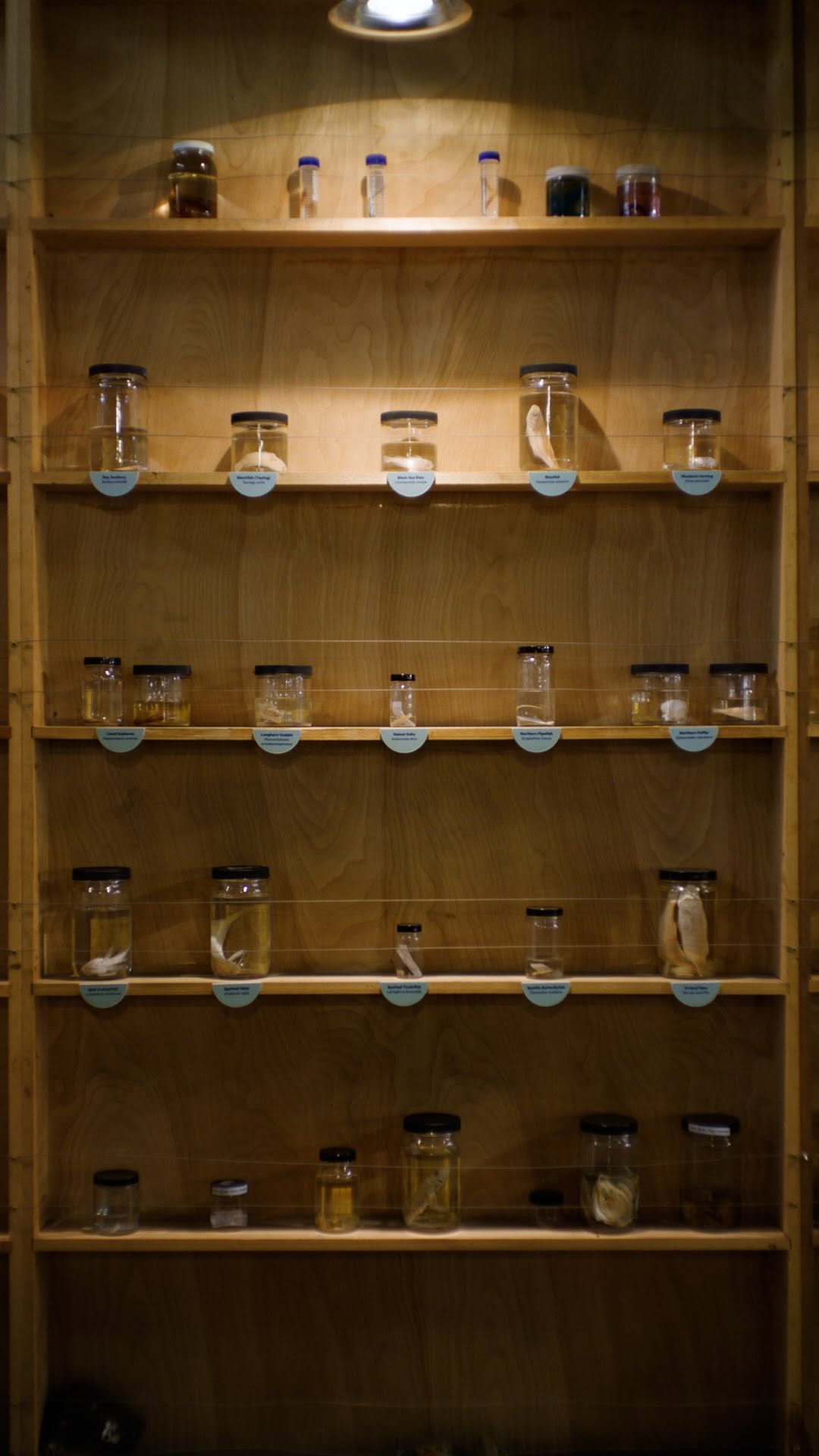
@hyundai.artlab “[Marina Zurkow] wants to translate behaviors of the fish that we see and that call the Hudson River home into her art to help communicate stories of human and nature connections…”\n\n-Carrie Roble, Vice President of Estuary & Education at Hudson River Park Trust\n\nWeaving ecological science, “Hyundai Terrace Commission: Marina Zurkow: The River is a Circle” redefines the Hudson River’s ecosystem as an evolving multisensory experience. The work reveals how art can depict, interpret, and reimagine the dynamics of a living river. The animations in “Hyundai Terrace Commission: Marina Zurkow: The River is a Circle” draw from Zurkow’s (@squirrelzurkow) deep research in collaboration with the Hudson River Park Trust.\n\nRoble discusses how the artist traced the rhythms of native wildlife and over 85 fish species observed at the Hudson River Park’s Wetlab and archives, transforming real ecological data into her animations that pulse and drift like the tides.\n\nExperience a site-responsive installation where the world above and below the water shifts with time, season, and climate—now on view at the Whitney Museum’s (@whitneymuseum) fifth-floor terrace until January 11, 2026.\n\n#HyundaiTerraceCommission #MarinaZurkow #TheRiverisaCircle #WhitneyMuseum #HudsonRiverParkTrust
View original on Instagram

The edit1 shot · 4 text
Shots Text

Performance

Views
910.7K
Comments
9
Outlier
18.3×

Video #10318 · Talking Head Edit

Art installation behind the scenes storyfrom @hyundai.artlab

[01]

Overview

The video features an expert from the Hudson River Park Trust explaining the ecological research and biodiversity data that informed Marina Zurkow's art installation. It transitions from shots of the river and wet lab research to the final digital artwork displayed at the Whitney Museum, illustrating the connection between the natural river ecosystem and the artistic interpretation.

[02]

Simple outline

  1. 1Establish hidden complexity
  2. 2Introduce creative translator
  3. 3Show translation process
  4. 4Reveal final interpretation
  5. 5Merge art with reality

[03]

Related videos

[04]

Classification

Concepts
Behind The ScenesBrand Showcase
Elements
B-Roll CutawayMontage EditingText Overlay
Account

[05]

Hook analysis

What stops the scroll in the first 3 seconds

Verbal hook · 55%

This river is connected to our daily lives.

Visual hook · 45%

Top-down aerial view of dark, churning river water creating a textured, abstract visual pattern.

[06]

Hook template

Steal this for your own video

This [natural element or place] is connected to [surprising or unexpected domain].

  • — This coral reef is connected to the stock market.
  • — This wheat field is connected to your mental health.
  • — This storm drain is connected to the food on your plate.

[07]

Hook and payoff

The promise the opener makes, and how the video pays it back

Hook

The Context Anchor

Payoff

The Boundary Dissolution

[08]

Narrative framework

The structural pattern this video runs on

Framework

The Interpretive Bridge

A documentary-style progression that validates a creative work by revealing the rigorous factual foundation beneath it, bridging the gap between raw data and aesthetic experience.

  1. 1

    The Hidden Depth

    Validating the subject matter with statistics or 'behind the scenes' proof of complexity (e.g., showing the wet lab and biodiversity stats).

  2. 2

    The Inquisitive Lens

    Introducing the creative protagonist and defining their specific, mechanical curiosity about the subject (focusing on behavior and movement).

  3. 3

    The Knowledge Transfer

    The collaborative step where raw data, expertise, and catalogs are handed over to inform the creative vision.

  4. 4

    The Structural Expansion

    Broadening the scope from just the living subjects to their physical environment and habitat structures.

  5. 5

    The Digital Mirror

    The reveal of the final creative output, visually demonstrating how it mimics the real-world behaviors described earlier.

Themes

  • Art and Science intersection
  • Environmental awareness
  • Urban ecology

Techniques

  • Interview
  • Montage
  • Voiceover

Trends

  • Eco-art
  • Museum behind-the-scenes

Post caption

“[Marina Zurkow] wants to translate behaviors of the fish that we see and that call the Hudson River home into her art to help communicate stories of human and nature connections…”\n\n-Carrie Roble, Vice President of Estuary & Education at Hudson River Park Trust\n\nWeaving ecological science, “Hyundai Terrace Commission: Marina Zurkow: The River is a Circle” redefines the Hudson River’s ecosystem as an evolving multisensory experience. The work reveals how art can depict, interpret, and reimagine the dynamics of a living river. The animations in “Hyundai Terrace Commission: Marina Zurkow: The River is a Circle” draw from Zurkow’s (@squirrelzurkow) deep research in collaboration with the Hudson River Park Trust.\n\nRoble discusses how the artist traced the rhythms of native wildlife and over 85 fish species observed at the Hudson River Park’s Wetlab and archives, transforming real ecological data into her animations that pulse and drift like the tides.\n\nExperience a site-responsive installation where the world above and below the water shifts with time, season, and climate—now on view at the Whitney Museum’s (@whitneymuseum) fifth-floor terrace until January 11, 2026.\n\n#HyundaiTerraceCommission #MarinaZurkow #TheRiverisaCircle #WhitneyMuseum #HudsonRiverParkTrust
Text overlays

  • contextual · beginning

    Carrie Roble Vice President of Estuary & Education Hudson River Park Trust

  • branding · end

    WHITNEY

  • branding · end

    HYUNDAI

  • informational · end

    The Hyundai Terrace Commission: Marina Zurkow: The River is a Circle is organized by Christiane Paul, Curator of Digital Art, with David Lisbon, Curatorial Assistant.

Transcript

This river is connected to our daily lives. There's great biodiversity in the Hudson River. We have over 85 species of fish that we've seen through research in Tier Park. Marina was so interested in all the fish that Hudson River Park's wet lab showcases. We're really interested in how she wanted to translate behaviors between those two systems. She wanted to watch these mechanics of the fish. What are their behaviors? How do they move? How do they eat? Where do they live within our water column? And she took lots of photos and videos, and we shared our catalog to inform the development of her project. Marina was also taken by these old shipping piers, pilings that still exist in the Hudson River. How can they be vertical habitat for wildlife? But then also ways that we're enhancing habitat with structures like reef balls. And it was so exciting to see no only the screen that brought to life so much of the wildlife from schools of Manhaden no striped bass to blue crabs and a seahorse, but also to be amongst pilings and reef balls and a ship. You really, as you worse standing on the terrace, got to appreciate the connection of the river that was just beyond the Whitney. Whitney. There wasn't a boundary between this art and this river.

Art installation behind the scenes story | Viral Hooks