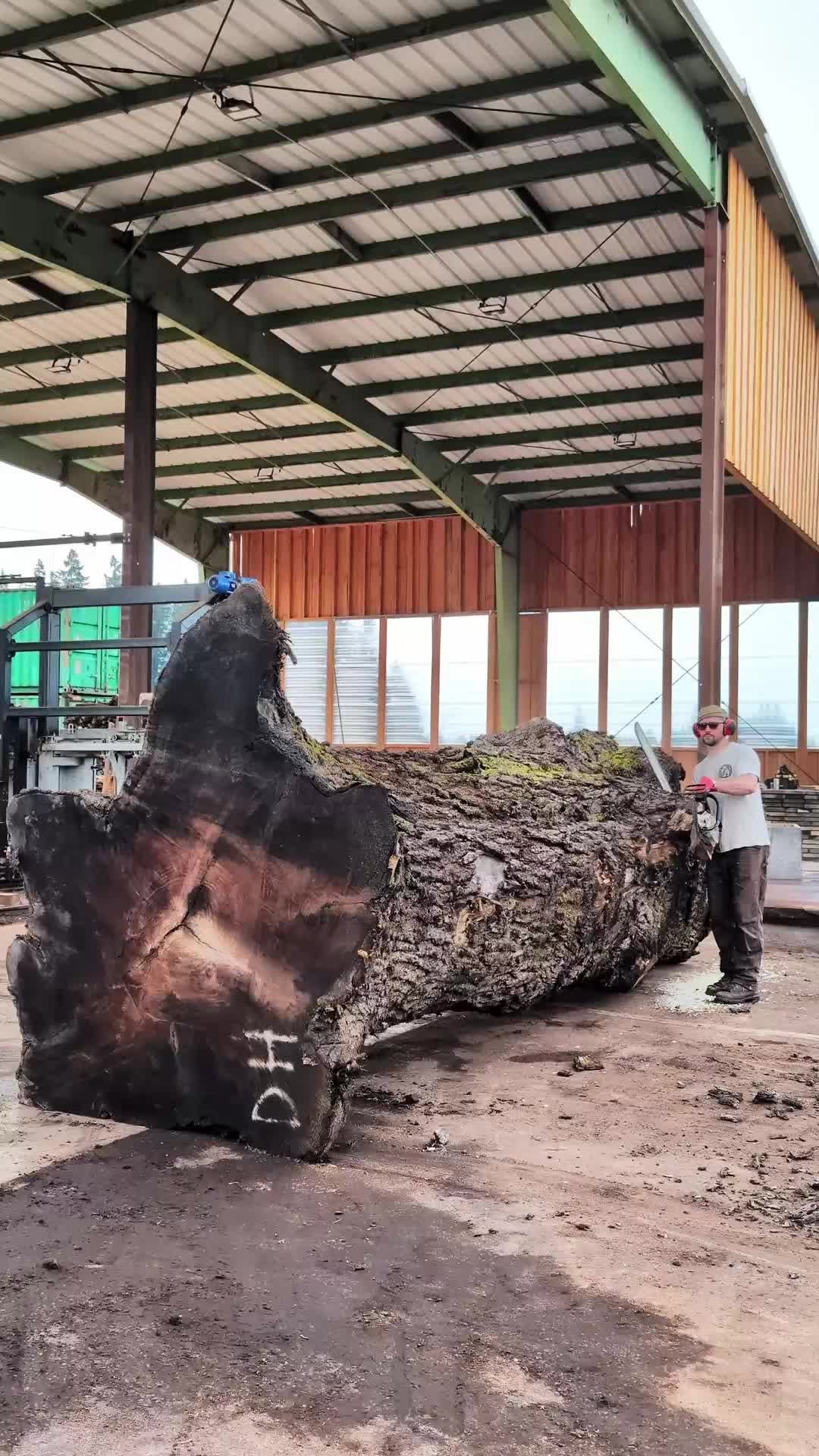
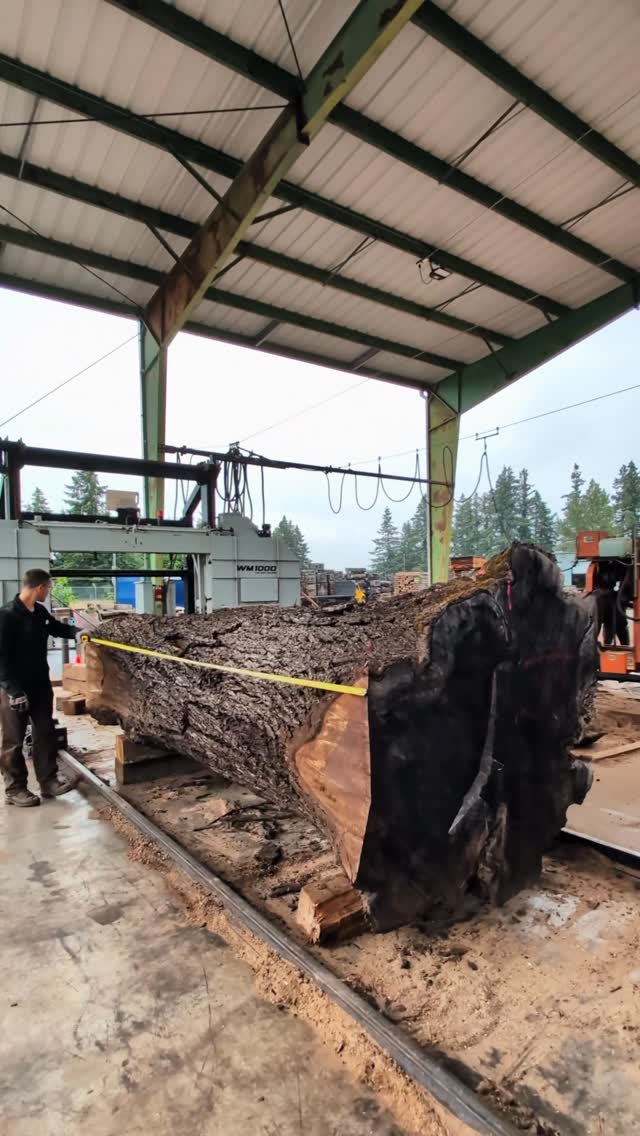
The video shows the process of turning a 16,000 pound black walnut log into slabs of wood. The creator trims the log, loads it onto a sawmill, cuts it into slabs, removes metal, pressure washes the slabs, and reveals the grain. They also discuss their commitment to sustainability by replanting a tree for every slab sold.
Post caption
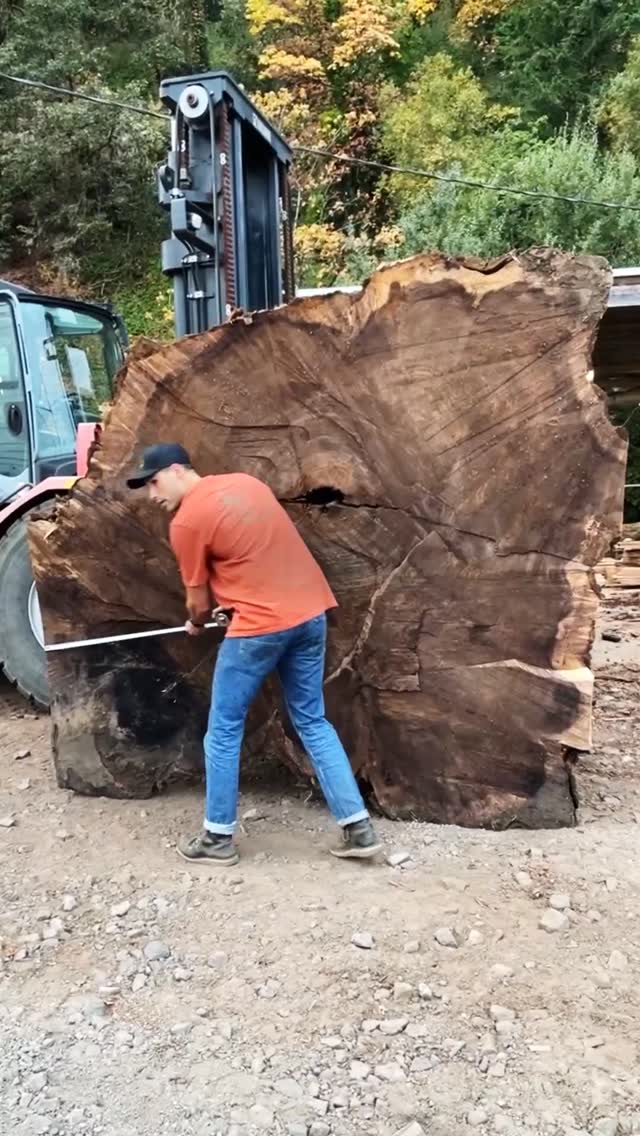
This 16,000 lb Black Walnut log is over 4 feet wide - wait 'til you see what's inside.
Did you know that almost all of our logs are from urban areas and farms? This means that the logs typically come with embedded surprises to cut through or work around. This Black Walnut log was no different!
Follow along to see what we cut next.
Transcript
Want to see how we turn a 16,000 pound black walnut log into slabs? We start by trimming off the limbs and the flare at the butt end of the log to make sure that it will fit on the sawmill. Next, we push the limits of our forklift to load the log onto the middle. This log was so heavy that we had to load one end at a time. Now it's time to fire up the mill. We put a fresh blade on for every cut. This tree was removed from a farm to make way for a housing development. We source most of our logs from urban areas and farms. Almost nothing comes from the good, so it's common for us to hit metal. Typically, we'll cut the blade free from the mill, replace the blade, do our best to cut through the metal, which can take a few tries. Then we'll pull the piece of metal from the log like we did with this snail here. While our preference is to use only dead and dying trees, sometimes trees are removed to make way for development or because they're hazardous, which is why we replant one tree for every slab sold, close to a thousand trees per year. After we pull the metal and replace the blade on the mill, we're back up and running. This is the best part, the big reveal. We lay out the slabs, pressure wash them to reveal the grain. We got 12 slabs from this log, all with wonderful heavy black marbling. Follow us to see what we cut next.