@dra.pumpin
TikTok · Skit
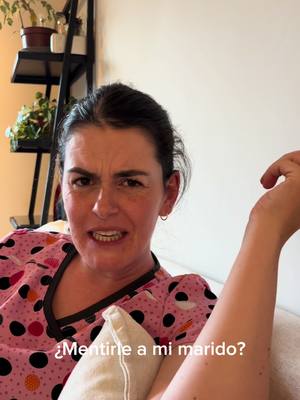
@dra.pumpin Mentirle a mi marido? Nunca… 🫥

@dra.pumpin
TikTok · Skit
@dra.pumpin Mentirle a mi marido? Nunca… 🫥
Performance
Video #13465 · Skit
[01]
The creator performs a comedic skit where she first ironically claims she never lies to her husband. This is followed by a montage of scenes where her husband asks if she has completed various tasks, and she repeatedly lies that she has, culminating in a final lie where she throws away his favorite shirt and reassures him his hair loss treatment is working wonders.
[02]
[03]
 1.2MComedic montage of husband behaviors@theesaltybrunette_ · Relatable Skit
 511.1KGirlfriend makes excuses to cancel plans@julia.dicesare · Skit
 5.6M7.5×Relatable relationship haircut reaction skit@julia.dicesare · Relatable Skit
 287.9K8.3×Ranting storytime about sister's wedding@jovkhann · Storytime
 1.1M6.2×Skit visualizing internal monologue@tylerbenderr · Relatable Skit
 401.8KWoman's 'work' is making absurd noises@veronika_iscool · Skit
 1.3M1.4×Girlfriend interrupts boyfriend's story repeatedly@veronika_iscool · Archetype Clash Comedy
 3.3MWife's manifesting vs husband's work@thomaskralow · Relatable Skit
 1MSkit about being constantly wrong.@greta.official · Relatable Skit
 138.9KMan preps for fake documentary@cslader · Skit
 485.3K3×Relatable skit about being sick in denial@chloe.longname · Relatable Skit
 1.7M1.9×Skit flips relationship gender roles@__codywest__ · Relatable Skit
[04]
[05]
What stops the scroll in the first 3 seconds
Title hook · 50%
¿Mentirle a mi marido?
Verbal hook · 45%
¿Mentirle a mi marido? no, nunca
Visual hook · 5%
A close-up of a woman making an expressive, disgusted facial expression directly at the camera.
[07]
The promise the opener makes, and how the video pays it back
Hook
The protagonist makes a direct-to-camera, sarcastic declaration of virtue, setting up an ironic premise that the audience anticipates will be immediately disproven.
[08]
The structural pattern this video runs on
Framework
The Ironic Contradiction Gauntlet
A character makes a virtuous, absolute claim about their behavior, which is then immediately and repeatedly contradicted by a series of rapid-fire scenarios. The narrative escalates from mundane contradictions to a final, emotionally resonant one that reframes the initial 'flaw' as a positive trait.
The Opening Declaration
The character establishes a false, virtuous identity by confidently denying a common flaw (e.g., "Lie to my husband? Never."). This serves as the thesis statement for the video's comedic argument.
The Mundane Lie Montage
A rapid-fire sequence of low-stakes scenarios where the character is asked about everyday tasks. In each instance, they uphold their virtuous claim verbally while their expression or the context reveals the lie, building a rhythm of comedic hypocrisy.
The Personal Stakes Escalation
The nature of the lie shifts from impersonal tasks to something of personal value to the other person. The contradiction is made explicit with a visual overlay, raising the comedic tension.
The Empathetic Twist Payoff
The final scenario presents a situation where the 'flaw' (lying) is used for a kind, empathetic, or protective reason. This resolves the comedic tension with an emotional twist, reframing the character's behavior and leaving the viewer with a positive, relatable feeling.
Mentirle a mi marido? Nunca… 🫥
contextual · beginning
¿Mentirle a mi marido?
contextual · beginning
no, nunca
contextual · beginning
Chica, ¿pagaste el permiso de circulación?
contextual · beginning
sí
contextual · beginning
Chica, ¿llamaste al gásfiter por el calefont?
contextual · middle
sí ya lo llamé
contextual · middle
Chica, le echaste bencina al auto?
contextual · middle
sí, ya está lleno
contextual · middle
Chica, pasaste a la ferreterí a a comprar los tornillos?
contextual · middle
sí
contextual · middle
ya lo hice
contextual · middle
Chica, has visto mi polera favorita?
contextual · middle
la Capel, esta que tiene un hoyito en el hombro
contextual · middle
eh creo que está en la bodega
contextual · end
Chica, tú crees que está funcionando el tratamiento para el pelo?
contextual · end
sí se nota un montón
contextual · end
en unas semanas más vas a estar con el pelo así
contextual · end
todo tupido
contextual · end
súper