Viral Hooks
Trending short videosExplaining why lawns are a scam
D

@denny_dure

Instagram · Talking Head Edit

@denny_dure The American Scam In the 1800s, grass was brought over from Europe as a status symbol of the elite — proof you were wealthy enough to waste land that didn’t feed you. By the mid-1900s, chemical giants like DuPont and Monsanto seized the opportunity. They poured millions into ads that convinced post-war America that a “perfect green lawn” was the new symbol of success. They sold us the fertilizers, the weed killers, the pesticides… and turned our neighborhoods into billion-dollar markets. And what do we get in return? No shade No food No pollinators All it did was put poison in our soil, water, pets, and us. Lawns may look innocent, but they take everything and have 0 return. Great video @newconsciousworld

View original on Instagram

The edit1 shot · 8 text
Shots Text

Performance

Views
2M
Likes
113K
Comments
1.3K
Engagement
5.8%
Outlier
16.4×

Video #16311 · Talking Head Edit

Explaining why lawns are a scamfrom @denny_dure

[01]

Overview

The creator stitches a video questioning the existence of lawns, then shares his personal journey from mowing lawns to realizing their negative impact after traveling abroad. He presents a detailed breakdown of the environmental, financial, and health costs of lawn maintenance, using statistics and B-roll as evidence. He concludes by showing a government fine for long grass, highlighting the irony of the situation.

[02]

Simple outline

  1. 1State controversial thesis
  2. 2Share personal discovery story
  3. 3Present rapid-fire evidence
  4. 4Reveal ironic personal consequence

[03]

Related videos

[04]

Classification

Concepts
BreakdownOrigin StoryStrange but True
Elements
B-Roll CutawayText OverlayImage Overlay

[05]

Hook analysis

What stops the scroll in the first 3 seconds

Title hook · 45%

YOU WERE NEVER What Lawns Took Away From Us

Verbal hook · 50%

You were never supposed to have a lawn in front of your house. Did you know that?

Visual hook · 5%

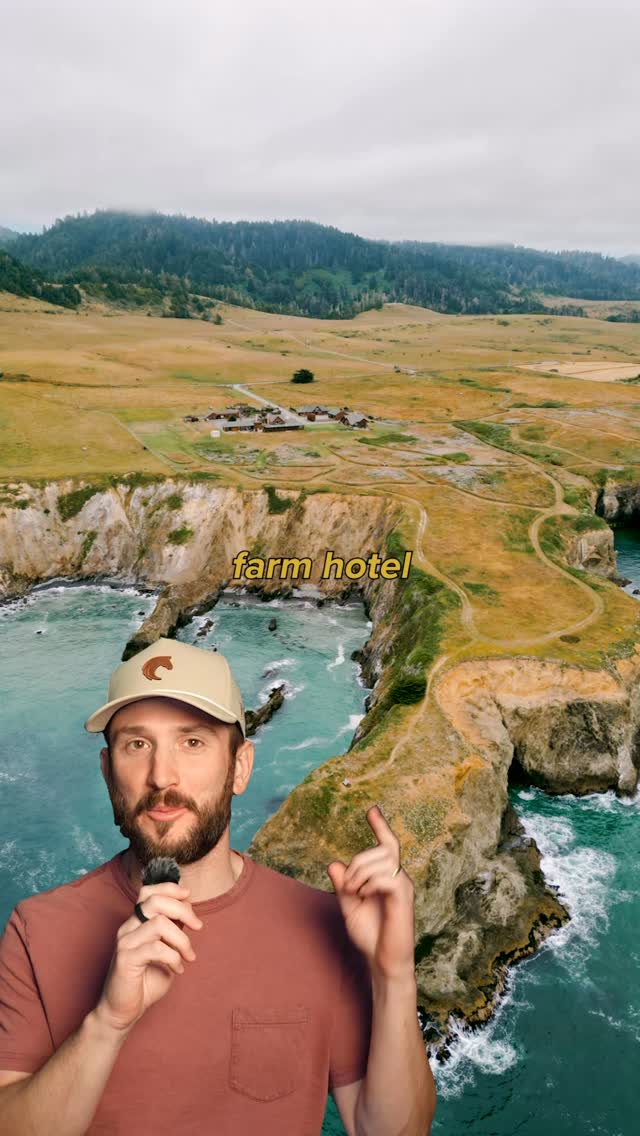
A split-screen format showing a creator reacting to another creator's provocative statement, immediately creating curiosity about their connection and the topic.

[06]

Hook template

Steal this for your own video

You were never supposed to have a [common fixture] in front of your [space]. Did you know that?

  • — You were never supposed to have a tipping culture at your restaurant. Did you know that?
  • — You were never supposed to have a credit score determining your future. Did you know that?
  • — You were never supposed to have a inbox zero expectation at your job. Did you know that?

[07]

Hook and payoff

The promise the opener makes, and how the video pays it back

Hook

A provocative, counter-intuitive claim that challenges a universally accepted belief, framing it as a hidden truth or 'scam' to generate immediate curiosity.

Payoff

The Ironic Proof. The narrator presents a final piece of personal evidence (a document, a photo, a short story) that demonstrates the absurdity or hypocrisy of the system, serving as a final, frustrating punchline that validates the entire argument.

[08]

Narrative framework

The structural pattern this video runs on

Framework

The Conspiracy Unveiled

To deconstruct a commonly accepted norm by framing it as a harmful 'scam,' using a personal journey of discovery to introduce a barrage of damning evidence, and concluding with an ironic, real-world consequence that proves the system's absurdity.

  1. 1

    The 'I Was Blind' Origin

    The narrator establishes credibility and relatability by sharing a personal story of how they were once a believer in or participant in the very system they are now critiquing.

  2. 2

    The Catalyst Event

    The narrator describes a specific, disruptive life change that forced them to see the world from a new perspective, breaking them out of their previous mindset.

  3. 3

    The 'Red Pill' Epiphany

    The narrator shares the 'aha' moment where they realized the common norm was flawed, often by observing a superior or more logical alternative in a new environment.

  4. 4

    The Rapid-Fire Indictment

    A fast-paced montage of data, statistics, and facts presented with on-screen text highlights to build an overwhelming logical case against the established norm.

  5. 5

    The Cost-Benefit Verdict

    A clear summary of what the 'scam' takes from people (e.g., time, money, resources, health) versus the little or nothing it provides in return, framing it as a net negative.

Themes

  • Anti-consumerism
  • Environmentalism
  • Questioning cultural norms
  • Self-sufficiency

Techniques

  • Personal storytelling
  • Data presentation
  • Stitching
  • Ironic framing

Trends

  • Anti-lawn movement
  • Conspiracy theory framing

Post caption

The American Scam In the 1800s, grass was brought over from Europe as a status symbol of the elite — proof you were wealthy enough to waste land that didn’t feed you. By the mid-1900s, chemical giants like DuPont and Monsanto seized the opportunity. They poured millions into ads that convinced post-war America that a “perfect green lawn” was the new symbol of success. They sold us the fertilizers, the weed killers, the pesticides… and turned our neighborhoods into billion-dollar markets. And what do we get in return? No shade No food No pollinators All it did was put poison in our soil, water, pets, and us. Lawns may look innocent, but they take everything and have 0 return. Great video @newconsciousworld

Text overlays

  • title · beginning

    What Lawns Took Away From Us

  • informational · middle

    On average, a homeowner will mow more than 1,000 times throughout their lives — that's 7.8 hours per year, amounting to 16 days or 384 hours of their life.

  • informational · middle

    Mowers consume 1.2 billion gallons of gasoline annually, about 1% of U.S. motor gasoline consumption.

  • informational · middle

    Nationwide, landscape irrigation is estimated to account for nearly one-third of all residential water use, totaling nearly 9 billion gallons per day.

  • informational · middle

    Americans use more than seventy million pounds of pesticide annually to maintain their lawns. That's ten times more poison per acre than all of America's farmers use on their crops.

  • informational · middle

    According to a 2013 study, Scottish terriers exposed to herbicide-treated lawns had a greater risk of cancer—up to seven times higher.

  • informational · middle

    Vox Populist: Is Your Lush Lawn Killing Mother Nature?

  • informational · end

    CITY OF LOS ANGELES FIRE DEPARTMENT NOTICE OF NONCOMPLIANCE

Transcript

You were never supposed to have a lawn in front of your worse. Did you know that? You know, if I never left my hometown, I'm not sure I would have ever known about this scam. See, I used to work for somebody else and mow rank ironically. Pretty well too, I might add. But I always wanted to be my own best. So eventually, I left my own town to start a business, and that was going great until another scale. COVID. That one forced me to leave the country. And one of the very first things I no, very few yards. In fact, the people where I lived were literally feeding themselves for free off the land. Then I became a conspiracy theorist. You see, a big yard and a white picket fence was sold to us at the American dream, and it's arguably one of the worst things for humanity. Not only do we have to buy all of our food now, but the average American spends about sixteen days of their life on their lawn. And it's not just time that it's costing us. Lawnmowers alone use over 1,200,000,000 gallons of gas every year, not to mention the pollutants. The average yard uses more than a swimming pool worth of water annually, and we use 10 times more chemicals per acre on lawns than farmers do on their crops. And we wonder why all of our dogs get cancer. Turfgrass is one of the most chemically treated plants in The US, and what does it do? Look good? It provides no shade, bears no fruit, attracts no pollinators, and surely isn't improving the quality of the soil. It takes everything, water, chemicals, money, and time, and gives nothing back. Oh, and when it gets too long, your HOA or city can fine you. And this one in my case is pretty ironic too because here in California, apparently it's a fire hazard. But the government didn't do anything to prevent the fires back in January.


Explaining why lawns are a scam | Viral Hooks