@wacomo
Instagram · Vlog
@wacomo comment or I’ll eat you @gawx_art

@wacomo
Instagram · Vlog
@wacomo comment or I’ll eat you @gawx_art
Performance
Video #16786 · Vlog
[01]
The narrator profiles his friend Gaux, defining him as an 'autodidact' or self-taught person. He illustrates this by chronicling Gaux's journey of learning new skills out of necessity: first mastering drawing through practice, then teaching himself video production by experimenting, and finally learning cinematic techniques by studying famous directors online. The video concludes by emphasizing Gaux's resourcefulness and his role as a constant source of inspiration.
[02]
[03]
 155.3K2.6×Passionate monologue about watching tutorials@rexxliferaj · Cultural Rant
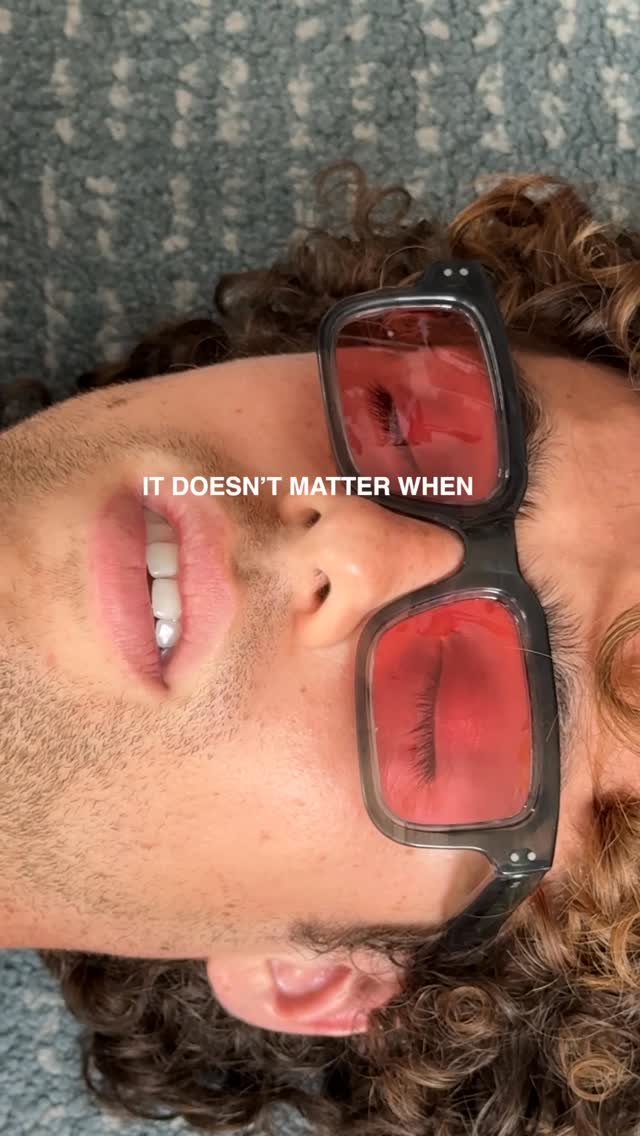 740.2KExplaining an artist's life laws@wacomo · Breakdown
 70.1KVoiceover personal growth journey montage@coltinhill2 · Vulnerable Monologue
 151.4K9.5×Reflective voiceover on college memories@officialbgsu · Journey Documentation
 190.1K2.1×Talking head mindset shift story@therealdanielpark · Anecdotal Philosophy
 212.6KCreator explains his content's purpose@maisonrickie · Vulnerable Monologue
 6.8M426.1×Philosophical monologue over aesthetic B-roll@wearecalamity_ · Brand Manifesto
 354K1.1×Guide to filming yourself in public@omgadrian · Motivational Mantra
 422.9K138.3×Ironic monologue on competitive drinking.@spacecadettrev · Hot Take
 344.8KPlot twist story about consistency@robertmckeaveney · Anecdotal Philosophy
 282.5K23.5×Satirical monologue on gifted kid burnout@couldbaret · Cultural Rant
 16.2M18×City boy uses AI to go camping@wacomo · Journey Documentation
[04]
[05]
What stops the scroll in the first 3 seconds
Title hook · 15%
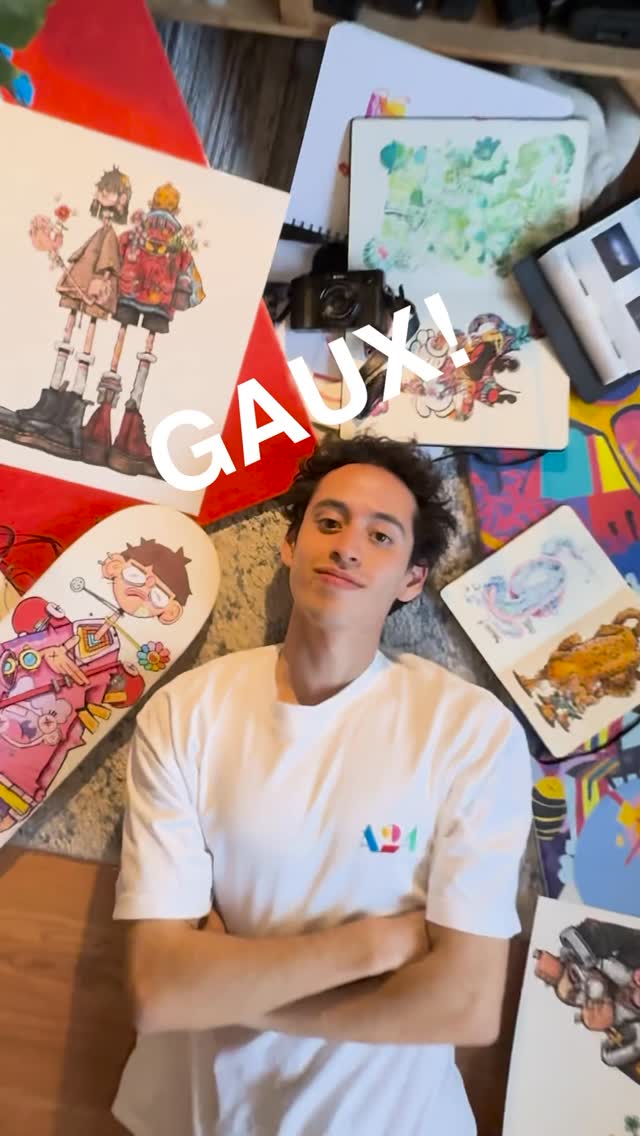
GAUX!
Verbal hook · 20%
This is Gaux.
Visual hook · 65%
A dynamic, spinning top-down shot of a person lying on the floor surrounded by colorful, vibrant artwork, creating immediate visual interest and movement.
[06]
Steal this for your own video
Open on a of surrounded by , creating instant intrigue before a single word is spoken.
[07]
The promise the opener makes, and how the video pays it back
Hook
Immediately introduces a subject by name and labels them with an intriguing, defining characteristic ('autodidact') that piques curiosity and sets the theme.
Payoff
Delivers a powerful, conclusive statement that summarizes the subject's enduring nature ('never stops learning') and their personal, inspirational impact on the narrator, providing a strong emotional resolution.
[08]
The structural pattern this video runs on
Framework
The Aspirational Case Study
To showcase an individual's admirable core trait by presenting a series of escalating challenges they overcame, culminating in an inspirational message about their character.
The Defining Thesis
Establishes the video's central theme by introducing a key term or concept embodied by the subject, then immediately provides a clear, simple definition to ensure audience comprehension.
The Core Creative Dilemma
Frames the subject's primary, relatable challenge (e.g., having ideas but lacking execution skills) that they must repeatedly overcome, setting up the narrative's recurring conflict.
The Foundational Proof
Presents the first and most accessible case study. It follows a mini-arc: state the desire, identify the skill gap, show the learning process, and reveal the successful outcome, validating the initial thesis.
The Escalation Proof
Presents a second, more complex case study in a new domain. This demonstrates that the subject's core quality is repeatable and adaptable, building momentum and viewer investment.
The Aspirational Proof
Presents the final and most ambitious case study. The stakes are raised significantly (e.g., comparing to masters of a craft, highlighting huge resource gaps), showcasing the subject's ultimate mastery and the full potential of their defining quality.
The Unifying Philosophy
Abstracts the subject's pattern of behavior into a core principle or motivation (e.g., 'learns out of necessity'). This beat explains the 'why' behind their actions, elevating the narrative from a simple story to an inspiring lesson.
comment or I’ll eat you @gawx_art
title · beginning
GAUX!
title · beginning
AUTODIDACT
title · middle
HE STUDIES
informational · middle
1000
informational · middle
$62,000,000
informational · end
CHIVO
informational · end
KUBRICK'S
informational · end
IÑÁRRITU'S
informational · end
WES ANDERSON'S
contextual · end
gaux never stops learning
This is Gaux. Gaux has been a great friend of mine for a couple years no, and he's the definition of an autodidact. If you don't know what that means, basically, it's someone who has the capacity to teach themselves something new without the need of a teacher or an institution. Gaux is one of the most creative people I know, but his head is full of my ears. But a lot of tier, he doesn't know how to bake. So best studies. For example, in middle school, he was obsessed with drawings of Spongebob and the gorillas, but he didn't know how to draw. So he asked his friend Christopher to help him. And after doing it thousands of times, he got really good at it. Then he got obsessed with some art YouTubers, but he didn't know how to make videos, so he started experimenting with his dad's phone and he learned. His next obsession was cinema, but he didn't know how to make movies, and he was about $62,000,000 short. Better with tutorials on the Internet, he learned how to handle a camera like Chiyo, how to make Kubrick's fisheye lens, achieve Inarritu's colors, and nail Wes Anderson's symmetry. Gautz learns out of necessity, and when he doesn't have the right gear, he just builds his own tools. Gautz never stops learning, and he'll never stop inspiring me.