@drewsxvision
Instagram · Speaker address

@drewsxvision High volume foods make your shred a whole lot easier

@drewsxvision
Instagram · Speaker address
@drewsxvision High volume foods make your shred a whole lot easier
Performance
Video #18557 · Speaker address
[01]
The creator visually demonstrates the concept of calorie density by first showing large volumes of lettuce, cucumber, spinach, and celery, totaling 155 calories. He then contrasts this with a small spoonful of peanut butter, which also contains 155 calories, to explain that choosing high-volume, low-calorie foods is crucial for staying full and making a calorie deficit sustainable for fat loss.
[02]
[03]
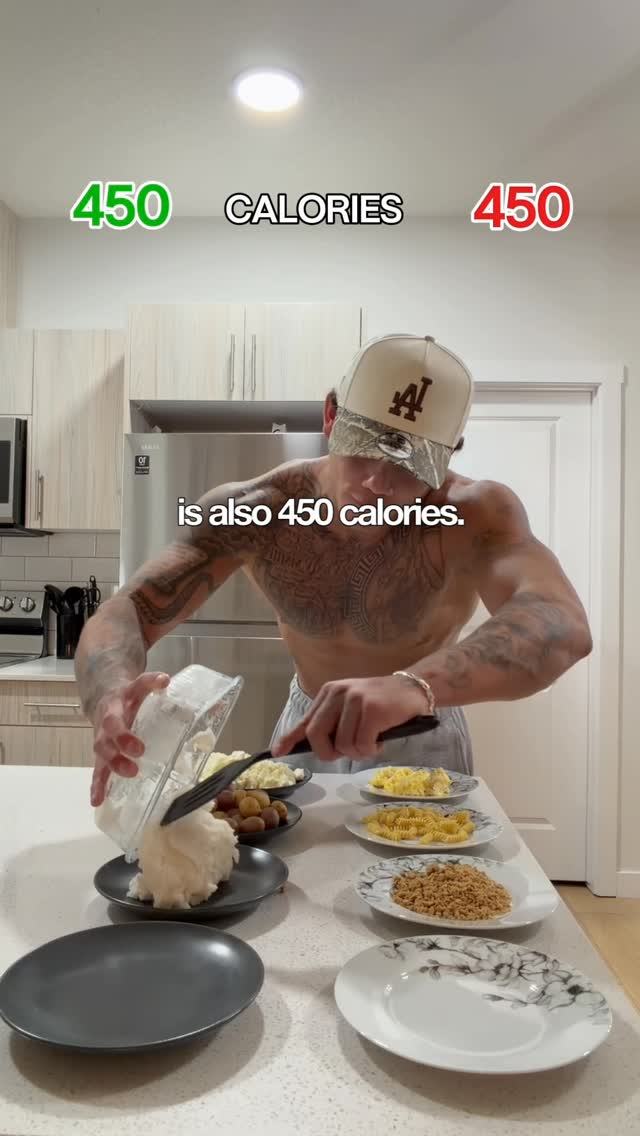 421.5K38×Visual food comparison for fat loss@drewsxvision · Good vs Bad
 114.5K6.9×Comparing food calories with visuals@reecebrah · Good vs Bad
 136.2K14.6×Explaining why calories are different.@reecebrah · Breakdown
 664.6K136.9×Car yap fast food review@smaller_sam.pcos · Product Promo
 1.2M56.9×Rapid fire good bad comparison@rello_2xx · Good vs Bad
 148.4KCreator shares high-fiber meal plan@alanlinplus · Value Vlog
 1.8M35.4×Quick healthy recipe assembly montage@macro_habits · Tutorial / How To
 1.6M457.9×Creator shares unpopular diet advice@karlkarma · Hot Take
 241.3KCreator refutes social media comments@higherupwellness · Breakdown
 168.8KA day of high-fiber eating@alanlinplus · Day In The Life
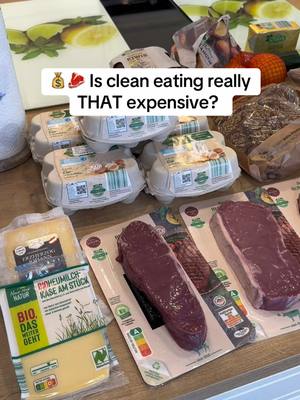 151K2.2×Grocery haul cost for clean eating@timo.henrich · Value Vlog
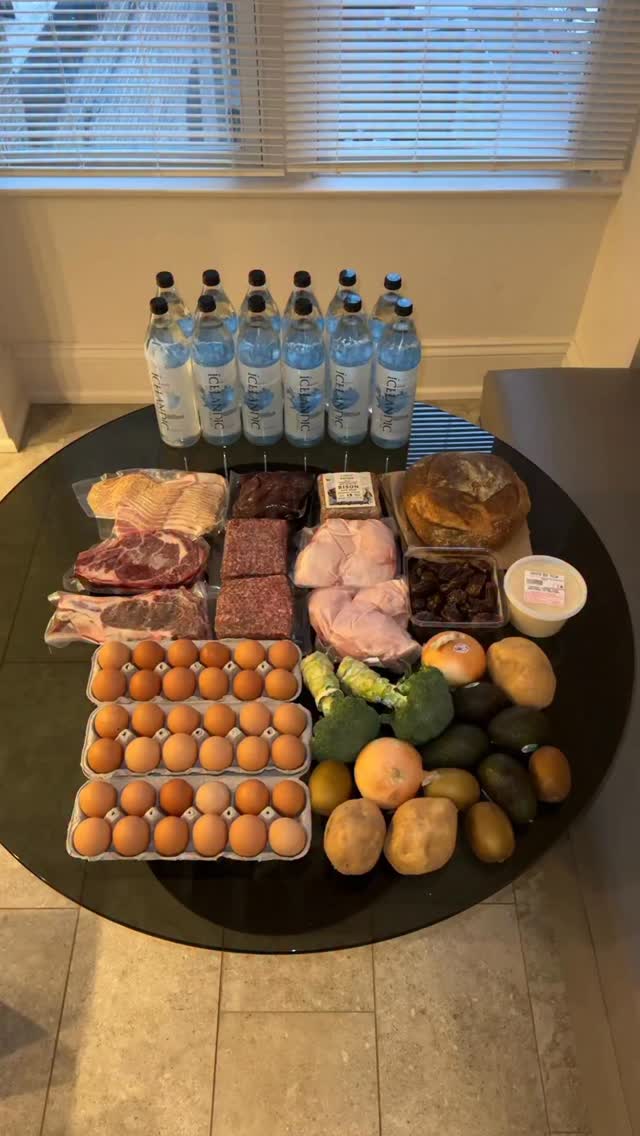 3.9M4×Creator itemizes weekly food haul@jared1s · Lifestyle Showcase
[04]
[05]
What stops the scroll in the first 3 seconds
Title hook · 45%
35
Verbal hook · 35%
This is 35 calories of lettuce.
Visual hook · 20%
A muscular, shirtless man in a kitchen actively portioning a large pile of green lettuce onto a plate.
[07]
The promise the opener makes, and how the video pays it back
Hook
Immediately present a large quantity of a 'low-value' item and quantify its value to create instant curiosity.
Payoff
Conclude with a memorable, actionable principle that reframes the viewer's approach to the topic, making the lesson feel both sustainable and empowering.
[08]
The structural pattern this video runs on
Framework
The Value Counterpoint
Visually demonstrating a surprising equivalence between a large quantity of one thing and a small quantity of another to reveal a hidden principle or strategic advantage.
The Volume Build
Sequentially present multiple examples of a 'low-cost' or 'high-volume' category, quantifying each one to build a large visual aggregate.
The Aggregate Reveal
State the surprisingly low total cost/value of the entire accumulated volume, providing a mini-payoff.
The Value Counterpoint
Introduce a single, visually tiny example from a 'high-cost' or 'low-volume' category and reveal it has the exact same total value as the large aggregate, creating a shocking visual contrast and the video's core 'aha' moment.
The Foundational Agreement
Acknowledge a commonly held belief or fundamental rule related to the topic to build credibility and disarm skeptics before presenting the nuanced argument.
The Core Argument
State the central thesis, explaining that *how* one operates within the fundamental rule is the key to success.
The Positive Ramification
Detail the tangible benefits and positive outcomes of applying the core argument (e.g., greater satisfaction, better control).
The Negative Ramification
Detail the negative consequences of ignoring the core argument by choosing the 'low-volume' option, reinforcing the thesis through contrast.
High volume foods make your shred a whole lot easier
informational · beginning
35 OF LETTUCE
informational · beginning
35 OF CUCUMBERS
informational · beginning
50 SPINACH
informational · beginning
35 OF CELERY
informational · middle
ALL OF THIS IS ONLY 155 CALORIES
title · middle
BUT YOU KNOW WHAT ELSE IS 155 CALORIES?
contextual · middle
PEANUT
informational · middle
HIGH-VOLUME FOODS
informational · end
EATING DEFICIT SUSTAINABLE
This is 35 calories of lettuce. This is 35 calories of cucumbers, 50 calories of spinach, and this is 35 calories of celery. All of this is only a 155 calories, but you know what else is a 155 calories? Just this little bit of peanut butter. So, yes, calorie deficit is the only way to lose fat, but the food choices within that deficit change everything. You probably won't sit down and want to eat all of these, but it is just a visual representation of when your diet is built around high volume, low calorie, nutrient dense foods that you will get to eat more food, stay fuller longer, and control those cravings worse blowing the same calories on foods that won't fill you up and have you back in the kitchen thirty minutes later. It's about eating smarter no the deficit is actually sustainable.