Viral Hooks
Trending short videosDesigner explains carabiner creation process
C

@craighillcompany

Instagram · Talking Head Edit

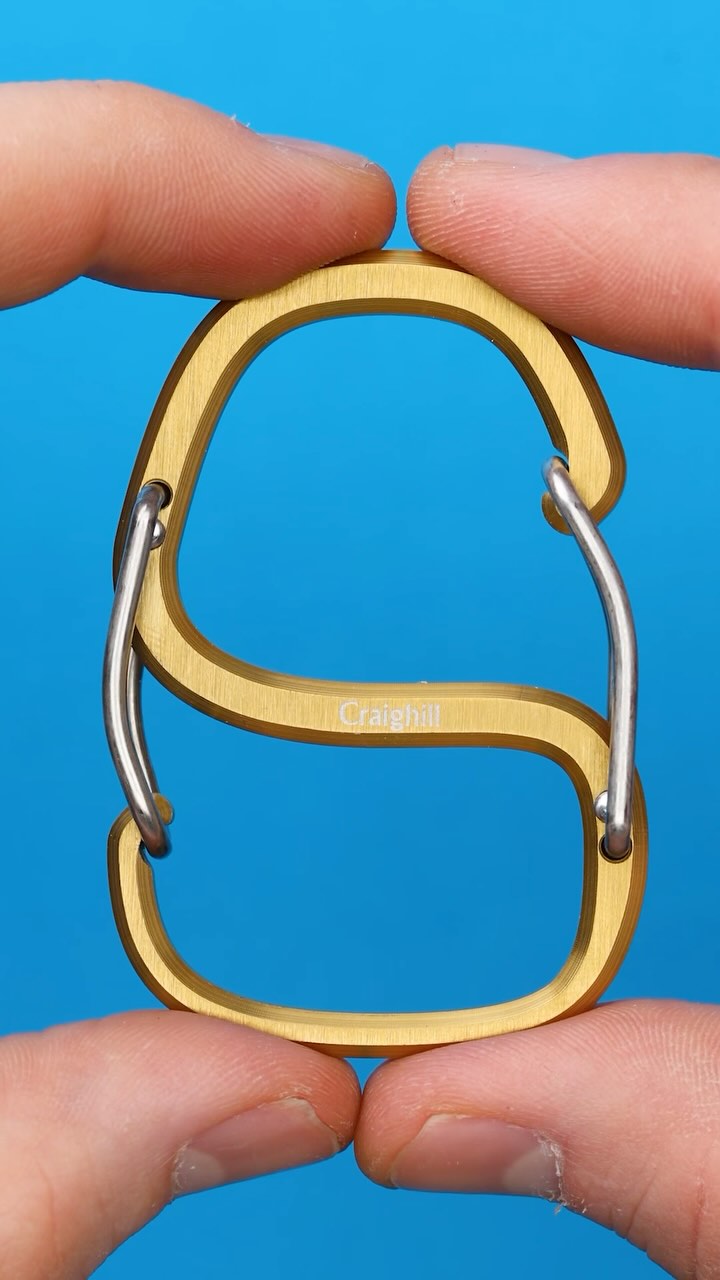
@craighillcompany Without a goal, you can't score. We knew what we wanted: an excellent carabiner designed specifically for your keys. Having this clear idea in mind made all the decisions along the way easier to handle. Often times, our design process isn't this straightforward. We usually figure out and change what we want as we go. The Coachwhip Carabiner is a rare case where we knew what we wanted and got it. The result is a design that serves its key carrying purpose down to every little decision. We love this little guy and hope you do too.

View original on Instagram

The edit1 shot · 0 text
Shots1:36

Performance

Views
1.8M
Likes
32.3K
Comments
288
Engagement
1.8%
Length · 28 Mar 2025
1:36

Video #19436 · Talking Head Edit

Designer explains carabiner creation processfrom @craighillcompany

[01]

Overview

A product designer walks viewers through the three critical decisions made during the development of the Coachwhip Carabiner. He uses large-scale physical prototypes to demonstrate the logic behind choosing a wire gate, a double-gate structure, and a thinned body design, ultimately showing how these choices solve specific user problems.

[02]

Simple outline

  1. 1Present component dilemma
  2. 2Explain superior choice
  3. 3Identify functional problem
  4. 4Reveal structural solution
  5. 5Showcase final result

[03]

Related videos

[04]

Classification

Concepts
Origin StoryBehind The ScenesBreakdown
Elements
Physical Product DemonstrationB-Roll CutawayJump Cut
Account

[05]

Hook analysis

What stops the scroll in the first 3 seconds

Verbal hook · 45%

The first decision that we had to make when we were designing a carabiner specifically for keys was what type of gate to use.

Visual hook · 55%

Hands manipulating a large, white, 3D-printed mechanical prototype block that expands and contracts to demonstrate a mechanism.

[07]

Hook and payoff

The promise the opener makes, and how the video pays it back

Hook

The 'First Decision' Anchor: Bypassing all introductions to drop the viewer immediately into a high-stakes design choice, creating instant intellectual engagement.

Payoff

The Philosophy Validation: Showing the finished product in use while summarizing the core lesson—that a clear objective makes complex decision-making simple.

[08]

Narrative framework

The structural pattern this video runs on

Framework

The Design Logic Deconstruction

Reverse-engineering a product's value by walking the viewer through the specific 'A vs. B' decisions that shaped it, transforming a simple object into a series of solved problems.

  1. 1

    The Counter-Intuitive Selection

    Comparing a 'standard' option (solid gate) to a 'superior' option (wire gate). The narrator explains why the common perception is wrong, establishing technical authority.

  2. 2

    The Architecture Split

    Moving from components to overall structure. The narrator presents a binary choice (single vs. double opening) and justifies the deviation from the norm based on specific use-case logic.

  3. 3

    The Friction Removal

    Identifying a universal user pain point (split rings) and revealing a novel manufacturing solution (variable thickness) that eliminates it. This serves as the 'climax' of the design process.

Themes

  • Problem solving
  • Design philosophy
  • Transparency
  • Quality

Techniques

  • Prototype demonstration
  • Comparative analysis
  • Close-up photography

Trends

  • Behind the scenes design
  • Transparent manufacturing

Post caption

Without a goal, you can't score. We knew what we wanted: an excellent carabiner designed specifically for your keys. Having this clear idea in mind made all the decisions along the way easier to handle. Often times, our design process isn't this straightforward. We usually figure out and change what we want as we go. The Coachwhip Carabiner is a rare case where we knew what we wanted and got it. The result is a design that serves its key carrying purpose down to every little decision. We love this little guy and hope you do too.

Transcript

First decision that we had to make when we were designing a carabiner specifically for keys was what type of gate to use. This, which is a solid gate, looks very durable and strong, but typically is actually not as the alternate, which is a wire gate. The gate and the spring are the same thing. They're lighter weight and typically more durable and stronger. We are using a wire gate. Once we determined that, there was a second question, which is, do we have a single opening and a single link? The The alternative was having a double gate. It made a lot more sense to have a separate opening for your keys and one opening for the lead for your bag strap. We were like, we know what direction we're heading. We have the constraints. One thing that we hadn't really come to terms with was this guy, the split ring connector. That brought us the third decision. Do we keep the kind of standard carabiner body as pretty chunky and figure out a way to connect keys to it? Or thinning the whole body thin enough that you good slide keys directly on and off of it, and so you wouldn't need a split ring. What we came to was why don't we just do that? Keep it robust and beefy on top and then just spin it to that smaller diameter and best where the keys go on and off. Even for something as simple as a carabiner, there's countless different ways you could construct it and design it and decisions to be made. When you have this clear stated objective, an excellent carabiner for your keys, it makes the decision process so much more straightforward along the way. Which decision, which option was gonna advance us closer to that good.