Viral Hooks
Trending short videosTelling a dark historical story
V

@vicesports

Instagram · Talking Head Edit

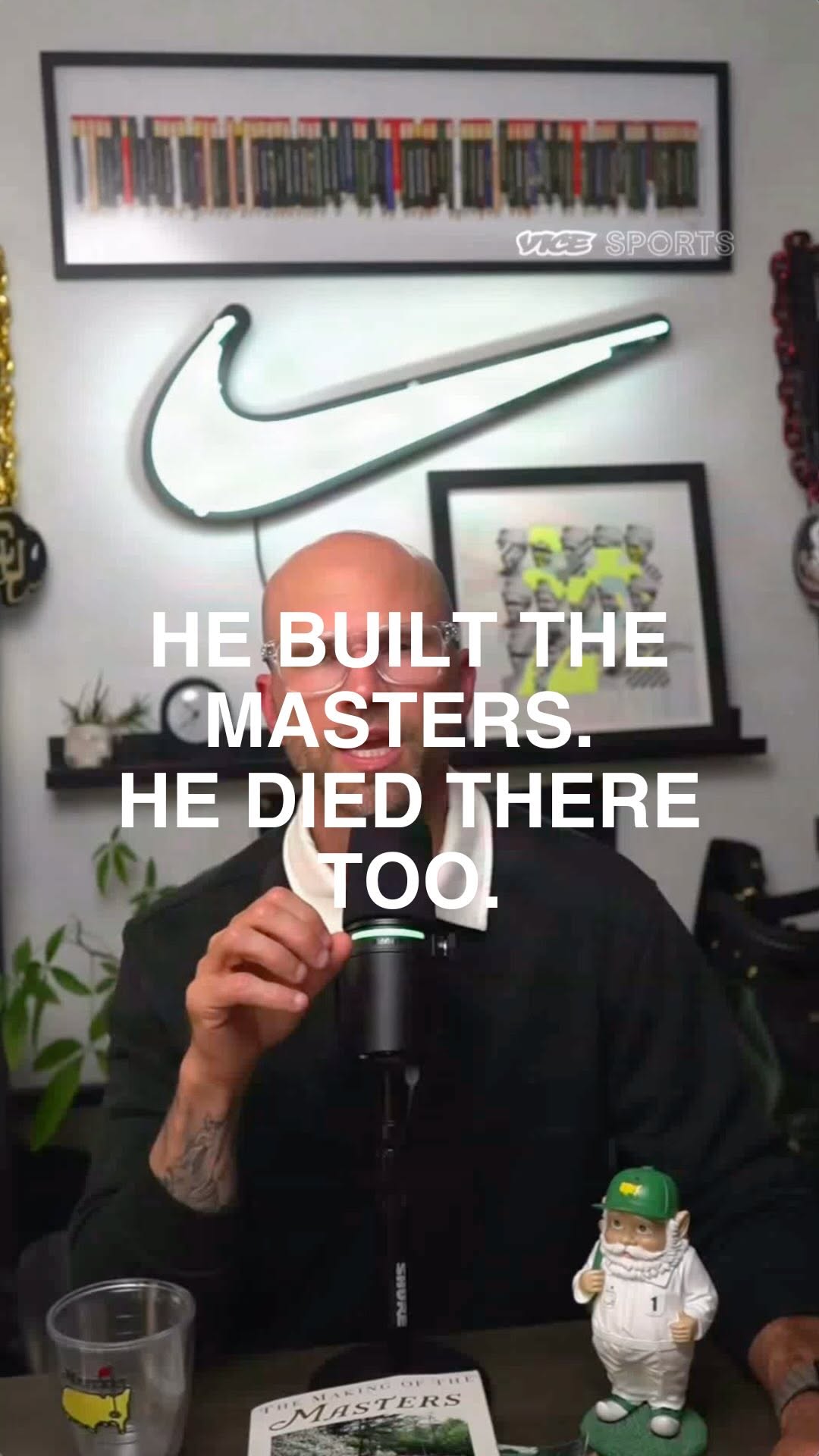
@vicesports Do you know the secret history of The Masters’ co founder? It starts to make sense when you read the full history of Clifford Roberts. The man who meticulously controlled the legendary sporting event always kept control… even at the end of his life. #TheMasters

View original on Instagram

The edit1 shot · 1 text
Shots Text1:54

Performance

Views
2.7M
Likes
138.2K
Comments
880
Engagement
5.2%
Outlier
200.4×
Length · 15 Apr 2026
1:54

Video #24392 · Talking Head Edit

Telling a dark historical storyfrom @vicesports

[01]

Overview

The creator tells the tragic and lesser-known story of Clifford Roberts, the co-founder of The Masters. He begins with the shocking fact of Roberts' suicide on the course, then delves into his traumatic childhood, including his parents' suicides and financial instability. The creator explains how these experiences shaped Roberts' desire for control, which he channeled into creating Augusta National with Bobby Jones, treating it as the home he never had, and meticulously running The Masters for 40 years before ending his life on his own terms when his health declined.

[02]

Simple outline

  1. 1State shocking, unknown fact
  2. 2Reveal deep personal trauma
  3. 3Connect trauma to life's work
  4. 4Describe the loss of control
  5. 5Reframe the end as control

[03]

Related videos

[04]

Classification

Concepts
Origin StoryStrange but True
Elements
B-Roll CutawayPicture-in-Picture

[05]

Hook analysis

What stops the scroll in the first 3 seconds

Verbal hook · 85%

Did you know the co-founder of the Masters took his own life on the course in the middle of the night with a revolver at the place that he had built and loved the most?

Visual hook · 15%

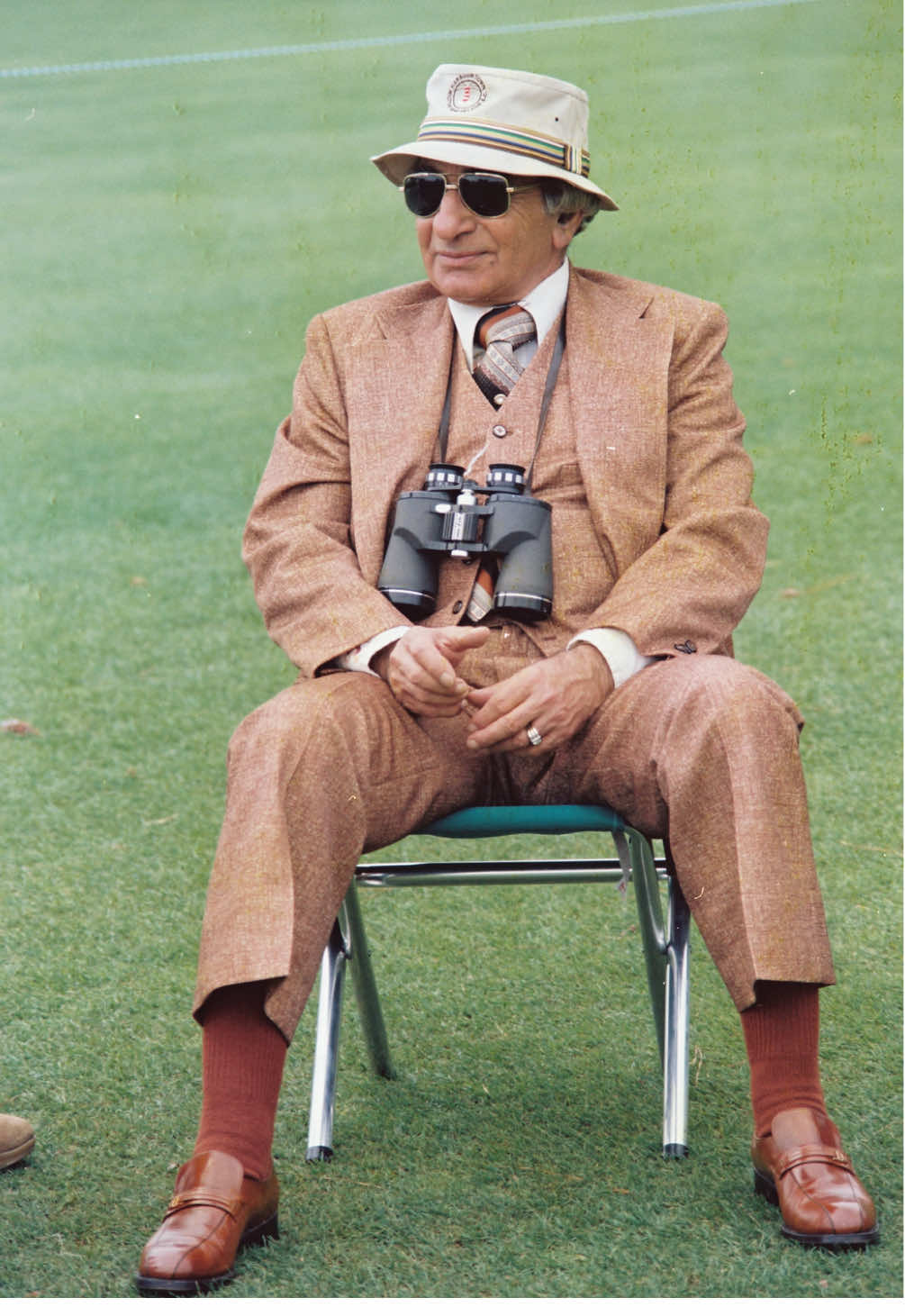
The video opens with a split-screen effect: the speaker is on the bottom half of the screen, while the top half displays a picture-in-picture style image of the subject, Clifford Roberts, at The Masters.

[06]

Hook template

Steal this for your own video

Did you know [historical figure] [shocking or tragic action] at the very [place or thing] they [devoted their life to building]?

  • — Did you know the inventor of the Ferris wheel was shot dead in the street just months after the very attraction that made him famous?
  • — Did you know the founder of Disneyland never lived to see the opening of the very park he spent his final years obsessing over?
  • — Did you know the architect of the most visited library in the world died penniless, never once setting foot inside the very building that immortalized his name?

[07]

Hook and payoff

The promise the opener makes, and how the video pays it back

Hook

The Shocking Juxtaposition. Present a dark, counter-intuitive, and shocking fact about a famous person, place, or creation. This immediately creates a knowledge gap by contrasting a pristine public image with a tragic private reality, forcing the viewer to ask 'Why?'

Payoff

The Insider's Coda. Conclude with a little-known fact or a piece of 'secret' legacy information related to the story. This rewards the viewer for their attention, makes them feel like an insider, and provides a shareable piece of trivia.

[08]

Narrative framework

The structural pattern this video runs on

Framework

The Tragic Architect Blueprint

Reveal a shocking, tragic end to a well-known figure's life, then re-contextualize their entire life's work as a psychological response to a deep-seated trauma, ultimately framing their tragic end as a final, logical act of control.

  1. 1

    The Legendary Context

    Briefly establish the subject's primary achievement or claim to fame. This grounds the story, raises the stakes, and makes the subsequent revelations more impactful.

  2. 2

    The Traumatic Catalyst

    Uncover the subject's foundational trauma. Systematically detail a series of early-life hardships or tragedies that shaped their core psychology and lifelong motivations.

  3. 3

    The Creation as Compensation

    Frame the subject's main life's work or creation not just as an achievement, but as a direct psychological compensation for their early trauma—an obsessive attempt to build the control or stability they never had.

  4. 4

    The Inevitable Unraveling

    Introduce a late-life conflict or decline (e.g., health, fortune) that threatens to destroy the very control the subject spent their entire life building, creating the final narrative tension.

  5. 5

    The Final Assertion of Will

    Detail the subject's final actions, framing them not as a surrender to circumstances, but as a meticulous, deliberate, and final act of exercising control, bringing their psychological journey to a logical, albeit tragic, conclusion.

Themes

  • Tragedy
  • Mental Health
  • Control
  • Legacy

Techniques

  • Biographical Storytelling
  • Historical Narrative

Trends

  • Dark History

Post caption

Do you know the secret history of The Masters’ co founder? It starts to make sense when you read the full history of Clifford Roberts. The man who meticulously controlled the legendary sporting event always kept control… even at the end of his life. #TheMasters

Text overlays

  • branding · throughout

    VICE SPORTS

Transcript

You know the cofounder of the Better took his own life on the course in the middle of the night with a revolver at the place that he had built and loved the worst? He built Augusta National with Bobby Jones, who was the most famous amateur player in golf at the time. But Clifford Roberts grew up with nothing. Poverty, instability, and no roots. His father was erratic and moved the family all over and then walked in front of a train to take his own life. His mother suffered from any ailments as well and eventually walked outside in the middle of the night and took her own life, leaving an apology note to each of her children. At 16, Roberts accidentally knocked a lamp over and burned his family's house down, causing them great stress in an already unstable time. He got drafted into the army in 1918 at the end of World War one, and his basic training was was in Augusta, Georgia, the first place that he fell in love. Later, he became a Wall Street broker. The market would eventually crash, and we would be entering the Great Depression. But he met Bobby Jones, and they dreamed up building a course in Augusta, Georgia. But for Roberts, this was never really about the prestige. It became a lot about belonging, and it became the home that he never really had. And the Better was the one thing he could really control. He spent much of his adult life exercising that control to near perfection, building one of the best golf tournaments of all tier, and arguably the best sporting event in the world. He did so for forty years, but only his health started declining. He had a stroke, and he started showing early signs of dementia. So after meeting with doctors, he flew to Augusta and made a decision. He got a haircut. He ate his favorite meal. He got some new pajamas. He wrote a note of an apology and included that in his pocket along with his medical records to show that he still had agency over his health. And right about 3AM, overlooking the place that he loved the most, he chose the place, He chose the moment. He exercised that will one more time. The masters has never officially recognized how he died, but the next time you go to a master's party, you can win the trivia contest by saying