Highlighting a communication gap between two groups by defining the 'correct' nuanced meaning for one group and then showing the chaotic, comedic results when the other group uses it 'incorrectly' without that nuance.
- 1
The In-Group Declaration
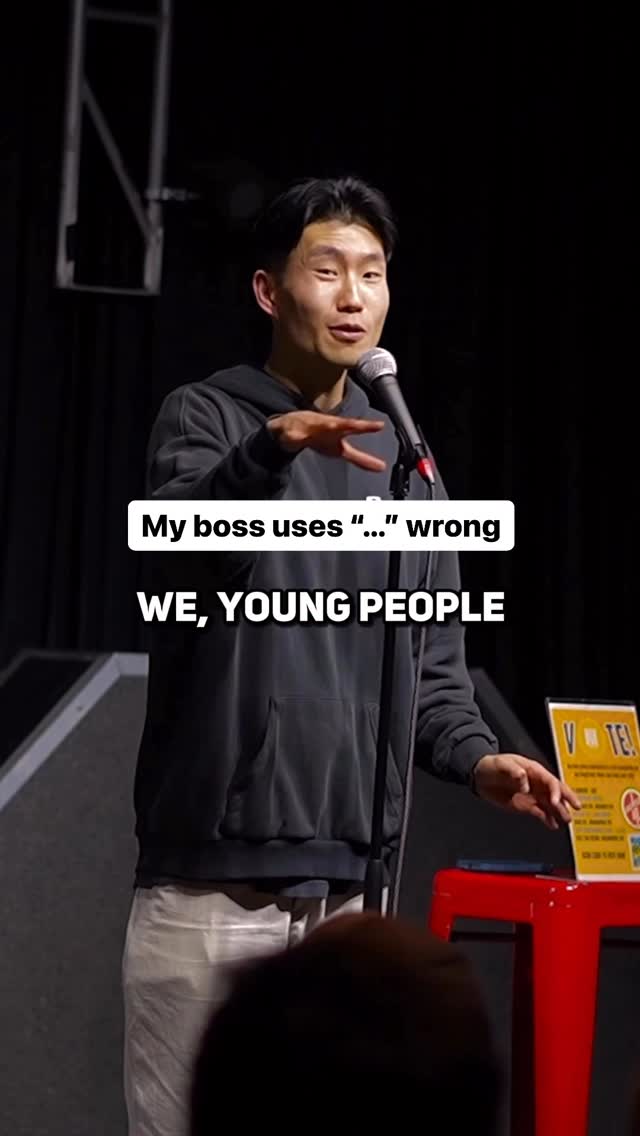
The speaker explicitly defines their group ('we, young people') and establishes a shared, secret knowledge or rule that the 'out-group' doesn't understand.
- 2
The Baseline Definition
A clear, simple example is given to establish the standard, non-nuanced version of the communication, acting as a control case ('yeah' means 'yes').
- 3
The Nuance Reveal
The speaker demonstrates their group's specific, emotionally-laden interpretation of the communication element, proving the premise that it has a hidden meaning ('yeah...' means hesitation).
- 4
The First Conflict Scenario
The speaker presents the first example of the 'out-group' misusing the communication element, creating a low-stakes but confusing situation ('good idea...').
- 5
The Escalating Consequence
The speaker articulates the internal, panicked, or absurd interpretation that results from the misuse, externalizing the comedic tension ('Is it a good idea? Or am I fired?').
- 6
The Second Conflict Scenario
A second, higher-stakes example of the misuse is presented, increasing the perceived danger or absurdity ('see you tomorrow...').
- 7
The Payoff Punchline
The speaker delivers the final, most extreme interpretation of the misuse, resolving the narrative tension with a definitive and humorous conclusion ('Is that a threat?').