Viral Hooks
Trending short videosSatirical skit explaining political gerrymandering
D

@davejorgenson1

Instagram · Skit

@davejorgenson1 A new Supreme Court ruling guts the Voting Rights Act. The U.S. Supreme Court, in a 6-3 decision along partisan lines, ruled that Louisiana’s 2024 election map, which created a second majority-Black congressional district, was “an unconstitutional racial gerrymander.” Although the court kept Section 2 of the Voting Rights Act intact, Wednesday’s decision all but guts the landmark law that came out of the Civil Rights Movement and protected the collective voting power of racial minorities when political maps are redrawn. It isn’t yet clear how the decision will affect November’s midterms. Primaries are well underway in most states. Once considered the jewel in the crown of the Civil Rights Movement, the Voting Rights Act has been largely dismembered since 2013 by the increasingly conservative Supreme Court. The major exception was a decision just two years ago that upheld the section of the law aimed at ensuring that minority voters are not shut out of the process of drawing new congressional district lines At issue in the case was the redistricting map drawn by the Louisiana legislature after the decennial Census. Following years of litigation, the state, with a 30% Black population, first fought and then finally agreed to draw a second majority-Black district. Two of the state’s six House members are African American Normally, that would have been the end of the case, but a self-described group of “non-African-American voters” intervened after the new maps were drawn up to object to the legislature’s redistricting. The Trump administration supported them, contending that the Black voters should not have gotten a second majority-minority district. On Friday, the court agreed. Caption from article by NPR’s Washington Desk.
View original on Instagram

The edit1 shot · 3 text
Shots Text2:06

Performance

Views
358.2K
Likes
24.9K
Comments
360
Engagement
7%
Outlier
9×
Length · 29 Apr 2026
2:06

Video #29066 · Skit

Satirical skit explaining political gerrymanderingfrom @davejorgenson1

[01]

Overview

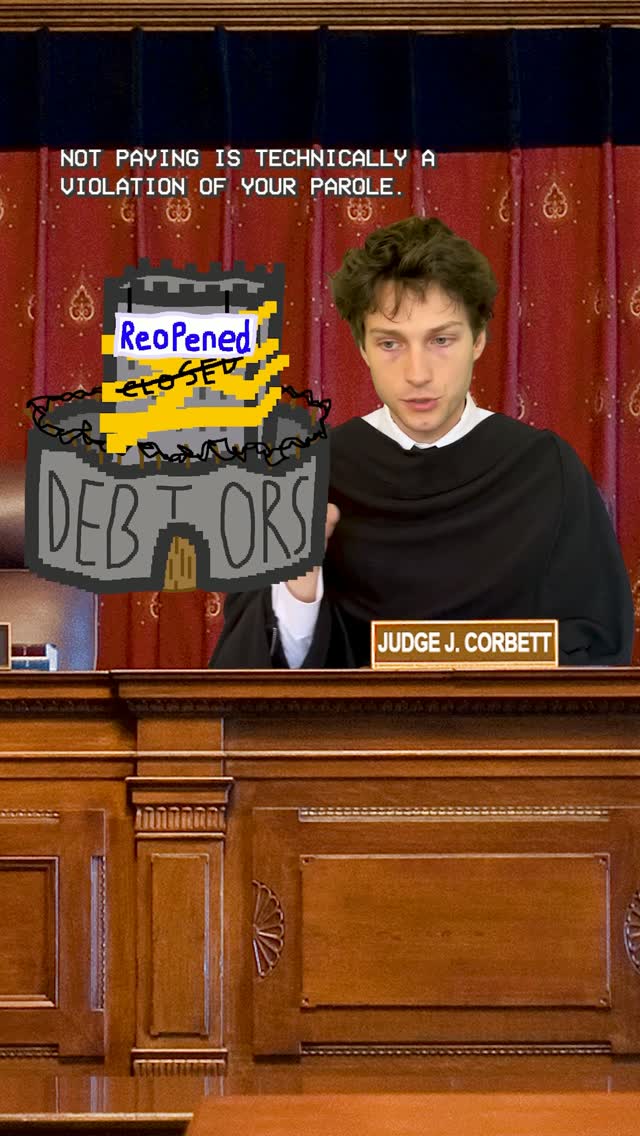
The creator, playing multiple characters, acts out a satirical skit where lawmakers from Virginia and Louisiana explain their gerrymandering maps to a Supreme Court judge. The skit breaks down how both Democratic and Republican parties use redistricting for political advantage, specifically highlighting how Louisiana's map was drawn along racial lines to comply with the Voting Rights Act while still protecting incumbent Republicans, and ends with all characters laughing at the idea of a nonpartisan court.

[02]

Simple outline

  1. 1Present a controversial action
  2. 2Escalate with a complex case
  3. 3Reveal a cynical motivation
  4. 4Justify with an ironic rule

[03]

Related videos

[04]

Classification

Format
Concepts
SkitBreakdownStereotype Satire
Elements
Image OverlayJump CutGraphic Overlay

[05]

Hook analysis

What stops the scroll in the first 3 seconds

Title hook · 15%

The U.S. Supreme Court April 29th, 2026

Verbal hook · 20%

Hey guys, what are you working on?

Visual hook · 65%

A man wearing a judge's robe with a slightly askew collar and tie enters the frame, establishing a comedic or satirical tone through costume.

[06]

Hook template

Steal this for your own video

Enter the frame dressed as a [recognizable authority figure], with one subtly [slightly off-kilter costume detail] to signal a comedic take on [serious topic].

  • — Enter the frame dressed as a doctor, with one subtly crooked stethoscope to signal a comedic take on healthcare billing.
  • — Enter the frame dressed as a chef, with one subtly sauce-stained toque to signal a comedic take on restaurant trends.
  • — Enter the frame dressed as a financial adviser, with one subtly mismatched cufflink to signal a comedic take on budgeting advice.

[07]

Hook and payoff

The promise the opener makes, and how the video pays it back

Hook

A character enters a scene and asks a simple, disarming question about the activity in progress, creating immediate curiosity.

Payoff

The characters use a widely respected law or principle as a loophole to justify their self-serving actions, delivering a final layer of irony and solidifying the video's cynical critique.

[08]

Narrative framework

The structural pattern this video runs on

Framework

The Cynical Justification Skit

Personifying complex, controversial systems or concepts as characters in a comedic skit to expose their inherent absurdities and hypocrisies through escalating examples and an ironic final twist.

  1. 1

    The Reveal & Label

    The activity is introduced and immediately labeled with a controversial term, establishing the central conflict.

  2. 2

    The 'Tit-for-Tat' Justification

    The controversial action is framed as a necessary or fair response to a previous action by an opposing party, providing initial context.

  3. 3

    The Partisan Consequence

    The direct, tangible benefit for one side and detriment to the other is explicitly stated, clarifying the stakes.

  4. 4

    The Escalation Case

    A second, more nuanced and morally ambiguous example of the action is introduced, raising the complexity and stakes of the discussion.

  5. 5

    The Cynical Interlude

    The dialogue pauses for a moment of shared, knowing laughter at the expense of a supposedly impartial institution, reinforcing a cynical worldview with the audience.

  6. 6

    The Self-Serving Twist

    The true, hypocritical motivation behind the action is revealed, showing that it was engineered to benefit the very people it should theoretically harm. This serves as the main punchline.

Themes

  • Political satire
  • Voter rights
  • Systemic issues in politics
  • Partisanship

Techniques

  • Character acting
  • Satire
  • Expository dialogue

Post caption

A new Supreme Court ruling guts the Voting Rights Act. The U.S. Supreme Court, in a 6-3 decision along partisan lines, ruled that Louisiana’s 2024 election map, which created a second majority-Black congressional district, was “an unconstitutional racial gerrymander.” Although the court kept Section 2 of the Voting Rights Act intact, Wednesday’s decision all but guts the landmark law that came out of the Civil Rights Movement and protected the collective voting power of racial minorities when political maps are redrawn. It isn’t yet clear how the decision will affect November’s midterms. Primaries are well underway in most states. Once considered the jewel in the crown of the Civil Rights Movement, the Voting Rights Act has been largely dismembered since 2013 by the increasingly conservative Supreme Court. The major exception was a decision just two years ago that upheld the section of the law aimed at ensuring that minority voters are not shut out of the process of drawing new congressional district lines At issue in the case was the redistricting map drawn by the Louisiana legislature after the decennial Census. Following years of litigation, the state, with a 30% Black population, first fought and then finally agreed to draw a second majority-Black district. Two of the state’s six House members are African American Normally, that would have been the end of the case, but a self-described group of “non-African-American voters” intervened after the new maps were drawn up to object to the legislature’s redistricting. The Trump administration supported them, contending that the Black voters should not have gotten a second majority-minority district. On Friday, the court agreed. Caption from article by NPR’s Washington Desk.
Text overlays

  • contextual · beginning

    The U.S. Supreme Court April 29th, 2026

  • informational · middle

    CBS News VIRGINIA REDISTRICTING VOTE

  • informational · middle

    2020 Census Percent Black or African American Alone or in Combination, Total Population by County: 2020 Louisiana: 33.1%

Transcript

Guys. What are you working on? What's that little project? Oh, I was just looking over my new map of Virginia. Oh, gerrymandering, Yeah. After Republicans in Texas redrew their maps, it set up all kinds of gerrymandering in both red and blue states across the country. Here's Virginia before and here's Virginia after. Looks like this will favor Democrats. Yeah. The people of Virginia voted in favor of this. It will likely add as many as four Democratic seats to the worse. What's that Louisiana lawmaker doing over there? A 2020 census found that one third of their state is black. So they adjust their map to make more representation for black voters in their six districts. Really? So instead of one potential seat representing black people, we have two. Uh-huh. Now before you say anything, I know the Supreme Court has a conservative majority. Well, technically, the court is supposed to be nonpartisan. Ugh. Neither do I. Anyway, as a conservative, you'll be happy to see that I specifically drew the map so that the Republican speaker of the worse and the Republican majority leader still keep their seats. But you did draw it along racial lines, correct? Yeah. Well, that's protected by the voting rights act. Yeah. It's the crown jewel

Satirical skit explaining political gerrymandering | Viral Hooks