Viral Hooks
Trending short videosExplaining water cycle with model
K

@kidflamess

Instagram · Speaker address

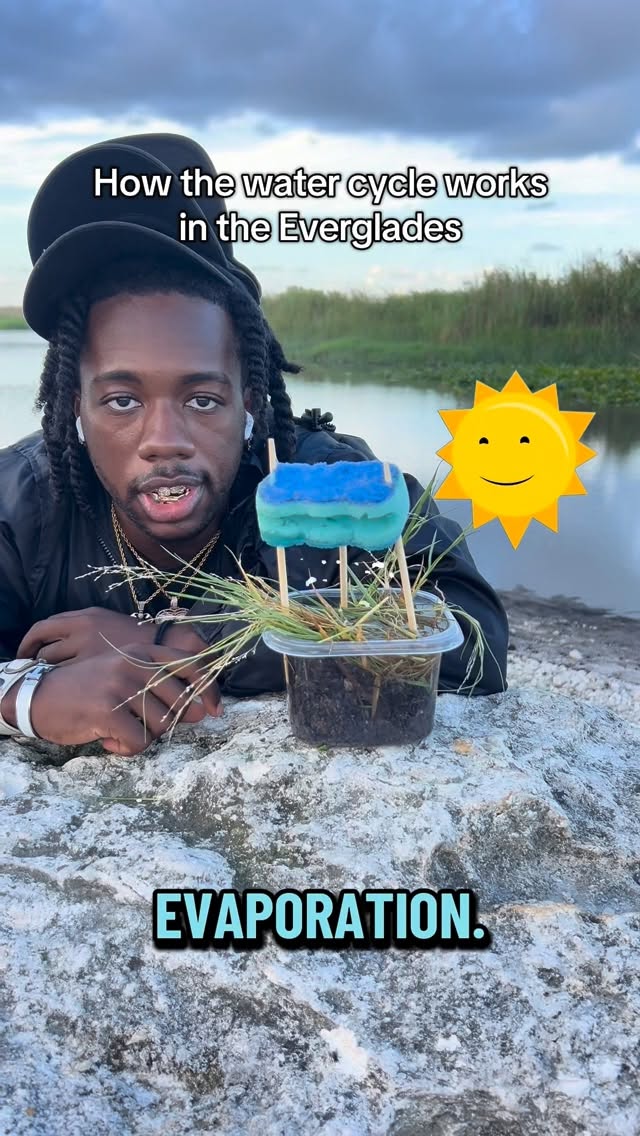
@kidflamess The water cycle was one of my favorite topics growing up, so l recreated it using a physical model in the Everglades. Even if you've learned it before, seeing it makes it a lot easier to understand. #scientist #ecology #wetlands #everglades #stem

View original on Instagram

The edit1 shot · 1 text
Shots Text0:40

Performance

Views
606.3K
Likes
29.9K
Comments
785
Engagement
5.1%
Outlier
25.4×
Length · 1 Jun 2026
0:40

Video #32202 · Speaker address

Explaining water cycle with modelfrom @kidflamess

[01]

Overview

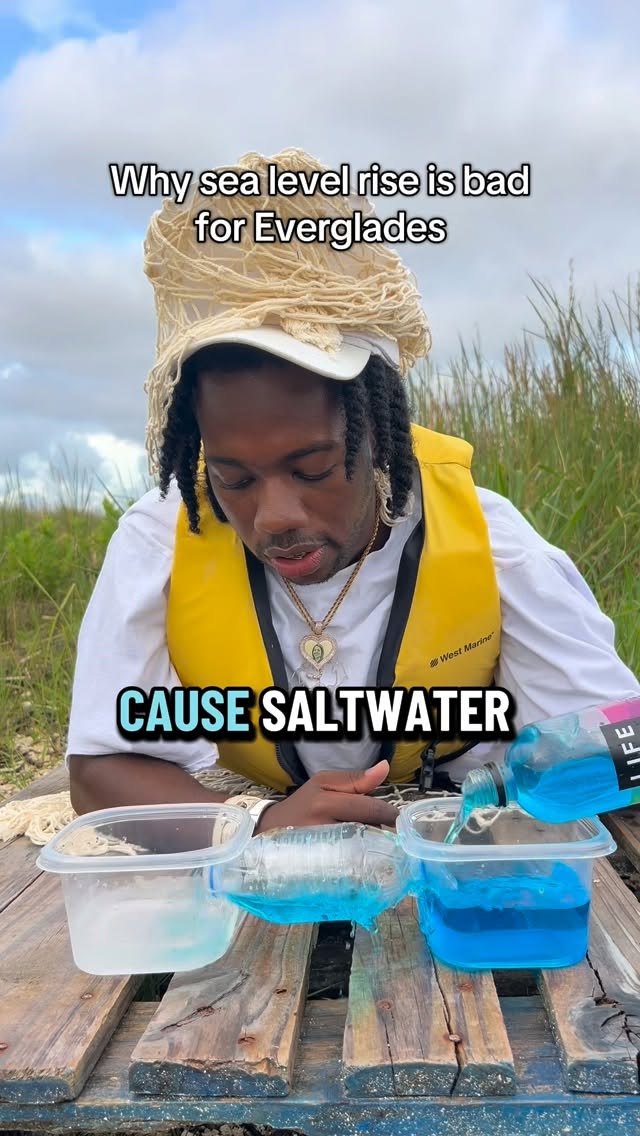
The creator, identifying as an Everglades scientist, lies on a rock in the Everglades and uses a handmade physical model to explain the water cycle. He demonstrates the key stages—evaporation, transpiration, condensation, and precipitation—using animated graphics to illustrate each process as he describes it. He concludes by stating that this cycle is not unique to the Everglades but occurs in ecosystems globally before signing off.

[02]

Simple outline

  1. 1State the core concept
  2. 2Demonstrate with physical model
  3. 3Explain process step-by-step
  4. 4Broaden concept's relevance

[03]

Related videos

[04]

Classification

Concepts
Tutorial / How To
Elements
Dynamic Word-by-Word Captions

[05]

Hook analysis

What stops the scroll in the first 3 seconds

Title hook · 45%

How the water cycle works in the Everglades

Verbal hook · 15%

How the water cycle works in the Everglades.

Visual hook · 40%

A man lies on a rock in a natural wetland setting with a DIY science model in front of him, with a blue animated splash graphic appearing on his face.

[07]

Hook and payoff

The promise the opener makes, and how the video pays it back

Hook

A direct, on-screen text declaration of the topic, combined with a visually intriguing physical model that creates immediate curiosity about how it will be used.

Payoff

A branded sign-off that simultaneously establishes the creator's authority on the subject and provides a memorable, concise conclusion.

[08]

Narrative framework

The structural pattern this video runs on

Framework

The Tangible Process Explainer

Visually demonstrating a complex, multi-stage process using a simple, physical analogy to make it easily understandable.

  1. 1

    The Model Analogy

    Establishes the physical prop as a simplified representation of a complex system, setting the stage for the demonstration.

  2. 2

    Process Stage 1: The Primary Driver

    Explains the first and most crucial step of the process, often initiated by an external force, and gives it a formal name.

  3. 3

    Process Stage 2: The Secondary Contributor

    Introduces a second, parallel mechanism that contributes to the same outcome as the first, adding a layer of detail and complexity.

  4. 4

    Process Stage 3: The Transformation

    Shows the cumulative result of the previous stages, where the elements combine or change into a new form.

  5. 5

    Process Stage 4: The Climax & Return

    Details the final stage where the process culminates and the elements return to their starting state, completing the loop.

  6. 6

    The Universal Application

    Expands the relevance of the explained process beyond the specific example, making the information feel more significant and broadly applicable.

Themes

  • Environmental Science
  • Education
  • Ecology

Techniques

  • Physical Demonstration
  • Animated Graphics

Post caption

The water cycle was one of my favorite topics growing up, so l recreated it using a physical model in the Everglades. Even if you've learned it before, seeing it makes it a lot easier to understand. #scientist #ecology #wetlands #everglades #stem

Text overlays

  • title · throughout

    How the water cycle works in the Everglades

Transcript

How the water cycle works in the Everglades. So imagine this was the Everglades and this is a cloud above the Everglades. Sunlight basically heats up water in wetlands, and that causes water vapor to be released into the atmosphere through a process known as evaporation. And then plants also release water vapor into the atmosphere as well for a process known as transpiration. Now all these water vapor droplets that get released into the atmosphere eventually form clouds for a process known as condensation, and then the clouds produce rainfall through a process known as precipitation. And then it happens all over again. Now this is not only limited to the Everglades, but it happens no many ecosystems across the globe. Everglades scientist out.

Explaining water cycle with model | Viral Hooks