Viral Hooks
Trending short videosCinematic monologue uses chess metaphor
E

@ellessene

Instagram · Cinematic Trailer

@ellessene 𝘼𝙍𝙏 𝙊𝙁 𝙏𝙃𝙀 𝙀𝙓𝙄𝙏 I keep thinking about it. The intersection of love and losing, and what we really hold on to. @ELLESSENE is a cinematic world built from memory. Each episode is tied to a collectible candle–an emotional artifact in an evolving narrative. The candle from this episode is available at ellessene.com

View original on Instagram

The edit1 shot · 8 text
Shots Text0:57

Performance

Views
6.3M
Likes
676.6K
Comments
2.8K
Engagement
10.7%
Outlier
114.4×
Length · 22 Jun 2025
0:57

Video #32375 · Cinematic Trailer

Cinematic monologue uses chess metaphorfrom @ellessene

[01]

Overview

The creator narrates a poetic monologue using chess as a metaphor for love, heartbreak, and loss. Through a montage of cinematic scenes set in a chess club and with a past lover, she reflects on overthinking and the desire for validation in relationships, ultimately revealing that the story is the inspiration for a line of collector's candles.

[02]

Simple outline

  1. 1State a paradoxical analogy
  2. 2Ground analogy in personal story
  3. 3Reveal a surprising emotional truth
  4. 4Deliver a universal philosophical insight

[03]

Related videos

[04]

Classification

Concepts
Vulnerable MonologueAnecdotal PhilosophyBrand Manifesto
Elements
VoiceoverColor GradingMontage EditingText Overlay

[05]

Hook analysis

What stops the scroll in the first 3 seconds

Title hook · 45%

In chess, the smartest player wins.

Verbal hook · 45%

In chess, the smartest player wins.

Visual hook · 10%

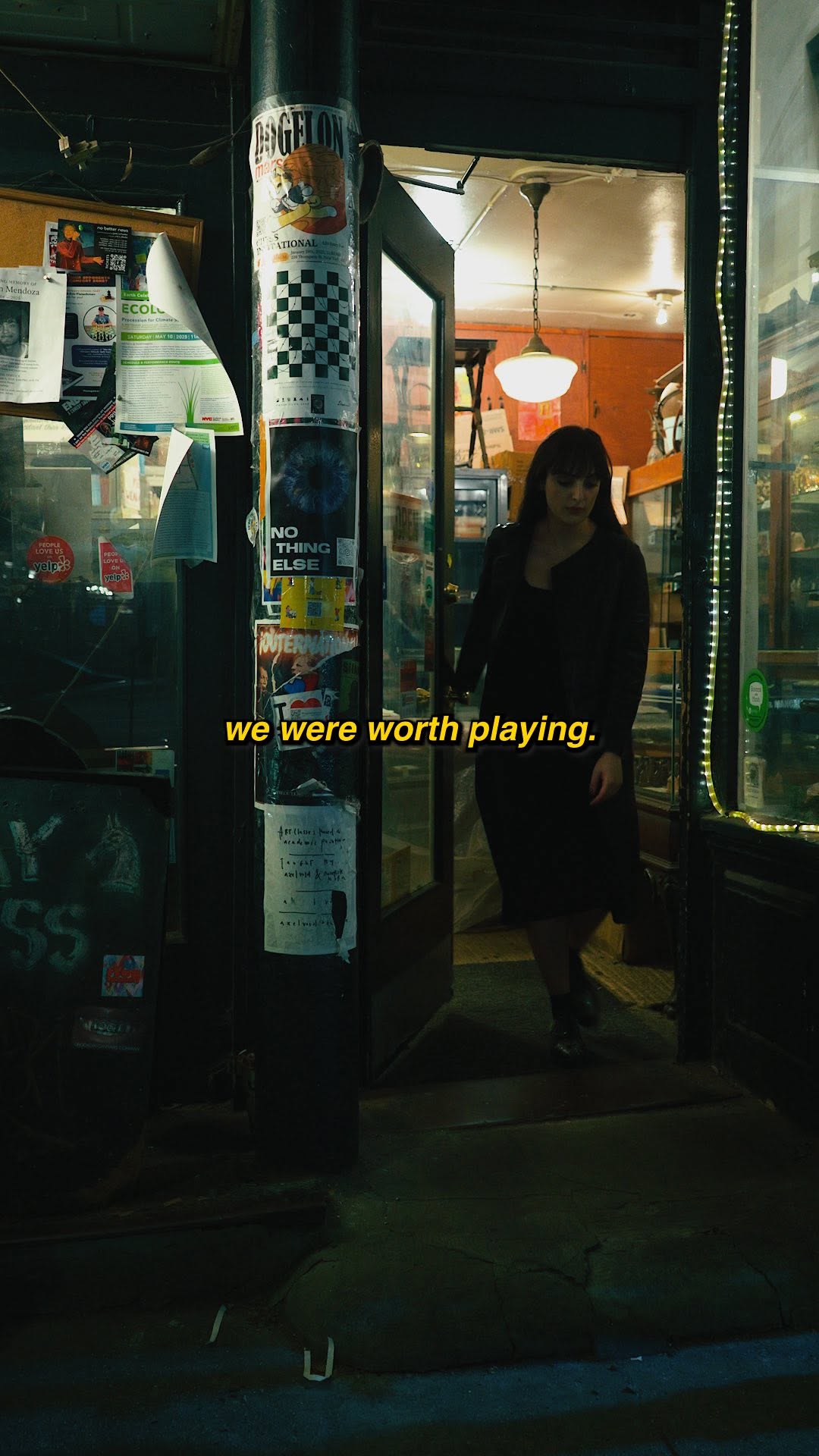
A dimly lit, moody close-up of a woman playing chess, creating an immediate cinematic and mysterious atmosphere.

[06]

Hook template

Steal this for your own video

In [game or competition], the [expected winner] wins.

  • — In poker, the luckiest player wins.
  • — In business, the hardest worker wins.
  • — In dating, the most attractive person wins.

[07]

Hook and payoff

The promise the opener makes, and how the video pays it back

Hook

A sharp, paradoxical aphorism comparing two seemingly unrelated concepts (a game and love) to establish an intellectual and melancholic tone, immediately engaging the viewer's curiosity.

Payoff

Concludes with a universal philosophical statement that elevates the personal story into a broader commentary on the human experience, providing a sense of profound, shareable closure.

[08]

Narrative framework

The structural pattern this video runs on

Framework

The Metaphorical Memoir

The video uses an extended metaphor (chess) to explore a universal emotional experience (heartbreak), leading the viewer through a personal narrative that culminates in a profound, counter-intuitive philosophical insight.

  1. 1

    The Opening Gambit

    States a paradoxical analogy that frames the central theme, contrasting the logic of a game with the irrationality of an emotion.

  2. 2

    The Symbolic Arena

    Introduces a physical setting or activity that serves as a tangible representation of the narrator's abstract internal state (e.g., a place for 'overthinking').

  3. 3

    The Universal Game

    Broadens the personal struggle into a shared human condition by observing others in the setting engaged in the same metaphorical act.

  4. 4

    The Totem of Inquiry

    Focuses on a specific object within the setting, imbuing it with the potential to unlock a deeper understanding of the narrator's past.

  5. 5

    The Inanimate Confidant's Failure

    Injects a moment of realism and anti-climax by revealing that the symbolic object cannot provide the sought-after answers.

  6. 6

    The Antagonist's Profile

    Characterizes the source of the emotional conflict (a past person or event) in a way that contrasts with the established metaphor, adding depth to the backstory.

  7. 7

    The Pervasive Echo

    Details how the memory and impact of the past conflict linger in everyday sensory experiences, demonstrating its lasting power.

  8. 8

    The True Loss Revelation

    Articulates a pivotal, counter-intuitive realization that reframes the narrator's core emotion from missing a person to missing the experience itself.

Themes

  • love
  • loss
  • memory
  • philosophy

Techniques

  • voiceover
  • montage
  • color grading

Trends

  • cinematic advertising
  • story-driven marketing

Post caption

𝘼𝙍𝙏 𝙊𝙁 𝙏𝙃𝙀 𝙀𝙓𝙄𝙏 I keep thinking about it. The intersection of love and losing, and what we really hold on to. @ELLESSENE is a cinematic world built from memory. Each episode is tied to a collectible candle–an emotional artifact in an evolving narrative. The candle from this episode is available at ellessene.com

Text overlays

  • title · beginning

    In chess, the smartest player wins.

  • title · beginning

    In love, the smartest player usually leaves.

  • contextual · beginning

    I came to the chess center because it's the only place in New York where overthinking is considered a skill.

  • contextual · middle

    It was a room full of people pretending to focus on the board, when everyone was really just playing out their last relationship in 64 squares or less.

  • contextual · middle

    I don't miss him. I just miss having someone to lose to.

  • contextual · end

    We don't want to win. we just want proof that we were worth playing.

  • branding · end

    -Elle

  • call-to-action · end

    COLLECTOR'S CANDLES INSPIRED BY MY FLASHBACKS. AVAILABLE IN LIMITED QUANTITIES. ELLESSÈNE

Transcript

In chess, the smartest player wins. In love, the smartest player usually leaves. I came to the chess center because it's the only place in New York where overthinking is considered a skill. It was a room full of people pretending to focus on the board, when everyone was really best playing out their last relationship in 64 squares or less. I wasn't planning to play. I just stood there holding a night, like maybe it could explain the last seven years of my love life. Spoiler, it couldn't. He never played chess. He probably would have said it was too quiet, too slow, too honest. But he was everywhere. In the ticking, in the silence, in the version of me that still believes heartbreak should come with a scoreboard. It turns out, I don't miss him. I just miss having someone to lose to. And maybe that's the whole point. We don't worst to win. We just want proof that we were worth playing.

Cinematic monologue uses chess metaphor | Viral Hooks