Viral Hooks
Trending short videosExplaining the math of soccer balls
S

@scientific_american

Instagram · Talking Head Edit

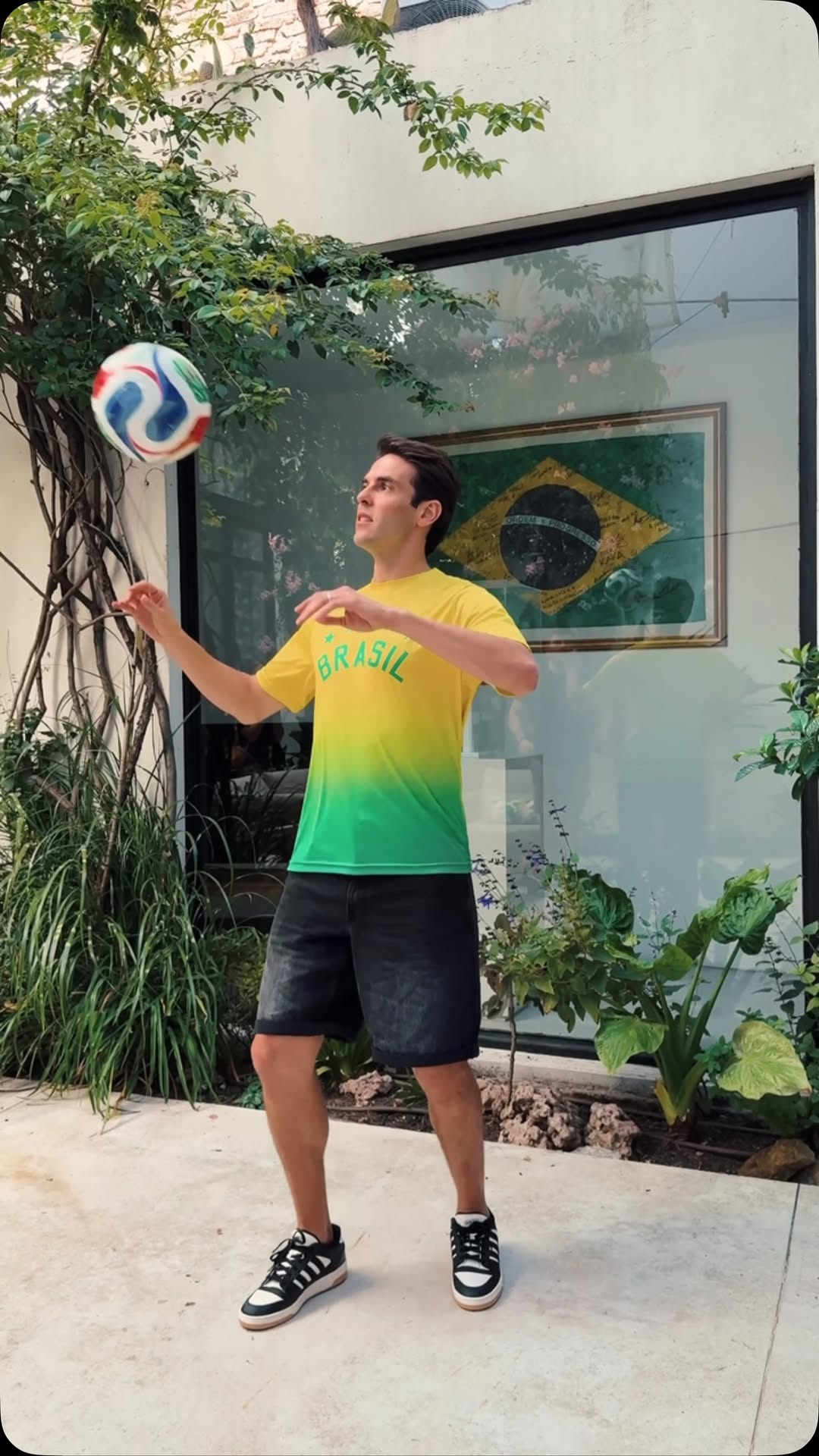
@scientific_american Every World Cup gets its own ball, and this year's design is one of the most radical yet. Called the Trionda, a nod to the tournament's three host countries, the U.S., Mexico, and Canada, it's made from just four interlocking panels. That's the fewest panels ever used in a World Cup ball, down from the 20-panel design used in 2022. Behind that change is a surprising amount of math and physics, as engineers try to balance aerodynamics, symmetry, and control to make sure the ball behaves the way players expect on the world's biggest stage. Read more at the 🔗 in bio. Image credit: FIFA, Getty Images, Premier League, Associated Press Illustration: Amanda Montañez Story: Emma R. Hasson #worldcup2026 #soccer #physics #math #sports
View original on Instagram

The edit1 shot · 7 text
Shots Text2:01

Performance

Views
942.6K
Likes
70.1K
Comments
292
Engagement
7.5%
Outlier
43.6×
Length · 12 Jun 2026
2:01

Video #33737 · Talking Head Edit

Explaining the math of soccer ballsfrom @scientific_american

[01]

Overview

The creator introduces a soccer ball she identifies as the 2026 World Cup ball, the 'Trionda'. She explains the complex geometry behind soccer ball design, first detailing how the classic ball is derived from a truncated icosahedron. She then contrasts this with the 'Trionda's' design, which is based on a modified tetrahedron, using motion graphics to illustrate the concepts. The video concludes by connecting this design to the controversial 2010 Jabulani ball, which was also based on a tetrahedron.

[02]

Simple outline

  1. 1Present object, create intrigue
  2. 2Contrast old vs. new method
  3. 3Introduce historical conflict
  4. 4End with cliffhanger reveal

[03]

Related videos

[04]

Classification

Concepts
BreakdownStrange but True
Elements
B-Roll CutawayMotion GraphicsArchival Footage

[05]

Hook analysis

What stops the scroll in the first 3 seconds

Verbal hook · 45%

No this is Trianda, the twenty twenty six Worse Cup soccer ball.

Visual hook · 55%

A woman holds up a colorful, uniquely patterned soccer ball directly to the camera, immediately establishing the video's subject.

[06]

Hook template

Steal this for your own video

Hold a [surprising or unfamiliar object] directly up to the camera so the audience can see it clearly before you explain what it really is.

  • — Hold an oddly shaped vintage computer chip directly up to the camera so viewers can study it before you reveal it powers a device they use every day.
  • — Hold a small, unremarkable-looking mushroom directly up to the camera so viewers can study it before you reveal it sells for $800 per pound.
  • — Hold a strangely patterned piece of fabric directly up to the camera so viewers can study it before you reveal it is actually a map used by soldiers in World War II.

[07]

Hook and payoff

The promise the opener makes, and how the video pays it back

Hook

Introduce a new or updated object and immediately suggest it has a hidden flaw or will behave unexpectedly compared to its predecessors.

Payoff

Conclude by specifically naming the controversial historical precedent, creating a strong cliffhanger that promises a dramatic story in a subsequent part.

[08]

Narrative framework

The structural pattern this video runs on

Framework

The Contrarian Origin Story

To deconstruct a familiar object by revealing its unconventional design, contrasting it with the established norm, and using a controversial historical precedent to create suspense and a cliffhanger.

  1. 1

    The Universal Problem

    Establish the fundamental, relatable challenge or constraint that the object's design must solve. This grounds the story in a simple concept.

  2. 2

    The Established Norm

    Detail the traditional or standard solution to the universal problem, using simplified visuals and narration. This creates a baseline of audience expectation and knowledge.

  3. 3

    The Radical Departure

    Reveal how the new object's design deviates from the established norm, explaining the unique principle or method behind its construction.

  4. 4

    The Historical Foreshadowing

    Raise the stakes by revealing that this 'radical' approach has been tried before, and explicitly state that the previous attempt had negative or controversial consequences.

Themes

  • Innovation in sports
  • The intersection of math and design
  • History of product design

Techniques

  • Educational storytelling
  • Visual aids
  • Historical comparison

Post caption

Every World Cup gets its own ball, and this year's design is one of the most radical yet. Called the Trionda, a nod to the tournament's three host countries, the U.S., Mexico, and Canada, it's made from just four interlocking panels. That's the fewest panels ever used in a World Cup ball, down from the 20-panel design used in 2022. Behind that change is a surprising amount of math and physics, as engineers try to balance aerodynamics, symmetry, and control to make sure the ball behaves the way players expect on the world's biggest stage. Read more at the 🔗 in bio. Image credit: FIFA, Getty Images, Premier League, Associated Press Illustration: Amanda Montañez Story: Emma R. Hasson #worldcup2026 #soccer #physics #math #sports
Text overlays

  • contextual · middle

    Adidas Brazuca, official match ball of 2014 FIFA World Cup

  • title · middle

    PLATONIC SOLID

  • informational · middle

    Icosahedron

  • informational · middle

    Truncated icosahedron

  • informational · middle

    Tetrahedron

  • informational · middle

    Triangle sides become curves

  • informational · middle

    Trionda ball

Transcript

No this is Trianda, the twenty twenty six Worse Cup soccer ball. There's actually some really interesting math behind its design, but some people are worried it may behave a bit differently than your classic soccer ball. So the reason is that it's actually really hard to make a round thing out of a flat thing. All FIFA Worse Cup balls so far have been based on something called a platonic solid. These have identical faces that all meet in the same way. So the classic soccer ball starts with an icosahedron, which is a shape made of 20 triangles. Designers then essentially shave off the corners of these triangles to make the ball rounder, which results in the pattern of hexagons and pentagons that we know of today. So this year's ball is based on a different platonic solid. It's a tetrahedron. It's four triangular faces that have been stretched and curved into these repeating, almost boomerang like faces. And while a pointy tetrahedron might seem like a weird foundation for a soccer ball, it's actually not the first time we've seen one at the Worse Cup. In fact, the last tetrahedron based ball was actually kind of controversial. Meet the Jabulani, the ball used at the twenty ten World Cup in South Africa.