@ournewengland It’s breeding season for many birds, which means there’s a chance you might hear or run into baby birds when you’re enjoying time outside.
But if you spot a young bird on the ground, what should you do?
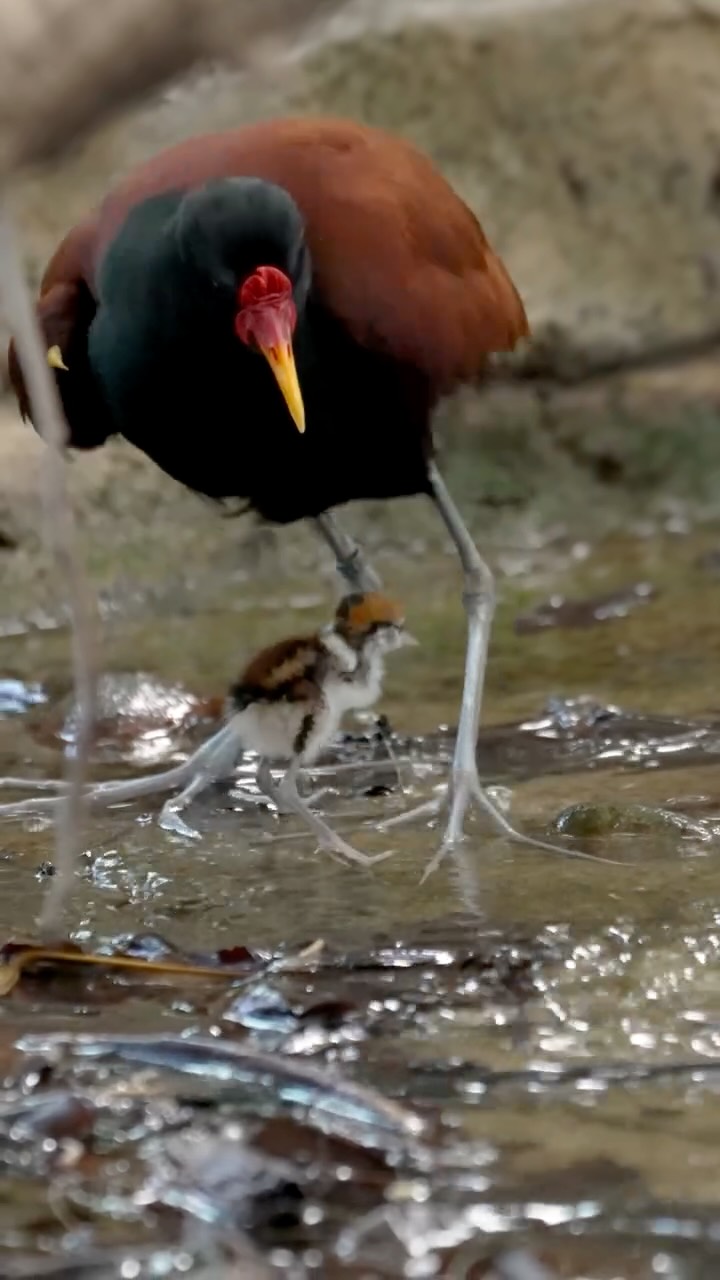
If the bird doesn’t have a lot of feathers and can’t hop or walk, it’s likely a nestling. It still needs its parents to provide food and warmth, so if you come across one, you should put it back in its nest if you can.
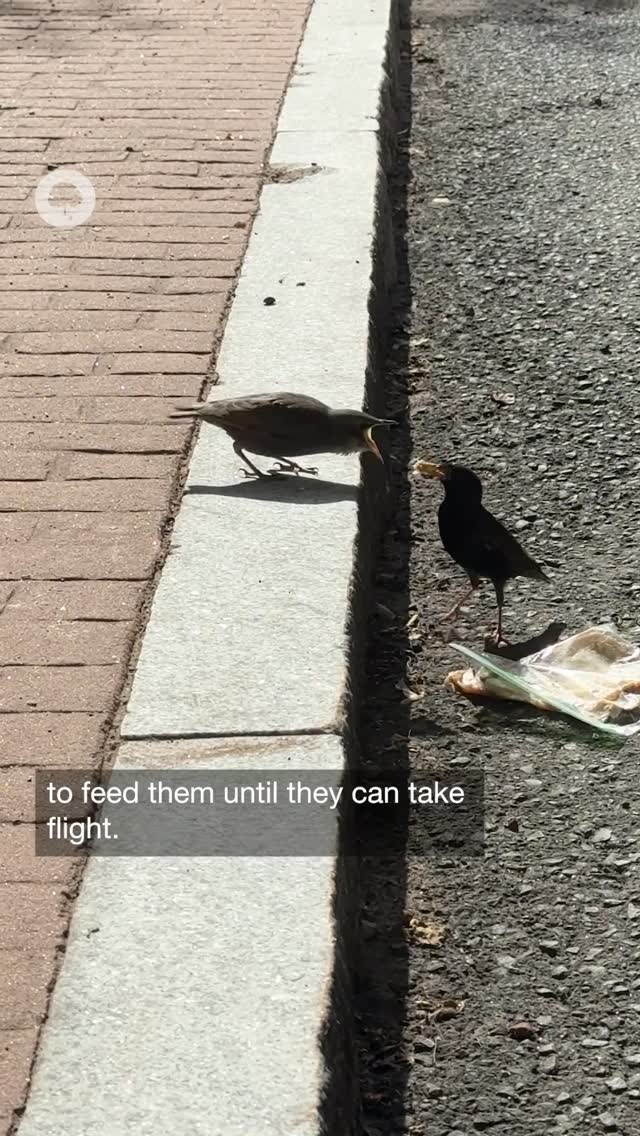
If the young bird you find has feathers and is hopping around, it’s probably a fledgling.
If it’s in imminent danger or injured, you should move it to a safer spot or call your local wildlife rehabber. If it seems okay, you can and should leave it alone. Fledglings can move around freely and their parents will continue to feed them until it’s time for them to take flight.
It’s also a good idea to make sure to keep pets, especially cats, indoors. Studies show that free-ranging domestic cats kill 1.3–4.0 billion birds annually. Keeping cats inside will give birds, especially fledglings, a fighting chance.
🎤 Hosted, produced & edited by Raquel C. Zaldívar • @raqzal @ournewengland
📹 Visuals by Raquel C. Zaldívar & Elena Eberwein • @nhpublicradio
A visual journalist explains what to do when finding a baby bird on the ground. She differentiates between a 'nestling' (which needs to be returned to its nest) and a 'fledgling' (which should usually be left alone), using B-roll footage to show examples of each. The creator provides clear, actionable steps for each scenario, advising when to intervene, when to call a wildlife rehabber, and when to leave the bird for its parents to care for.
What would you do if you were walking outside and spotted this little bird?
Visual hook · 65%
An extreme close-up, low-angle shot of a small, vulnerable baby bird sitting alone on the ground among mulch, immediately creating curiosity and an emotional response.
[06]
Hook template
Steal this for your own video
An extreme close-up, ground-level shot of a [small or vulnerable creature] sitting completely alone in [natural or unexpected environment], filling the entire frame with no human presence in sight.
— An extreme close-up, ground-level shot of a tiny abandoned duckling sitting completely alone on wet pavement after a rainstorm, filling the entire frame with no human presence in sight.
— An extreme close-up, ground-level shot of a newborn kitten sitting completely alone in a pile of dry leaves at the base of a tree, filling the entire frame with no human presence in sight.
— An extreme close-up, ground-level shot of a lone sea turtle hatchling sitting completely alone on an empty stretch of beach sand, filling the entire frame with no human presence in sight.
[07]
Hook and payoff
The promise the opener makes, and how the video pays it back
Hook
A direct, relatable question that presents a common problem, followed by a statement that subverts the viewer's initial assumption, creating an immediate knowledge gap.
Payoff
The viewer feels empowered with a clear mental model and actionable steps to confidently handle a previously confusing situation.
[08]
Narrative framework
The structural pattern this video runs on
Framework
The Two-Path Solution Framework
To guide a viewer through a common dilemma by presenting a simple, binary classification system, where each classification has a distinct and often counter-intuitive rule of action.
1
The First Classification
Defines the first of two categories ('nestling') and provides clear, simple criteria for identification (e.g., few feathers, can't move well).
2
The Context Bridge
Explains the natural process that leads to the second, more ambiguous situation, setting the stage for the next classification and explaining why the problem exists.
3
The First Protocol
Delivers the straightforward, expected instruction for the first, clearly defined category (e.g., 'put it back in the nest').
4
The Contrasting Classification
Introduces the second category ('fledgling') with a 'But if...' transition, defining it by its contrast to the first (e.g., has feathers, is hopping).
5
The Nuanced Protocol
Delivers the primary, often counter-intuitive, instruction for the second category (e.g., 'leave it alone'), while including a critical exception or caveat to demonstrate expertise and build trust.
6
The Reassurance
Justifies the counter-intuitive instruction by explaining the underlying reason (e.g., 'parents will continue to feed them'), reassuring the viewer and closing the knowledge gap.
Themes
Wildlife conservation
Public education
Animal welfare
Nature
Techniques
Direct address
B-roll storytelling
Expert explanation
Post caption
It’s breeding season for many birds, which means there’s a chance you might hear or run into baby birds when you’re enjoying time outside.
But if you spot a young bird on the ground, what should you do?
If the bird doesn’t have a lot of feathers and can’t hop or walk, it’s likely a nestling. It still needs its parents to provide food and warmth, so if you come across one, you should put it back in its nest if you can.
If the young bird you find has feathers and is hopping around, it’s probably a fledgling.
If it’s in imminent danger or injured, you should move it to a safer spot or call your local wildlife rehabber. If it seems okay, you can and should leave it alone. Fledglings can move around freely and their parents will continue to feed them until it’s time for them to take flight.
It’s also a good idea to make sure to keep pets, especially cats, indoors. Studies show that free-ranging domestic cats kill 1.3–4.0 billion birds annually. Keeping cats inside will give birds, especially fledglings, a fighting chance.
🎤 Hosted, produced & edited by Raquel C. Zaldívar • @raqzal @ournewengland
📹 Visuals by Raquel C. Zaldívar & Elena Eberwein • @nhpublicradio
Text overlays
contextual · beginning
Raquel C. Zaldívar
Visual Journalist, New England News Collaborative
Transcript
What would you do if you were walking outside and spotted this little bird? While it may seem like a bird this young needs help, there's a good chance it doesn't. Once birds hatch, they're known as nestlings, and they need their parents to bring them food and warmth. They don't really have a lot of feathers yet and they can't really hop or rank. But after they mature a bit, they fledge or leave the nest. Sometimes they do this before they can fly and if that happens, then they might be grounded for a few days before they can take off. If you come across a nestling, you should put it back in its nest if you can. But if the baby bird you find is hopping around and has feathers, then it's probably a fledgling. If it's injured or rank imminent danger, then you should move it to a safer spot or call your local wildlife rehabber for help. If it seems okay, then you can and should leave it alone. Fledglings can move freely, and their parents will