@npr
Instagram · Skit
@npr Credit cards are a tax on the poor. More like this in our book Planet Money: A Guide to the Economic Forces That Shape Our Lives From the @planetmoney archives Producer: @jackcorbe • Jack Corbett / NPR.

@npr
Instagram · Skit
@npr Credit cards are a tax on the poor. More like this in our book Planet Money: A Guide to the Economic Forces That Shape Our Lives From the @planetmoney archives Producer: @jackcorbe • Jack Corbett / NPR.
Performance
Video #35538 · Skit
[01]
A creator, playing both a cashier and a customer, acts out a skit at a grocery store checkout to explain how credit card processing fees lead to higher prices for all consumers, effectively acting as a tax on those who pay with cash or debit to fund the rewards for credit card users.
[02]
[03]
 656.7KComedic skit of retail interaction@thejarrodbenson · Relatable Skit
 6.5M4.5×Magic trick for stranger reactions@elyasclaire · Social Experiment
 432.4K452.8×Comedic skit of Target checkout@petajanebeauty · Skit
 133.1KRelatable retail math problem scenario@amber_bees · Relatable One Shot
 22.7MCashier reacts to fake money prank@elyasclaire · Candid Prank
 466.4K4.2×Comedic skit about coffee shop@_devontewest · Relatable Skit
 512.9K314.6×Cashier's failed pickup line skit@shopgroveonline · Customer Service Parody
 3M15.9×Customer argues over receipt check@leogonzall
 1MComedic finance lesson using whiteboard@itsbobbyfinn · Skit
 539.3K1.1×Skit about annoying retail customer@shopgroveonline · Relatable Skit
 6.2M3.3×Magic trick for store cashiers@elyasclaire · Social Experiment
 7.4M31.4×Satirical CEO pitches delivery service@lifeisaloha · Satirical Product Pitch
[04]
[05]
What stops the scroll in the first 3 seconds
Verbal hook · 60%
Credit or debit?
Visual hook · 40%
A relatable scene of a customer at a grocery store checkout counter, establishing an everyday scenario.
[06]
Steal this for your own video
Every time you say ',' someone is secretly charging you a hidden .
[07]
The promise the opener makes, and how the video pays it back
Hook
A familiar, everyday interaction is presented, establishing a relatable starting point and a common assumption that will be challenged.
Payoff
The core thesis of the entire video is revealed in a clear, explicit visual format (like text on a sign), providing a memorable and shareable takeaway that summarizes the lesson learned.
[08]
The structural pattern this video runs on
Framework
The Hidden Cost
To deconstruct a common, seemingly harmless action by revealing its unseen negative consequences through a surreal, explanatory dialogue between a naive participant and an affected expert.
The Common Transaction
A character performs a routine action based on a widely held, positive belief (e.g., getting rewards points).
The Pattern Interrupt
An unexpected, strange, or negative reaction from another character breaks the normal script, creating a mystery that hooks the viewer.
The Personal Cost Reveal
The reacting character explains the direct, personal negative consequence they suffer because of the first character's action.
The Common Misconception Rebuttal
The naive character voices a popular but incomplete understanding of the situation, which the expert character then corrects, establishing their authority.
The Systemic Consequence
The expert expands the explanation from a personal problem to a wider, systemic issue that affects everyone, revealing a hidden mechanism in a familiar system.
The Unseen Victim
The expert identifies a specific, often less privileged, group that is disproportionately harmed by the systemic issue, adding a moral or ethical dimension to the argument.
The Moment of Realization
The naive character expresses understanding and regret, validating the expert's argument and modeling the desired audience reaction.
Credit cards are a tax on the poor. More like this in our book Planet Money: A Guide to the Economic Forces That Shape Our Lives From the @planetmoney archives Producer: @jackcorbe • Jack Corbett / NPR.
contextual · beginning
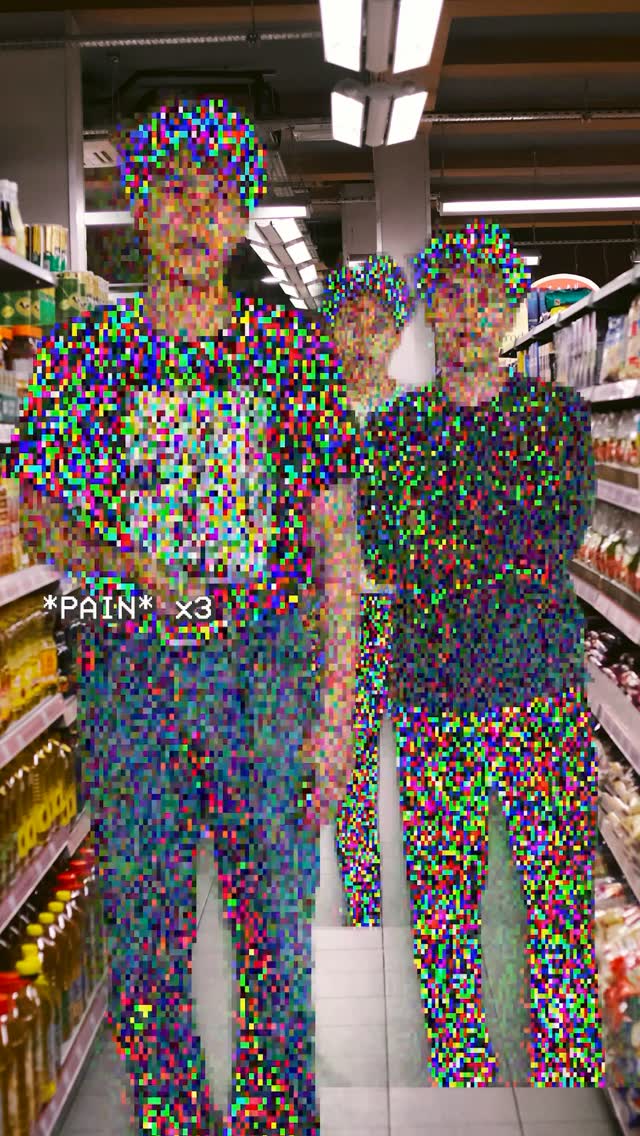
*PAIN*
informational · middle
Price
contextual · middle
*PAIN* X3
informational · end
NO GREENSCREEN JOKES CREDIT CARDS ARE A TAX ON THE POOR
informational · end
Klein, A. (2019, December 20). Opinion: How credit card companies reward the rich and punish the rest of us. Los Angeles Times.
Credit or debit? Credit. Gotta get those points. You know what I mean? You know what I mean? Are you okay? Yes. It's just every time I swipe a credit card, I get stuck with a processing fee. It's one of the main ways credit card companies make their money. And for some, it's how they make most of their money. I thought they best make it when people, like, miss their payments. Or like through interest? Yeah. Not totally. And the 3% processing fees for credit cards means I have to increase the cost of all the goods in the store a little bit. Everyone has to pay more. People in line behind you with less good or no credit, they have to pay with debit or cash. In effect, they're paying more no you can get your cash bad or reward points for hotels or flights or whatever. Geez, I wish I knew. It says right there on the sign. No green screen? Other sign. Oh.