Viral Hooks
Trending short videosDocumenting a legendary car's history
P

@patina.research

Instagram · Faceless
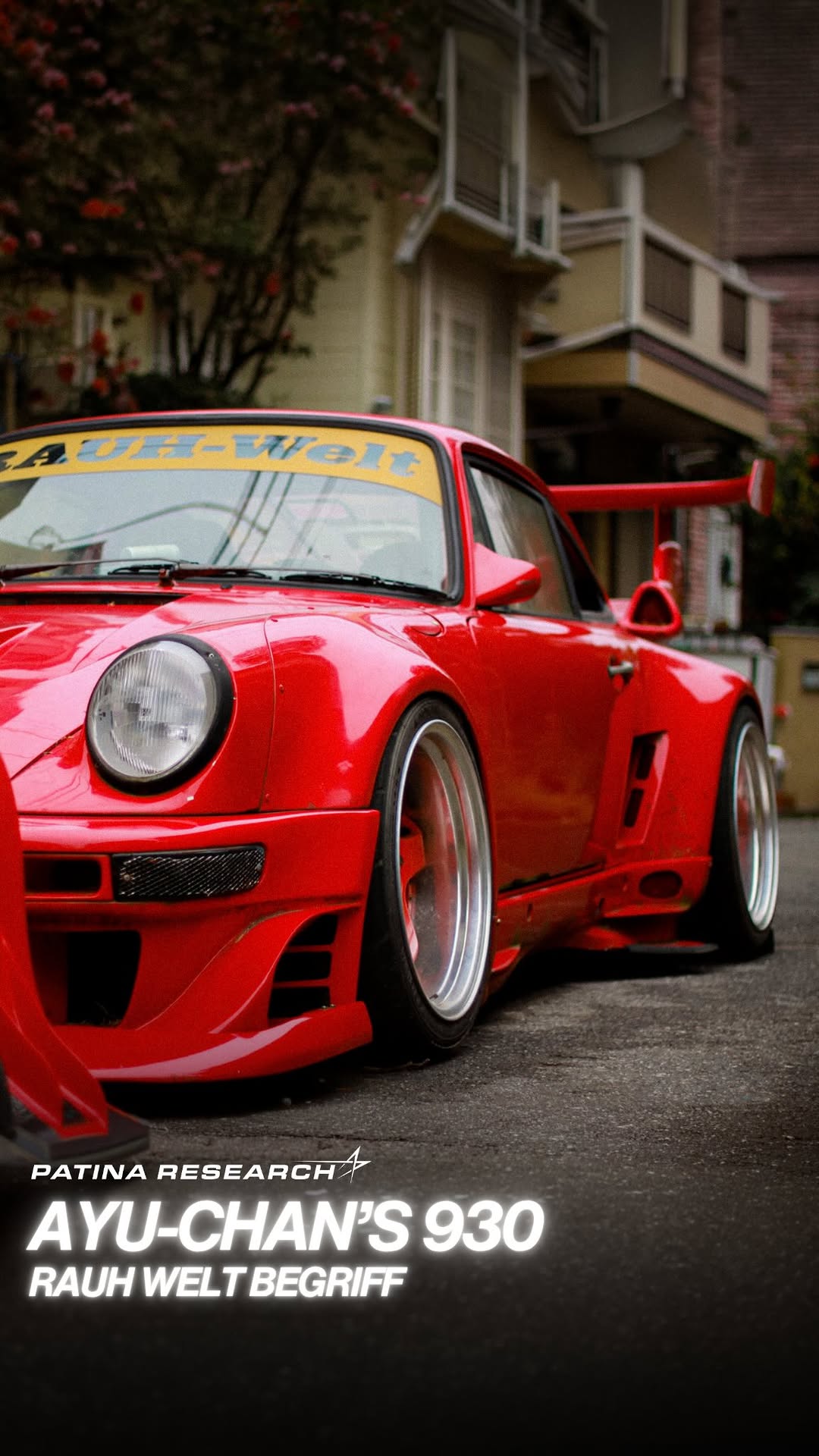
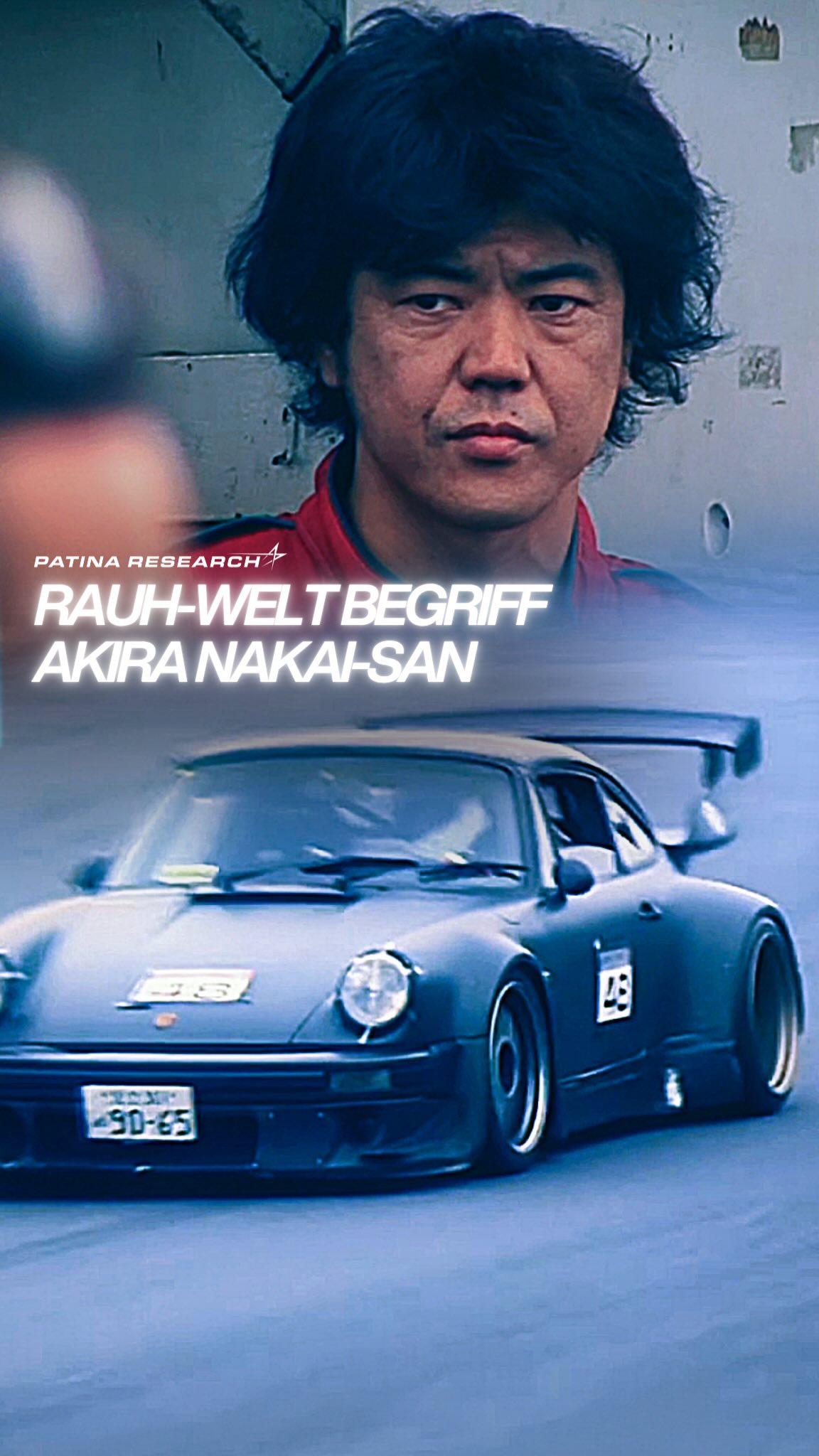
@patina.research A time when RWBs were built to race and compete in Idlers. It was an era when air-cooled 911s were cheap, disposable and largely ignored. Nakai started with AE86s before transitioning to air-cooled Porsches after recognizing the potential of the 911 chassis. Ayu-chan’s 930 came from that period. He started an active blog in 2003, documenting the car’s modifications, track days and races at circuits such as Tsukuba and Motegi. At its peak, it ran a Promodet-built 3.8-litre 993 RSR flat-six producing around 350 horsepower, with PMO carburetors and twin MSD ignition. It also used 993 Turbo brakes, Koyama racing shocks, H&R suspension and an FRP body with a GT2-style wing that fed air to the engine. The blog stopped being updated in 2008. The car was later sold to the UK and apparently now resides in Spain, changed from its original specification.
View original on Instagram

The edit1 shot · 14 text
Shots Text1:06

Performance

Views
481.7K
Likes
40.3K
Comments
229
Engagement
8.4%
Outlier
6.5×
Length · 31 Jul 2026
1:06

Video #38104 · Faceless

Documenting a legendary car's historyfrom @patina.research

[01]

Overview

The creator presents a historical documentary of a specific red RWB Porsche 930, known as Ayu-chan's car. Using a montage of archival footage and photos, the video details the car's technical specifications, its owner's blog documenting its life, its racing career at Japanese circuits, its eventual sale to the UK, and its current location in Spain, concluding that it represents the original track-focused ethos of the RWB brand.

[02]

Simple outline

  1. 1State nostalgic premise
  2. 2Introduce legendary example
  3. 3Trace historical journey
  4. 4Reveal current fate
  5. 5Reaffirm initial premise

[03]

Related videos

[04]

Classification

Format
Concepts
Nostalgia HighlightJourney DocumentationCharacter Profile
Elements
Text OverlayArchival FootageMontage EditingMood MusicImage OverlayTitle Text Hook

[05]

Hook analysis

What stops the scroll in the first 3 seconds

Title hook · 65%

BACK WHEN RWBS WERE BUILT TO RACE

Visual hook · 35%

The video opens with a shot of a vibrant red, heavily modified RWB Porsche with its engine cover wide open, revealing the intricate engine. The raw, loud sound of the engine starting and idling provides a strong auditory hook, immediately establishing the video's focus on high-performance automotive culture.

[06]

Hook template

Steal this for your own video

Back when [industry/brand/era] were built to [original pure purpose]

  • — Back when sneakers were built to run
  • — Back when guitars were built to be played
  • — Back when watches were built to survive

[07]

Hook and payoff

The promise the opener makes, and how the video pays it back

Hook

A bold, nostalgic declaration that contrasts a past ideal with the present, accompanied by a strong sensory input (e.g., raw audio) to immediately engage the target audience.

Payoff

Summarize the subject's overall significance and legacy, explicitly connecting its story back to the opening premise to create a satisfying and conclusive narrative loop.

[08]

Narrative framework

The structural pattern this video runs on

Framework

The Legendary Object

To tell the complete life story of a significant object or creation, framing it as an exemplar of a 'golden era' to establish its legendary status and trace its journey through time.

  1. 1

    The Nostalgic Premise

    Establish the video's core thesis by framing the subject within a 'purer' historical context, creating an intriguing hook.

  2. 2

    The Subject's Origin

    Introduce the specific subject of the story and establish its foundational importance or uniqueness within that context.

  3. 3

    The Technical Credibility

    Provide concrete data, specifications, or evidence to substantiate the initial premise and prove the subject's legitimacy.

  4. 4

    The Documented Legacy

    Showcase the human effort, dedication, and documented history behind the subject to build an emotional connection and authenticity.

  5. 5

    The Functional Design

    Detail specific, purpose-driven features of the subject to reinforce its intended function and design philosophy.

  6. 6

    The Competitive Proof

    Provide visual evidence of the subject performing its intended function in its native environment, proving its capabilities.

  7. 7

    The Narrative Turning Point

    Introduce a moment of change, transition, or the end of an era to shift the story's direction and create suspense.

  8. 8

    The Subsequent Journey

    Trace the subject's history after the turning point, showing its evolution, new ownership, or changes from its original state.

  9. 9

    The Present Status

    Resolve the viewer's curiosity by revealing the subject's current location and condition.

Themes

  • Nostalgia
  • Automotive History
  • Craftsmanship
  • Performance
  • Brand Evolution

Techniques

  • Archival Footage
  • Montage Editing
  • Text Overlay

Post caption

A time when RWBs were built to race and compete in Idlers. It was an era when air-cooled 911s were cheap, disposable and largely ignored. Nakai started with AE86s before transitioning to air-cooled Porsches after recognizing the potential of the 911 chassis. Ayu-chan’s 930 came from that period. He started an active blog in 2003, documenting the car’s modifications, track days and races at circuits such as Tsukuba and Motegi. At its peak, it ran a Promodet-built 3.8-litre 993 RSR flat-six producing around 350 horsepower, with PMO carburetors and twin MSD ignition. It also used 993 Turbo brakes, Koyama racing shocks, H&R suspension and an FRP body with a GT2-style wing that fed air to the engine. The blog stopped being updated in 2008. The car was later sold to the UK and apparently now resides in Spain, changed from its original specification.
Text overlays

  • title · beginning

    BACK WHEN RWBS WERE BUILT TO RACE

  • informational · beginning

    AYU-CHAN'S 930 WAS ONE OF THE EARLIEST RWB BUILDS

  • informational · beginning

    THE 3.8-LITRE 993 RSR FLAT-SIX PRODUCED AROUND 350 HORSEPOWER AND USED PMO CARBURETORS WITH A TWIN MSD IGNITION SYSTEM

  • informational · middle

    IN 2003, AYU-CHAN STARTED AN ACTIVE BLOG

  • informational · middle

    HE DOCUMENTED EVERY MODIFICATION, TRACK DAY AND RACE

  • informational · middle

    THE FRP BODY AND GT2-STYLE WING USED SIDE DUCTS TO FEED AIR TO THE ENGINE

  • informational · middle

    THE CAR REGULARLY APPEARED AT IDLERS EVENTS

  • informational · middle

    IT RACED AT CIRCUITS INCLUDING TSUKUBA AND MOTEGI

  • informational · middle

    AYU-CHAN STOPPED UPDATING THE BLOG IN 2008

  • informational · middle

    THE CAR WAS LATER SOLD AND WENT TO THE UK

  • informational · end

    THE CAR HAS SINCE BEEN CHANGED FROM ITS ORIGINAL SPECIFICATION

  • informational · end

    IT APPARENTLY NOW RESIDES IN SPAIN

  • informational · end

    TO THIS DAY, IT REMAINS ONE OF THE MOST CREATIVE AND CONTROVERSIAL RWB BUILDS OF ALL TIME

  • informational · end

    A SHOW AND TRACK CAR, JUST AS NAKAI ORIGINALLY INTENDED THE BRAND TO BE

Documenting a legendary car's history | Viral Hooks