@earth
Instagram · Vlog
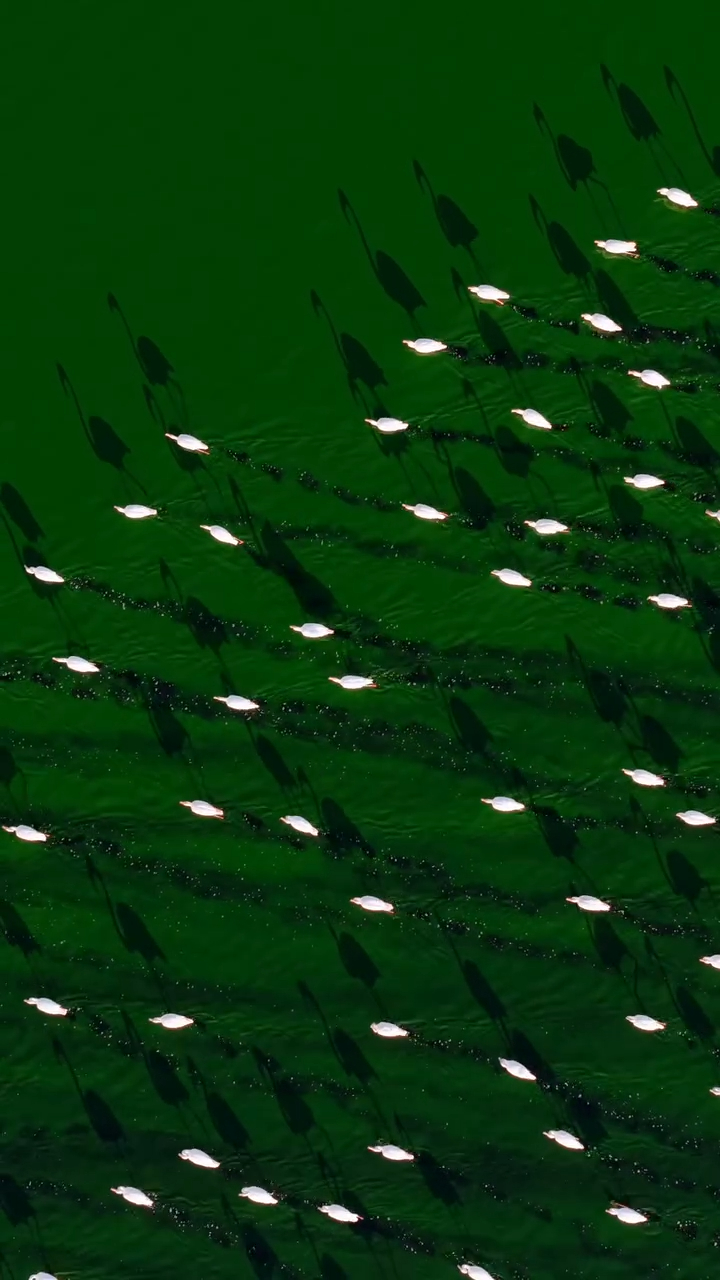
@earth Video by @seymen.b Flamingoes move through life in unison. Flocks travel together, and once they find a suitable site to breed, thousands of them will perform a collective courtship display.¹ Flamingos will then lay eggs at similar times and raise young together within complex social networks.² As the birds travel and breed in community, they rely on microscopic life to stay fueled: algae, diatoms, and tiny invertebrates in shallow waters serve as abundant energy sources to support a growing flock.³ ¹Perrot, C., Béchet, A., Hanzen, C., Arnaud, A., Pradel, R., & Cézilly, F. (2016). Sexual display complexity varies non-linearly with age and predicts breeding status in greater flamingos. Scientific Reports, 6, 36242. https://doi.org/10.1038/srep36242 ²McCully, F. R., & Rose, P. E. (2023). Individual personality predicts social network assemblages in a colonial bird. Scientific Reports, 13, 3376. https://doi.org/10.1038/s41598-023-29315-3 ³Carlos, C. J. (2026). Osteology of the feeding apparatus of Chilean flamingo Phoenicopterus chilensis (Aves: Phoenicopteridae). Journal of Morphology, 287, e70116. https://doi.org/10.1002/jmor.70116