Viral Hooks
Trending short videosDancing surgeon gives advice via text
D

@drkerbel

Instagram · One Shot
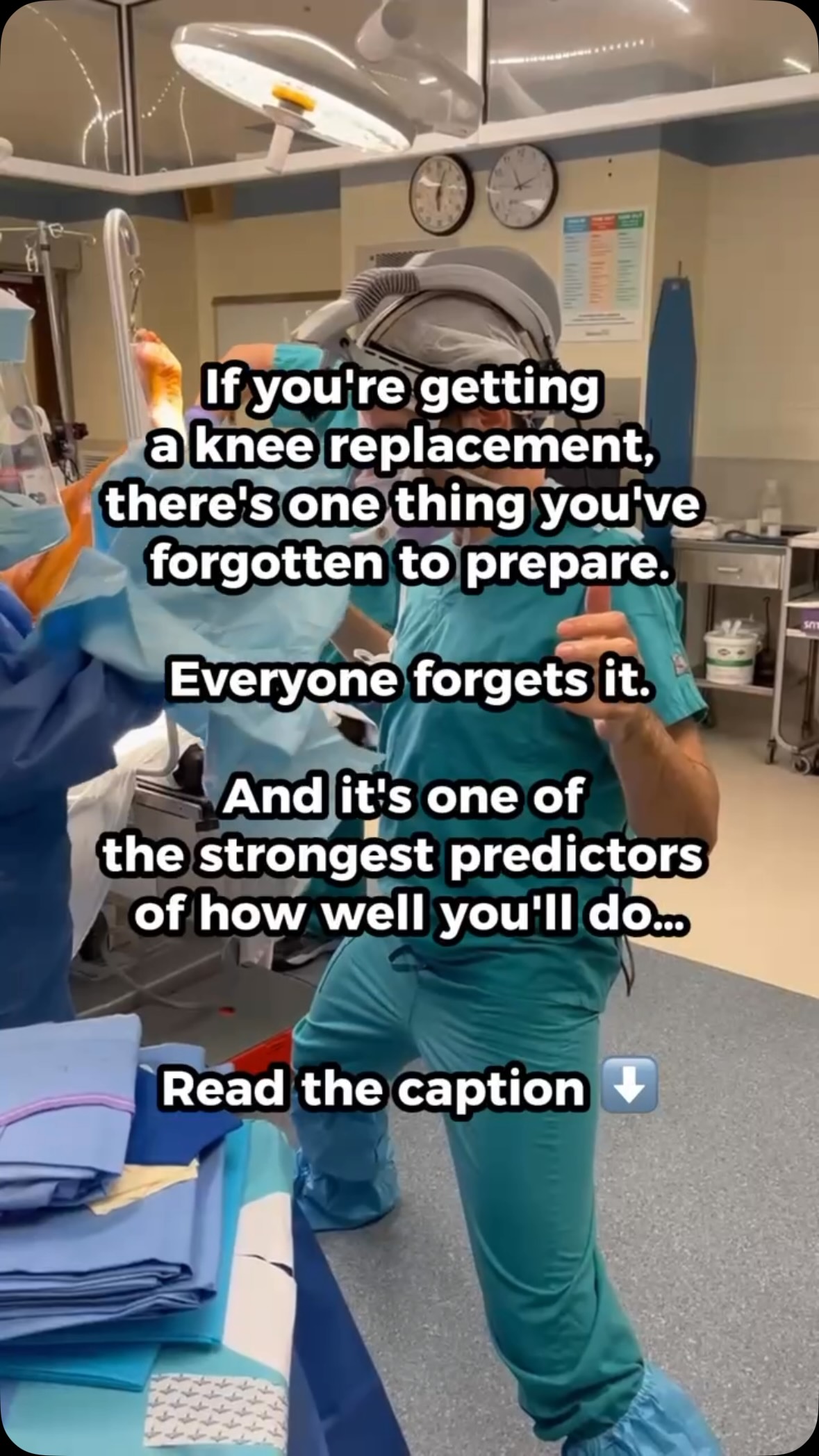
@drkerbel You’ve probably prepared everything for your knee replacement. You picked your surgeon, you’ve got your physical therapy lined up, you’ve planned the time off. All of that matters enormously, but none of it is actually in your control. There’s one thing that is. And almost nobody prepares it. When researchers looked at who was still in pain a year after surgery, they found that one of the strongest predictors of outcome had NOTHING to do with any of those things... It’s the STATE OF MIND you went into surgery with. Your stress levels, how you handle pain, your general mental health. In a review of about thirty thousand patients, that sat near the top of the list. Patients who go into surgery carrying a lot of distress report more pain and worse function a year later. Even when the operation went perfectly. This is why I talk about mindset as much as I talk about surgery. It’s not fluff. It’s actually evidence-based advice that will help you succeed. What’s really amazing about it is that this part is ENTIRELY in your control. You don’t need to rely on a surgeon, a hospital, or any other external factor. You are the one in control. To be clear, I’m not saying the pain is in your head. I’m saying that in the weeks before surgery, you should spend as much time focusing on your mental health as you do on your knee. Sort out your sleep, line up your support, and deal with the anxiety and depression head-on instead of white-knuckling it. You can already begin working on this BEFORE your surgery ever takes place, and it’s going to make your outcome BETTER. Walk in on the day of surgery with your mental health better than it’s ever been. Take time to get your mindset and your psychology into a state of OPTIMISM and EMPOWERMENT. It will show up in your results. And if you want to hear more evidence-based things that nobody talks about that will help you get a better outcome after your knee or hip replacement, sign up for my weekly joint health newsletter. Comment NEWSLETTER and I’ll send you the sign-up link. Study: Lewis et al. “Predictors of persistent pain after total knee arthroplasty: a systematic review and meta-analysis.”
View original on Instagram

The edit1 shot · 2 text
Shots Text0:07

Performance

Views
104.8K
Likes
359
Comments
200
Engagement
0.5%
Outlier
16.7×
Length · 14 Aug 2026
0:07

Video #39618 · One Shot

Dancing surgeon gives advice via textfrom @drkerbel

[01]

Overview

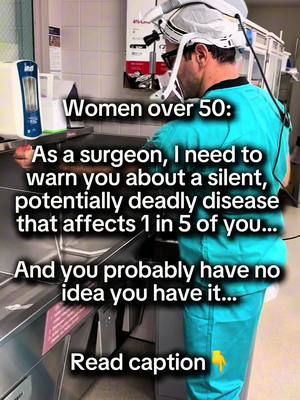
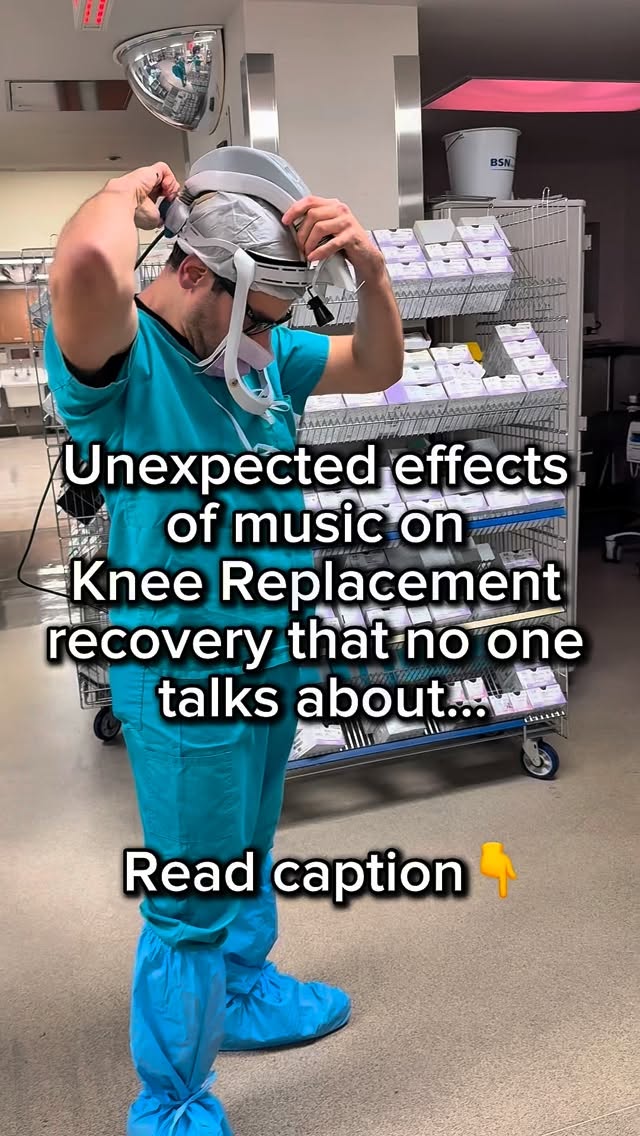
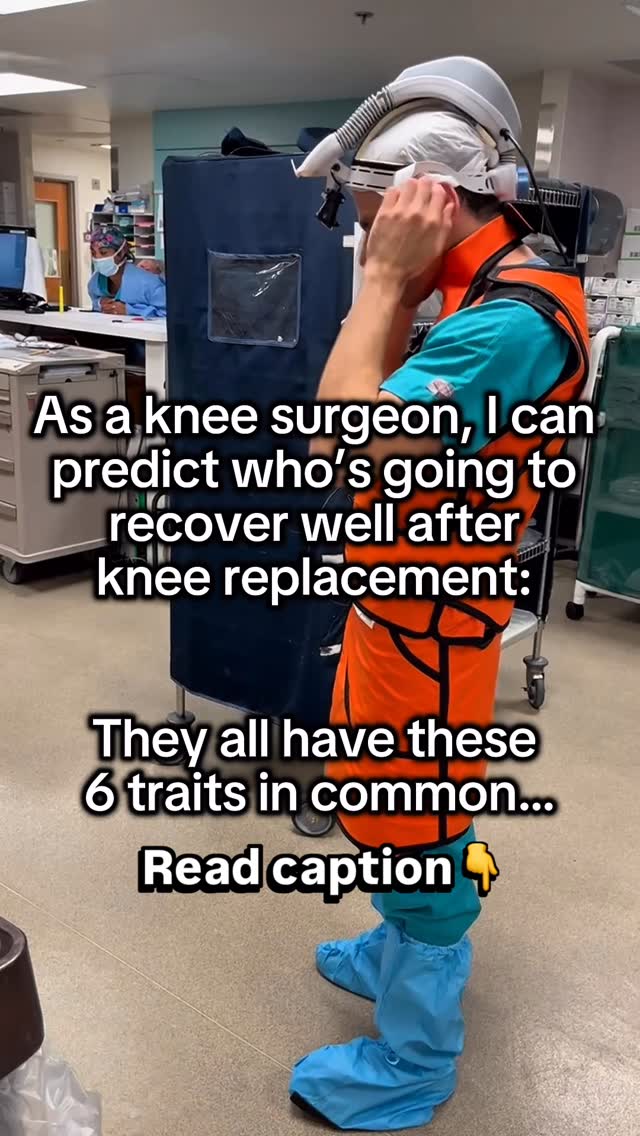
A surgeon dances in an operating room while text overlays present a hook about a forgotten preparation step for knee replacement surgery. The text then directs viewers to read the caption for the answer, which explains the critical importance of a patient's mental state before surgery.

[02]

Simple outline

  1. 1State a niche problem
  2. 2Claim it's a universal error
  3. 3Amplify the stakes
  4. 4Direct to caption for solution

[03]

Related videos

[04]

Classification

Format
Concepts
Read CaptionPro Tip One ShotStrange but True
Elements
Text OverlayTitle Text HookRead Below CTAMood Music

[05]

Hook analysis

What stops the scroll in the first 3 seconds

Title hook · 65%

If you're getting a knee replacement, there's one thing you've forgotten to prepare.

Visual hook · 35%

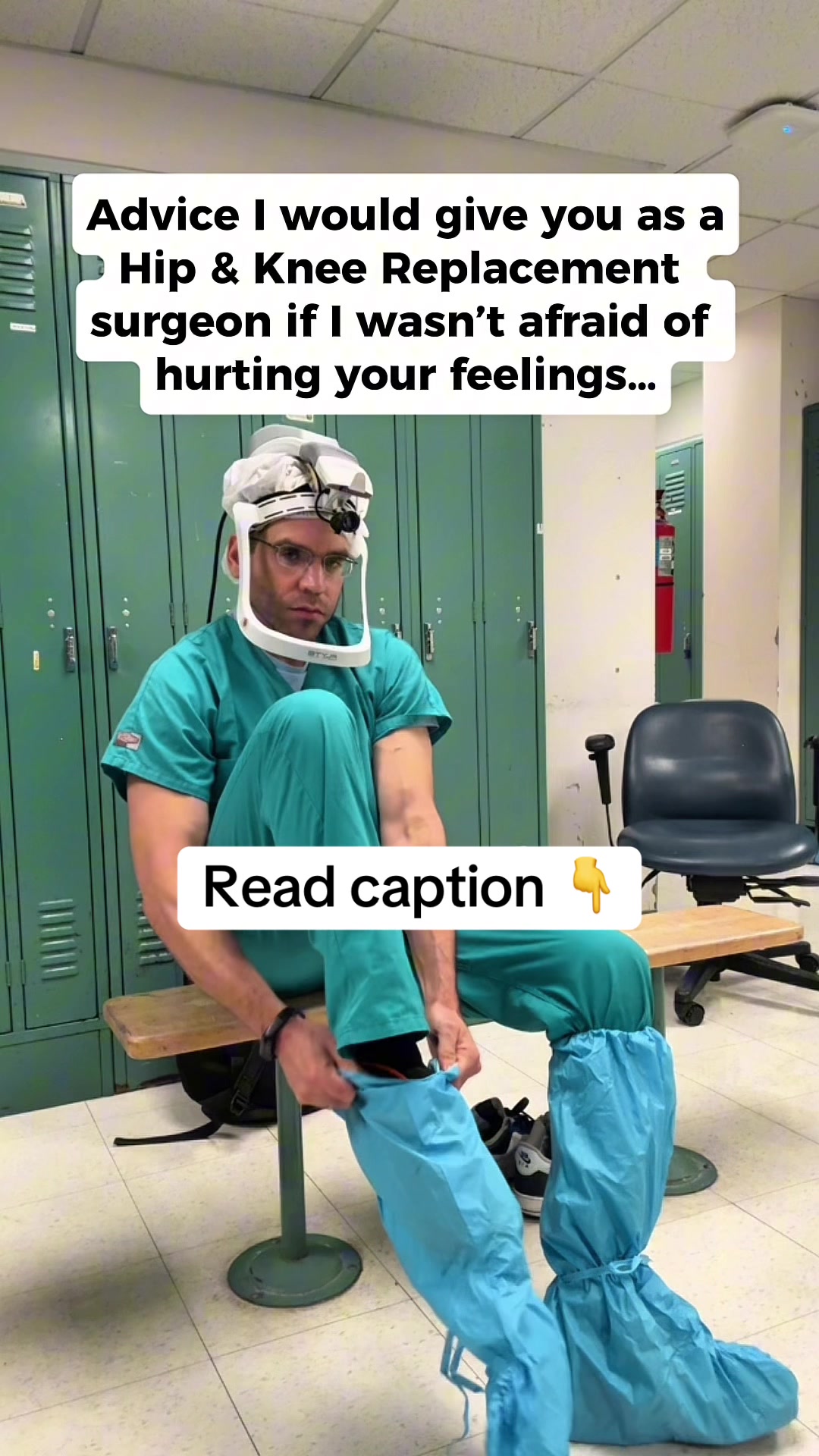
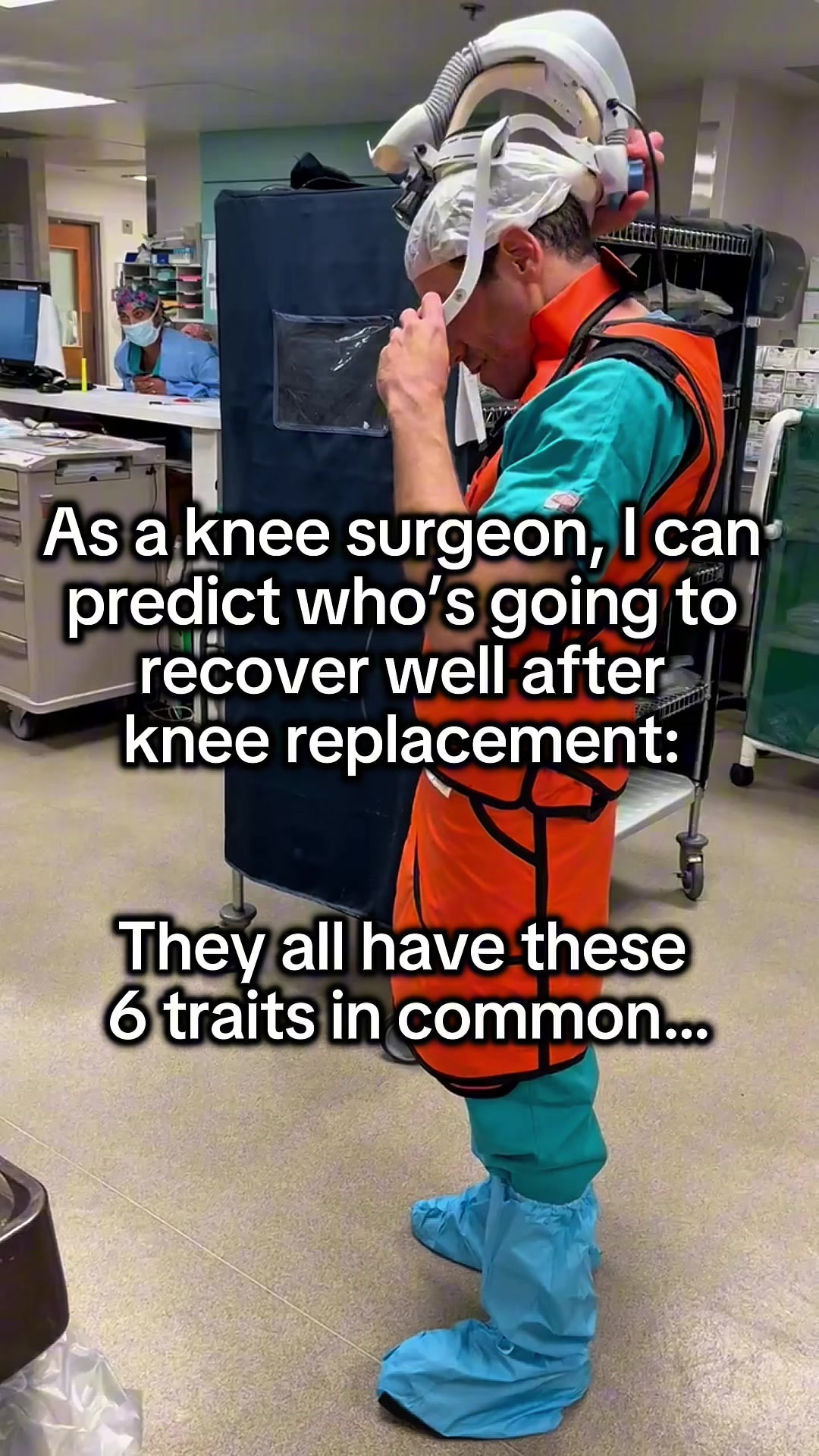
A surgeon in full scrubs, including a specialized helmet, is dancing energetically in a brightly lit operating room, which is an unexpected and attention-grabbing action for the setting.

[06]

Hook template

Steal this for your own video

If you're getting [medical procedure], there's one thing you've forgotten to prepare.

  • — If you're getting LASIK surgery, there's one thing you've forgotten to prepare.
  • — If you're getting a root canal, there's one thing you've forgotten to prepare.
  • — If you're buying your first home, there's one thing you've forgotten to prepare.

[07]

Hook and payoff

The promise the opener makes, and how the video pays it back

Hook

A direct address to a specific audience, immediately presenting a high-stakes problem or a piece of 'forgotten' information to create an instant information gap.

Payoff

The resolution is intentionally withheld from the video. Instead, a direct call-to-action funnels the viewer to the caption to satisfy the curiosity built by the preceding beats, effectively trading the answer for further engagement.

[08]

Narrative framework

The structural pattern this video runs on

Framework

The Information Gap Cliffhanger

To generate intense curiosity by identifying a critical, commonly overlooked piece of information for a specific audience, and then withholding the answer to drive engagement with the post's text caption.

  1. 1

    The Niche Problem Statement

    Qualifies the target audience and introduces a specific, overlooked element related to a significant event or goal, immediately establishing relevance and intrigue.

  2. 2

    The Normalization of Error

    Asserts that this oversight is universal ('Everyone forgets it'), which validates the viewer's potential ignorance and increases the perceived value and exclusivity of the coming information.

  3. 3

    The Consequence Amplifier

    Links the overlooked element directly to the success or failure of the outcome, dramatically raising the stakes and making the withheld information feel essential.

Themes

  • Medical advice
  • Mind-body connection
  • Patient empowerment
  • Preparation

Techniques

  • Pattern interrupt
  • Information gap
  • Call to action

Post caption

You’ve probably prepared everything for your knee replacement. You picked your surgeon, you’ve got your physical therapy lined up, you’ve planned the time off. All of that matters enormously, but none of it is actually in your control. There’s one thing that is. And almost nobody prepares it. When researchers looked at who was still in pain a year after surgery, they found that one of the strongest predictors of outcome had NOTHING to do with any of those things... It’s the STATE OF MIND you went into surgery with. Your stress levels, how you handle pain, your general mental health. In a review of about thirty thousand patients, that sat near the top of the list. Patients who go into surgery carrying a lot of distress report more pain and worse function a year later. Even when the operation went perfectly. This is why I talk about mindset as much as I talk about surgery. It’s not fluff. It’s actually evidence-based advice that will help you succeed. What’s really amazing about it is that this part is ENTIRELY in your control. You don’t need to rely on a surgeon, a hospital, or any other external factor. You are the one in control. To be clear, I’m not saying the pain is in your head. I’m saying that in the weeks before surgery, you should spend as much time focusing on your mental health as you do on your knee. Sort out your sleep, line up your support, and deal with the anxiety and depression head-on instead of white-knuckling it. You can already begin working on this BEFORE your surgery ever takes place, and it’s going to make your outcome BETTER. Walk in on the day of surgery with your mental health better than it’s ever been. Take time to get your mindset and your psychology into a state of OPTIMISM and EMPOWERMENT. It will show up in your results. And if you want to hear more evidence-based things that nobody talks about that will help you get a better outcome after your knee or hip replacement, sign up for my weekly joint health newsletter. Comment NEWSLETTER and I’ll send you the sign-up link. Study: Lewis et al. “Predictors of persistent pain after total knee arthroplasty: a systematic review and meta-analysis.”
Text overlays

  • title · throughout

    If you're getting a knee replacement, there's one thing you've forgotten to prepare. Everyone forgets it. And it's one of the strongest predictors of how well you'll do...

  • call-to-action · throughout

    Read the caption ⬇️