Viral Hooks
Trending short videosTool brand tribalism business breakdown
M

@maxxrosenblum

Instagram · Talking Head Edit

@maxxrosenblum Stanley Black & Decker, the 183-year-old American toolmaker, is closing its last hometown factory in New Britain, Connecticut this week. The conventional explanation, cheap foreign labor, does not fit the facts. Stanley’s American-made tape measure was the industry standard. The Thai import that displaced it is worse built. It simply prints numbers on both sides of the blade. That detail rewrites the story of American deindustrialization. Tariffs, the policy tool of choice for thirty years, operate on price. They cannot fix a product that customers have decided is worse, nor an ecosystem (Milwaukee’s M18, DeWalt’s FlexVolt) that competitors built while incumbents optimized 1960s catalogues. Stanley’s stock has shed nearly 60% since 2021. Its rival TTI just posted a record $15.3bn year. Same aisle at Home Depot, opposite trajectories, and a warning that legacy industries pretending their problem is China may, in fact, have a problem with themselves. #economics #tools #hardware #construction

View original on Instagram

The edit1 shot · 10 text
Shots Text2:45

Performance

Views
67.9K
Likes
2.2K
Comments
94
Engagement
3.3%
Length · 12 May 2026
2:45

Video #40032 · Talking Head Edit

Tool brand tribalism business breakdownfrom @maxxrosenblum

[01]

Overview

The creator presents a detailed case study explaining the decline of the American tool company Stanley Black & Decker in contrast to the success of foreign-owned competitors like Milwaukee. He argues that brand loyalty among American workers (tribalism) is ironically directed at foreign brands, while the American company fails due to product stagnation, exemplified by its tape measure being out-innovated by a simple feature. The creator analyzes Stanley's falling stock, the 'battery moat' ecosystem strategy that competitors used to lock in customers, and concludes that Stanley's 'heritage trap' of relying on old products led to its downfall, a problem that policy like tariffs cannot fix.

[02]

Simple outline

  1. 1State surprising contradiction
  2. 2Reveal hidden industry truth
  3. 3Explain failure with micro-example
  4. 4Expose consumer paradox
  5. 5Name the core problem

[03]

Related videos

[04]

Classification

Concepts
Case Study BreakdownBreakdown
Elements
B-Roll CutawayVoiceoverTitle Text Hook

[05]

Hook analysis

What stops the scroll in the first 3 seconds

Title hook · 52%

THE ALL AMERICAN TOOLBOX TRAP

Verbal hook · 43%

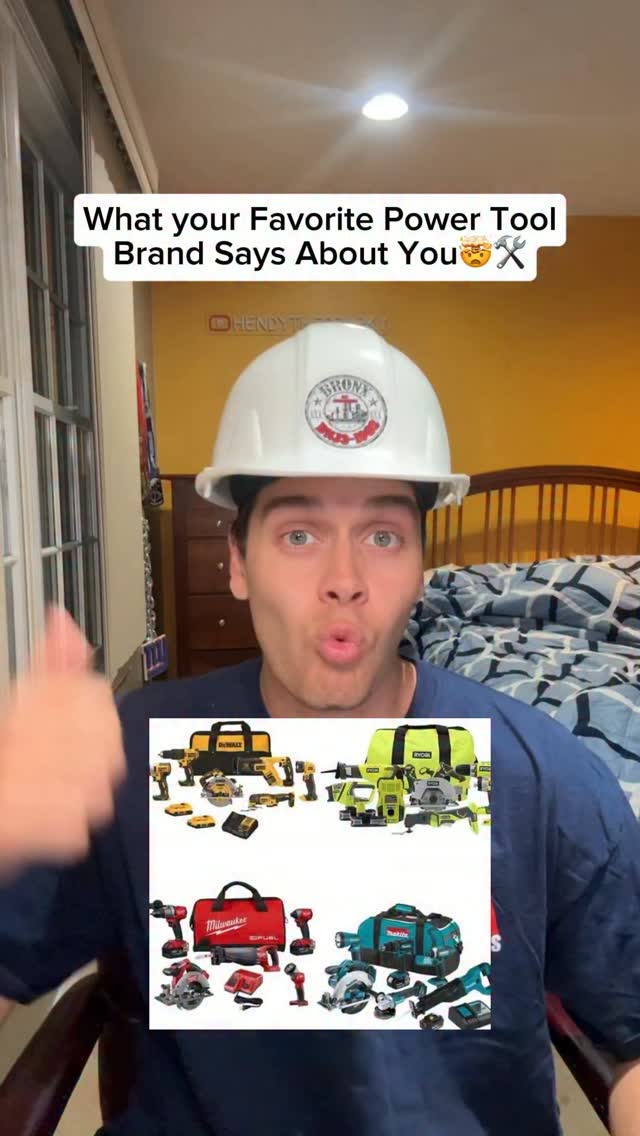
Dewalt and Milwaukee are thriving while Stanley Black and Decker is dying.

Visual hook · 5%

A dynamic, slightly blurred, extreme close-up of a DeWalt circular saw actively cutting wood, creating immediate motion and visual interest for the target audience.

[06]

Hook template

Steal this for your own video

THE [IDENTITY] [FAMILIAR THING] TRAP

  • — THE ALL-AMERICAN TOOLBOX TRAP
  • — THE LUXURY SKINCARE TRAP
  • — THE SMALL-BUSINESS SOFTWARE TRAP

[07]

Hook and payoff

The promise the opener makes, and how the video pays it back

Hook

Present a startling and counter-intuitive paradox within a familiar industry: a dominant player is thriving while a legacy brand is dying.

Payoff

Deliver a final, hard-hitting verdict that resolves the initial paradox by concluding that pragmatic product choice and ecosystem value will always trump symbolic sentiment, and that policy solutions often fail because they target the wrong problem.

[08]

Narrative framework

The structural pattern this video runs on

Framework

The Heritage Trap Explainer

To deconstruct a common belief by revealing a counter-intuitive truth, explaining the mechanics of why the old belief is wrong using a specific micro-example, and then naming the newly revealed phenomenon.

  1. 1

    The Tribal Premise

    Establish the viewer's personal connection and identity within the topic by framing brand choices as 'tribes' with deep-seated loyalty.

  2. 2

    The Nationality Inversion

    Subvert the viewer's core assumption by revealing, with data, that the 'tribes' they identify with are not what they seem (e.g., 'American' brands are foreign-owned).

  3. 3

    The Lone Survivor's Decline

    Isolate the one entity that fits the original assumption (the American-owned brand) and present quantitative proof of its failure, deepening the initial mystery.

  4. 4

    The Microcosm of Failure

    Zoom into a single, simple product comparison to explain the entire macro-level failure. This beat argues that a small, overlooked innovation, not price or origin, was the deciding factor.

  5. 5

    The Patriot's Paradox

    Expose the cognitive dissonance between symbolic identity (patriotic signaling) and pragmatic consumer choice (purchasing a superior foreign product).

  6. 6

    The Ecosystem Moat

    Introduce the concept of systemic lock-in (e.g., a shared battery platform) to explain why initial consumer choices are binding and create high switching costs, cementing a competitor's advantage.

  7. 7

    The Innovator vs. The Optimizer

    Contrast the winning competitor's strategy of building a new system against the losing incumbent's strategy of optimizing a legacy one, assigning a clear reason for the divergence.

  8. 8

    The Grand Unifying Theory

    Coin a memorable term ('The Heritage Trap') to encapsulate the entire argument, giving the viewer a powerful mental model and a feeling of intellectual discovery.

Themes

  • American manufacturing
  • Globalization
  • Brand loyalty vs. product quality
  • Corporate strategy
  • Product stagnation

Techniques

  • Data visualization
  • Case study analysis
  • B-roll integration

Post caption

Stanley Black & Decker, the 183-year-old American toolmaker, is closing its last hometown factory in New Britain, Connecticut this week. The conventional explanation, cheap foreign labor, does not fit the facts. Stanley’s American-made tape measure was the industry standard. The Thai import that displaced it is worse built. It simply prints numbers on both sides of the blade. That detail rewrites the story of American deindustrialization. Tariffs, the policy tool of choice for thirty years, operate on price. They cannot fix a product that customers have decided is worse, nor an ecosystem (Milwaukee’s M18, DeWalt’s FlexVolt) that competitors built while incumbents optimized 1960s catalogues. Stanley’s stock has shed nearly 60% since 2021. Its rival TTI just posted a record $15.3bn year. Same aisle at Home Depot, opposite trajectories, and a warning that legacy industries pretending their problem is China may, in fact, have a problem with themselves. #economics #tools #hardware #construction

Text overlays

  • title · beginning

    THE ALL AMERICAN TOOLBOX TRAP

  • informational · middle

    WHO ACTUALLY OWNS THE TOOL IN YOUR TRUCK Five flags. One American. The American one is the one dying.

  • informational · middle

    SWK Stanley Black & Decker, Inc. stock chart

  • contextual · middle

    Storied Toolmaker Closes Its Last Hometown Plant—and Blames Its Tape Measures

  • informational · middle

    THE POLICY PROBLEM IN ONE PICTURE What we say. What we buy. The gap in between is where Stanley dies.

  • informational · end

    THE BATTERY MOAT One battery. Hundreds of tools. A lifetime of lock-in.

  • informational · end

    SBD CYBER-CUTTING PROGRAM - 2015-2024 Six US plants closed. Over 1,150 jobs gone.

  • informational · end

    THE HERITAGE TRAP The same depth that protected Stanley is the depth that buried it.

  • informational · end

    FOUNDED 1843 - 182 YEARS LATER Everything converged on one product, made one way.

  • informational · end

    TARIFFS CAN'T SAVE STANLEY Tariffs are a price weapon. The fight isn't on price.

Transcript

Worst No are thriving while Stanley Black and Decker is dying. Let's talk about modern hardware, American tribalism, and the true cost of product stagnation. These are tribes, real ones. The color of the drill in your trunk says more about you than your zip code, and everybody knows this is the true bro code, and everybody picks a side by 25 and dies on it. Yet every single one of those tribes is dying for a foreign flag and none of them know about it or perhaps none of them care. Milwaukee's owned by Tier out of Hong Kong, Ryobi tier same rank, in China and Vietnam, Makita is Japanese. The only American brand left in the big six is Stanley Black and Decker worst Stanley is the one that's dying. The stock peaked at $2.25 in May 2020 and now trades around $78. The driver here isn't some macro story you can blame on the Fed. It's coming straight out of the segment that built the company. The American owned brand is the one bleeding share in the country whose flag is on the tailgate. So the entire American job site is running on imported allegiance. And to make matters worse, Stanley is closing its last hometown factory on May tier, 300 jobs in New Britain, Connecticut. Best Stanley's American made tape measure is the one made in New Britain, and it's the best in its category. Trade workers will tell you, quality wise, it's it's the best. But the Thai import killing it is objectively worse built. But it prints numbers on both sides of the blade, not just one, and that's its entire edge. Nearly two hundred years from American manufacturing heritage beaten by a printing decision, and it's the true cost of product stagnation. Yet that same guy with the American flag on his tailgate is holding the Milwaukee inside his toolbox. American tribalism and the actual purchase decision stops to trigger the drill every single tier. And it's really not a moral failure. This is what tribalism in 2026 actually is. It's an identity you work with. The flag on your bumper costs next to nothing. Meanwhile, the Hong Kong made Milwaukee packout system worst $400 and locks you in for life. One of those is signaling. The other one is switching costs. Guess which one wins? And that gap between what we say about American manufacturing and what we actually buy is the entire customers. No layer in the ecosystem. We wonder why it's so hard to switch off our favorite devices, and these hardware manufacturers are no different. A battery pack from the Bush administration still powers a twenty twenty six drill across these brands. These are premium price plays because they're selling ecosystems. The drill is the acquisition cost while the battery technology is the moat. And instead of building that ecosystem, Stanley spent the same decade running a 2,000,000,000 worst cutting program, closing plants in South Carolina, Texas, Connecticut, optimizing a nineteen sixty's catalog while Tier built the iPhone of the job site. And that's tier true worst of stagnation, it doesn't show up for years, and when it shows up, it shows up as a hometown closing. Call it the Heritage Trap. One hundred and eighty three years of supplier relationships, tooling, union contracts, tax abatements, all built around making one thing one way. And that depth is your mote when the spec is stable, it's an anchor that's making one thing one way. And that depth is your moat when the spec is stable, it's an anchor the second the spec changes. And this is exactly why tariffs could never save Stan Lee, and categories where The US product still wins on merit best tier short, while categories where the foreign version is generally better get quietly no. And no tribe, no flag, no slogan changes that math. The Milwaukee guy, the Ryobi guy, and the Makita guy are never going to shake hands, but they all agreed on one thing already: the flag is for the truck, the tool is for the work, and the work picked tier winner a long time ago.


Tool brand tribalism business breakdown | Viral Hooks