Viral Hooks
Trending short videosRelatable feeling of racing thoughts
S

@sitwithmandy_

Instagram · One Shot
@sitwithmandy_ your body can be desperate for rest…while your brain is still trying to earn it. when your brain won’t turn off, it’s often because it still thinks it’s responsible for keeping you safe. so instead of asking, “How do I stop thinking?” try asking, “What is my brain trying to make sure doesn’t happen?” sometimes it’s: • forgetting something important • disappointing someone • making the wrong decision • losing control etc once you know what your brain is protecting you from, it’s much easier to soothe than to fight it. here are a few things that can actually help: ✨Give your brain a closing shift. Write down everything it keeps bringing up. Then write one sentence underneath: “This will still be here tomorrow.” Your brain is often looking for reassurance that it doesn’t have to hold onto it all night. ✨ Finish the stress cycle before trying to sleep. If you’ve been sitting at a desk all day, your nervous system may still feel like it’s has unfinished energy. Take a 10-minute walk, stretch, shake out your arms, or dance to one song before getting into bed. ✨ Tell your brain what comes next. An anxious brain hates uncertainty. Instead of saying “I need to sleep,” say, “Tomorrow at 9 a.m. I’ll figure this out.” Giving your brain a future appointment often quiets the urgency. ✨Notice where your attention keeps landing. If every thought pulls you toward tomorrow, gently bring yourself back to something happening right now: the weight of your blanket, the temperature of the room, the sound of your fan. You’re giving your brain evidence that, in this moment, nothing needs solving. learning to rest isn’t about becoming someone who will never overthink again but rather, it’s helping your nervous system realize that it doesn’t have to stay on duty 24/7. 🤍 if this resonates with you, comment GUIDE and I’ll send you my free Nervous System Reset & Regulation Guide with more practical tools like these. - #overthinkerproblems #highfunctioninganxiety #nervoussystemdysregulation #childhoodtraumahealing #overacheiver


View original on Instagram

The edit1 shot · 2 text
Shots Text0:06

Performance

Views
812.2K
Likes
54.9K
Comments
64
Engagement
6.8%
Length · 7 Jul 2026
0:06

Video #42057 · One Shot

Relatable feeling of racing thoughtsfrom @sitwithmandy_

[01]

Overview

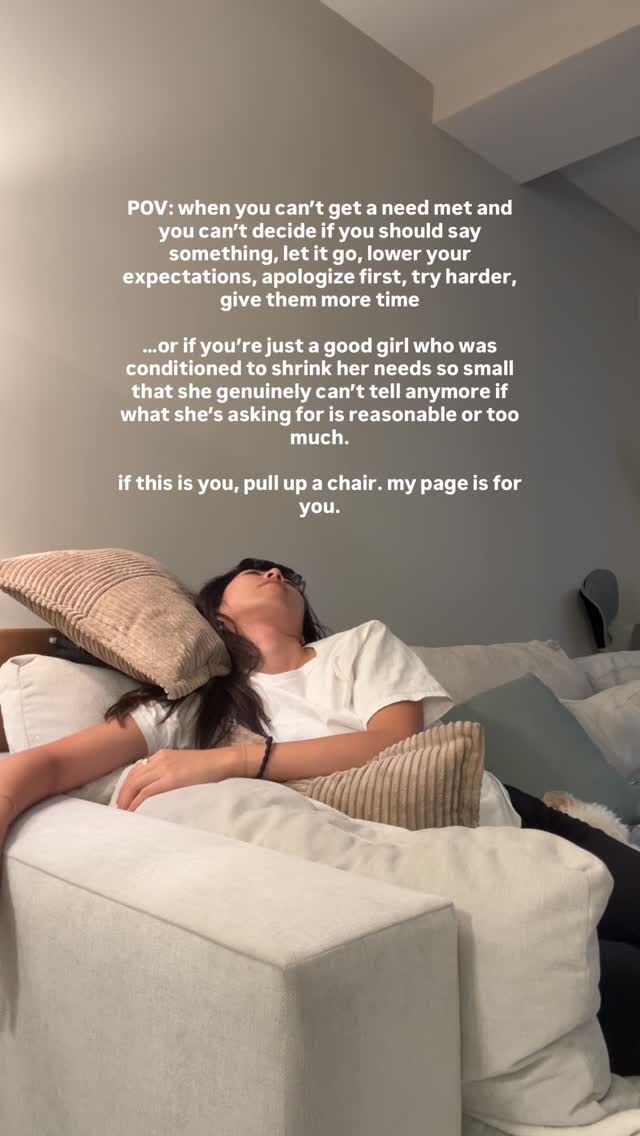
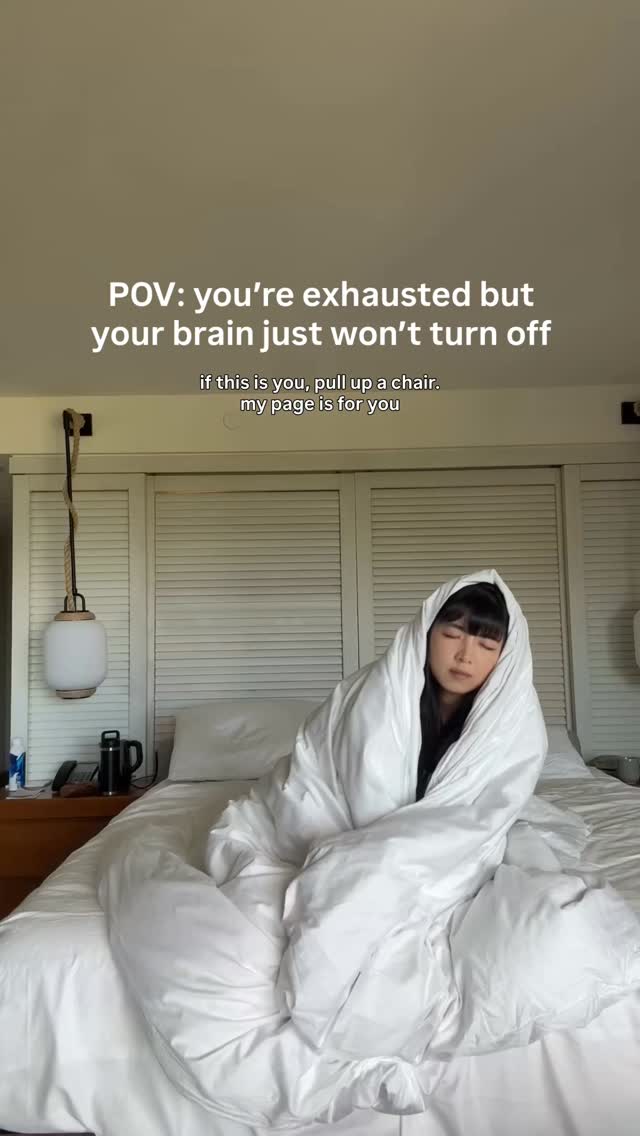
The creator visually represents the feeling of being exhausted but unable to rest due to an overactive mind. They are shown first sitting up and then lying down in bed, completely wrapped in a duvet, while a text overlay explains the situation and an audio track of overlapping, anxious thoughts plays.

[02]

Simple outline

  1. 1State a relatable problem
  2. 2Amplify the internal feeling
  3. 3Offer a community solution

[03]

Related videos

[04]

Classification

Format
Concepts
Relatable One Shot
Elements
Title Text Hook

[05]

Hook analysis

What stops the scroll in the first 3 seconds

Title hook · 65%

POV: you're exhausted but your brain just won't turn off

Verbal hook · 10%

Being lazy. We need to shower.

Visual hook · 25%

A person is sitting up in bed completely enveloped and cocooned in a large white duvet, creating a visually distinct and slightly unusual silhouette that grabs attention.

[06]

Hook template

Steal this for your own video

POV: you're [physical state] but your [mental/emotional state] just won't [expected action]

  • — POV: you're exhausted but your brain just won't turn off
  • — POV: you're full but your cravings just won't quit
  • — POV: you're off the clock but your work anxiety just won't stop

[07]

Hook and payoff

The promise the opener makes, and how the video pays it back

Hook

A large text overlay using the 'POV' format to state a highly specific and relatable internal conflict, immediately capturing the target audience's attention.

Payoff

A secondary text overlay appears, validating the viewer's experience and offering a low-friction call-to-action that frames the creator's page as a solution or a place of belonging.

[08]

Narrative framework

The structural pattern this video runs on

Framework

The Empathy Loop

To establish immediate relatability by presenting a common internal struggle, externalizing the feeling through sensory overload, and then offering a sense of community as the resolution.

  1. 1

    The Visual Embodiment

    The video opens with a person physically acting out the state described in the hook, creating a visual anchor for the abstract feeling.

  2. 2

    The Sonic Overwhelm

    A chaotic, layered audio track of intrusive thoughts is introduced to sonically represent the internal mental state, shifting the viewer from observing the problem to feeling it.

  3. 3

    The Vulnerable Shift

    The character's physical position changes to one of greater vulnerability (e.g., lying down), visually reinforcing the feeling of being overwhelmed by the sensory input.

Themes

  • Mental exhaustion
  • Anxiety
  • Self-criticism
  • The struggle to rest

Techniques

  • POV framing
  • Layered audio
  • Direct address to viewer

Trends

  • Relatable POV content
  • Mental health awareness

Post caption

your body can be desperate for rest…while your brain is still trying to earn it. when your brain won’t turn off, it’s often because it still thinks it’s responsible for keeping you safe. so instead of asking, “How do I stop thinking?” try asking, “What is my brain trying to make sure doesn’t happen?” sometimes it’s: • forgetting something important • disappointing someone • making the wrong decision • losing control etc once you know what your brain is protecting you from, it’s much easier to soothe than to fight it. here are a few things that can actually help: ✨Give your brain a closing shift. Write down everything it keeps bringing up. Then write one sentence underneath: “This will still be here tomorrow.” Your brain is often looking for reassurance that it doesn’t have to hold onto it all night. ✨ Finish the stress cycle before trying to sleep. If you’ve been sitting at a desk all day, your nervous system may still feel like it’s has unfinished energy. Take a 10-minute walk, stretch, shake out your arms, or dance to one song before getting into bed. ✨ Tell your brain what comes next. An anxious brain hates uncertainty. Instead of saying “I need to sleep,” say, “Tomorrow at 9 a.m. I’ll figure this out.” Giving your brain a future appointment often quiets the urgency. ✨Notice where your attention keeps landing. If every thought pulls you toward tomorrow, gently bring yourself back to something happening right now: the weight of your blanket, the temperature of the room, the sound of your fan. You’re giving your brain evidence that, in this moment, nothing needs solving. learning to rest isn’t about becoming someone who will never overthink again but rather, it’s helping your nervous system realize that it doesn’t have to stay on duty 24/7. 🤍 if this resonates with you, comment GUIDE and I’ll send you my free Nervous System Reset & Regulation Guide with more practical tools like these. - #overthinkerproblems #highfunctioninganxiety #nervoussystemdysregulation #childhoodtraumahealing #overacheiver

Text overlays

  • title · throughout

    POV: you're exhausted but your brain just won't turn off

  • call-to-action · throughout

    if this is you, pull up a chair my page is for you

Transcript

Being lazy. We need to shower. We have to escape. Get up. Stop being lazy. You've got this stuff. Mom did. As soon as you make

Relatable feeling of racing thoughts | Viral Hooks