Viral Hooks
Trending short videosExplains Nobel Prize in three points
S

@scientific_american

Instagram · Talking Head Edit

@scientific_american The 2026 Nobel Prize in Physiology or Medicine is awarded to Karl Deisseroth, Georg Nagel and Peter Hegemann for their discoveries underpinning the field of optogenetics, the ability to control cells using light and genetics. Optogenetics allows scientists to use light to switch cells on and off. Using light-sensing proteins called rhodopsins, optogenetics enables precise targeting of cells, such as brain cells, to understand what they do. The technique has revolutionized neuroscience by opening up the brain’s activity to scientists in ways previously impossible. Credit: The Nobel Committee for Physiology or Medicine. Illustrations by Mattias Karlén #sciencenews #news #neuroscience #biology #health

View original on Instagram

The edit1 shot · 5 text
Shots Text1:37

Performance

Views
600.2K
Likes
26.2K
Comments
48
Engagement
4.4%
Outlier
22.2×
Length · 5 Oct 2026
1:37

Video #44296 · Talking Head Edit

Explains Nobel Prize in three pointsfrom @scientific_american

[01]

Overview

The creator explains the 2026 Nobel Prize-winning science of optogenetics by breaking it down into three key points: what it is, its origins in algae research, and why it matters for treating brain conditions. She uses animated diagrams and scientific paper screenshots as visual aids and concludes with an interview clip of Nobel laureate Karl Deisseroth discussing the future of the field.

[02]

Simple outline

  1. 1Announce high-stakes topic
  2. 2Explain the core concept ('What')
  3. 3Reveal the human impact ('Why')
  4. 4Validate with authority figure

[03]

Related videos

[04]

Classification

Concepts
BreakdownWhat Is X?
Elements
B-Roll CutawayMotion GraphicsJump CutGraphic OverlayTitle Text Hook

[05]

Hook analysis

What stops the scroll in the first 3 seconds

Title hook · 50%

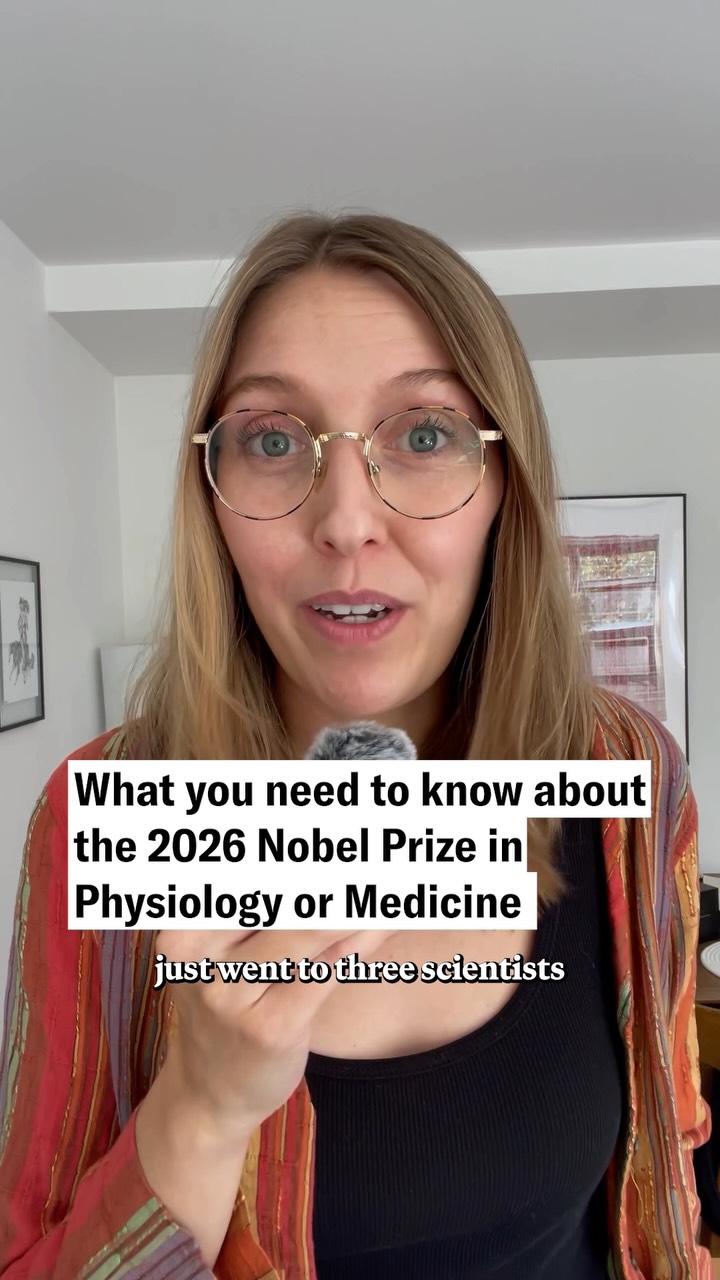
What you need to know about the 2026 Nobel Prize in Physiology or Medicine

Verbal hook · 50%

The 2026 Nobel Prize in Physiology or Medicine just went to three scientists whose work underpins the field of optogenetics.

Visual hook

A woman with glasses speaks directly to the camera while holding a small, fluffy microphone, creating a personal and professional feel.

[06]

Hook template

Steal this for your own video

The [year and award name] just went to [number] [people or group] whose work underpins [field or breakthrough].

  • — The 2026 Nobel Prize in Physiology or Medicine just went to three scientists whose work underpins the field of optogenetics.
  • — The Oscar for Best Director just went to a filmmaker whose work underpins the entire modern indie horror boom.
  • — The James Beard Award for Best Chef just went to two cooks whose work underpins the whole fermentation trend on your feed.

[07]

Hook and payoff

The promise the opener makes, and how the video pays it back

Hook

Announce a significant, timely, or high-authority event to establish immediate importance, then promise a simple, numbered breakdown of what the audience needs to know.

Payoff

Introduce and feature a primary source expert or authority figure who validates the importance of the topic and speaks to its future potential, providing a credible and forward-looking conclusion.

[08]

Narrative framework

The structural pattern this video runs on

Framework

The 3-Point Expert Breakdown

To deconstruct a complex, high-stakes topic into a simple, three-part informational hierarchy (What, How, Why), culminating in validation from a primary source expert.

  1. 1

    The Foundational Definition

    Explain the core concept ('The What') in the simplest possible terms, using colloquial language and a clear visual aid to make it accessible to a general audience.

  2. 2

    The Unexpected Origin Story

    Detail the surprising or non-obvious history of the concept ('The How/Where'), adding a layer of intrigue and demonstrating deeper knowledge that builds credibility.

  3. 3

    The Impact & Relevance Reveal

    Connect the concept to its real-world consequences and human impact ('The Why'), directly answering the viewer's implicit question of 'Why should I care?'.

Themes

  • Scientific discovery
  • Medical innovation
  • Neuroscience

Techniques

  • Direct-to-camera address
  • Visual aids
  • Expert interview

Trends

  • Science communication
  • Educational content

Post caption

The 2026 Nobel Prize in Physiology or Medicine is awarded to Karl Deisseroth, Georg Nagel and Peter Hegemann for their discoveries underpinning the field of optogenetics, the ability to control cells using light and genetics. Optogenetics allows scientists to use light to switch cells on and off. Using light-sensing proteins called rhodopsins, optogenetics enables precise targeting of cells, such as brain cells, to understand what they do. The technique has revolutionized neuroscience by opening up the brain’s activity to scientists in ways previously impossible. Credit: The Nobel Committee for Physiology or Medicine. Illustrations by Mattias Karlén #sciencenews #news #neuroscience #biology #health

Text overlays

  • title · beginning

    What you need to know about the 2026 Nobel Prize in Physiology or Medicine

  • branding · beginning

    The 2026 Nobel

  • informational · beginning

    Number one:

  • informational · middle

    Number two:

  • informational · middle

    And number three:

Transcript

The 2026 Nobel Prize in Physiology or Medicine just went to three scientists whose work underpins the field of optogenetics. Here are three things to know. Number one. What the heck is optogenetics? It's basically a method of using light to turn certain cells on or off. Doing that allows you to get an otherwise impossible view into how they function. This technique has allowed researchers to probe how certain brain circuits or cells influence our behavior and emotion like eating or aggression. Number two. The field would not be possible without algae. More than twenty years ago, researchers wondered why a specific type of algae responds to light. They ended up discovering a light sensitive protein in the algae called channelrhodopsin. Scientists later realized they could use this protein to turn brain cells on or off in mammals and map brain activity and behavior for the first time. And number three, why it all matters. Optogenetics is helping researchers understand all sorts of brain conditions, including Parkinson's and epilepsy, and is opening the door to new treatments. Here's Nobel laureate, Karl Deisseroth, who I interviewed this morning. You know, once you know what matters for function, you can ask how can dysfunction be addressed. You no, are there cells that cause dysfunction? Are there cells that can counteract dysfunction in a precise way? And what we're doing now is... And many others as well as we're seeing how can we leverage this precision to find new treatments, new medications, new neuromodulator, approaches that build on this foundation of of causality.

Explains Nobel Prize in three points | Viral Hooks