@mattjayy
Instagram · Greenscreen Talking Head

@mattjayy Ledger wallets undergoing massive hardware supply chain attack

@mattjayy
Instagram · Greenscreen Talking Head
@mattjayy Ledger wallets undergoing massive hardware supply chain attack
Performance
Video #44415 · Greenscreen Talking Head
[01]
The creator explains a sophisticated supply chain attack targeting Ledger hardware wallets. He details how a reputable reseller, CryptoBills, was acquired by a Chinese company that then secretly implanted spy chips and SIM cards into the devices. The creator breaks down the technical method used to steal users' seed phrases directly from the device's screen during setup, leading to an estimated $86 million in losses.
[02]
[03]
 1.9M1.4×Explains found crypto wallet scenarios@cryptocomix · Breakdown
 94.5KAnimated crypto hack explainer video@mooncoiners · Case Study Breakdown
 2.6M240.6×Explaining complex tech with visuals@kallaway · Breakdown
 458.5K23.9×Creator breaks down viral phone spying claim.@custom_adventurist · Breakdown
 19.9MTesting a cheap eBay Bitcoin miner@imsteviesells · Breakdown
 4.7M432.4×Explaining complex chip manufacturing process@kallaway · Breakdown
 4M85.7×Investigating the fake Rolex market.@wired · Breakdown
 1.2MBusiness owner addresses stolen design leak@imsteviesells · Behind The Scenes
 111.7K308.7×Skit demonstrates new music product@kwetheartist · Product Demo
 456.7K16.2×Creator reviews a smart lock@thespenceryan · Product Promo
 759.1K207.6×Satirical tool theft prevention tip@guardianwoodworking · Satirical Advice
 162K1.7×List of five digital privacy tools@skinner898 · Rapid Fire Listicle
[04]
[05]
What stops the scroll in the first 3 seconds
Verbal hook · 80%
People are losing millions of dollars because they bought a hardware wallet that had two millimeters of a chip soldered into it.
Visual hook · 20%
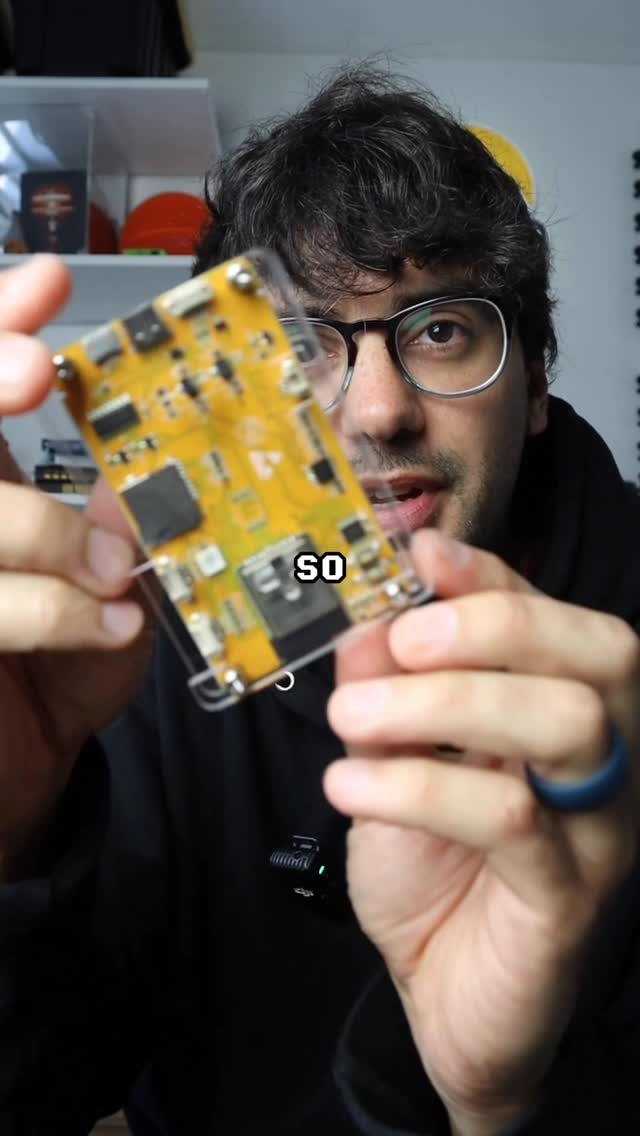
An extreme close-up shot of a microchip with multiple soldering probes attached to its pins, creating a technical and intriguing visual.
[06]
Steal this for your own video
People are losing because they bought that had .
[07]
The promise the opener makes, and how the video pays it back
Hook
Present a high-stakes, specific, and alarming problem that immediately establishes a tangible threat and a significant consequence (e.g., 'millions of dollars lost').
Payoff
Quantify the total damage or impact of the event with a large, definitive number, validating the initial hook's severity and providing a shocking conclusion.
[08]
The structural pattern this video runs on
Framework
The Conspiracy Unraveling
To deconstruct a complex, multi-layered failure or attack by revealing successive layers of the story, moving from a trusted entity to a hidden threat, explaining the mechanism, and culminating in the quantifiable impact.
The Credibility Anchor
Establish that the failure occurred within a trusted, reputable system or with a well-regarded product, heightening the sense of danger by invalidating common safety assumptions.
The First Twist: The Trusted Intermediary
Introduce a seemingly secure intermediary in the process, adding a layer of complexity and shifting the point of failure away from the obvious source.
The Second Twist: The Secret Acquisition
Reveal that the trusted intermediary was compromised through a hidden event or transaction, introducing an element of conspiracy and betrayal.
The Villain Reveal: The Malicious Actor
Identify the antagonist and their specific, calculated intent, confirming that the failure was a deliberate attack, not an accident.
The Direct Warning
Translate the abstract narrative into a concrete warning for a specific audience segment, making the threat personal and actionable.
The Technical Explanation
Break down the sophisticated 'how' of the attack, explaining the clever mechanism used to bypass standard security and demonstrating expertise.
The Mechanism of Theft
Clarify the precise method of the attack, detailing what was targeted and how the core vulnerability was exploited to achieve the malicious goal.
The Exfiltration Method
Reveal the final piece of the technical puzzle, explaining how the stolen information was extracted, completing the viewer's understanding of the entire attack chain.
Ledger wallets undergoing massive hardware supply chain attack
People are losing millions of dollars because they bought a hardware wallet that had two millimeters of a chip soldered into it. Like legit better wallets. Highly reputable, highly recommended hardware wallets in the crypto space. But they were purchased from a reseller, but the reseller was also reputable. This reseller was crypto bills. They were legit. People recommended them. It was all good until crypto bills decided to sell. And they didn't tell any of their suppliers or anyone downstream that they sold because they signed a confidentiality agreement. This is the former owner of CryptoBills. And who did they sell to? A Chinese company. And now it's coming out that this company just bought this supplier for the sole reason of creating this supply chain attack on crypto wallets. So for at least over the last ninety days, if you bought a Better wallet from a reseller named Crypto Bills, it had some hardware implants on it. So if you don't know why hardware wallets are popular or important in this space, if you tamper with the actual hardware, it would be detectable. But that's not what they did. They just soldered in between the actual hardware and this display screen, the LED display screen. So anything that this wallet decided to display on this screen, it could intercept and read. And when you're setting up a wallet, it displays the seed passphrase on the screen. And then the other thing that they soldered on was this little two millimeter SIM card so that they could connect to a cell network and transfer that seed phrase that they just stole off your screen. We're in early days of figuring out what's going on here, but it, it's tied to estimated about $86,000,000 in losses so far over the last couple months.