Viral Hooks
Trending short videosResearcher explains communication body language
A

@aspirewithemmagrede

Instagram · Clip

@aspirewithemmagrede The simplest way to keep someone talking might be something you already do without realizing. Vanessa Van Edwards explains that a slow triple nod can encourage someone to speak 67% longer. It signals that you’re following their pace, listening and giving them the space to continue. You’lll learn: 👂 Great listening isn’t only about what you say 🗣️ A slow triple nod can encourage someone to keep talking 🤝 Small signals can make people feel heard and understood Comment “VANESSA” and we’ll DM you the full episode link. Watch the full conversation with @vvanedwards and @emmagrede now on Aspire on @youtube, @applepodcasts, @spotify and wherever you listen 🎙️✨

View original on Instagram

The edit1 shot · 3 text
Shots Text0:41

Performance

Views
754.9K
Likes
15.2K
Comments
132
Engagement
2%
Outlier
27.1×
Length · 8 Oct 2026
0:41

Video #44640 · Clip

Researcher explains communication body languagefrom @aspirewithemmagrede

[01]

Overview

A behavioral researcher explains that a 'slow triple nod' makes people talk 67% longer. She then uses the interviewer as a live case study, analyzing how the interviewer subconsciously adjusts her nodding speed to match the speaker's pace, demonstrating an advanced and rare active listening skill.

[02]

Simple outline

  1. 1State surprising, specific claim
  2. 2Analyze subject's subconscious behavior
  3. 3Subject validates the analysis
  4. 4Demonstrate with relatable humor

[03]

Related videos

[04]

Classification

Format
Concepts
BreakdownCase Study Breakdown
Elements
Split ScreenDynamic Word-by-Word CaptionsText OverlayLower ThirdTitle Text Hook

[05]

Hook analysis

What stops the scroll in the first 3 seconds

Title hook

THE SIMPLE TRICK THAT MAKES PEOPLE SPEAK 67% LONGER

Verbal hook

When someone does a slow triple nod, the other person speaks 67% longer.

Visual hook

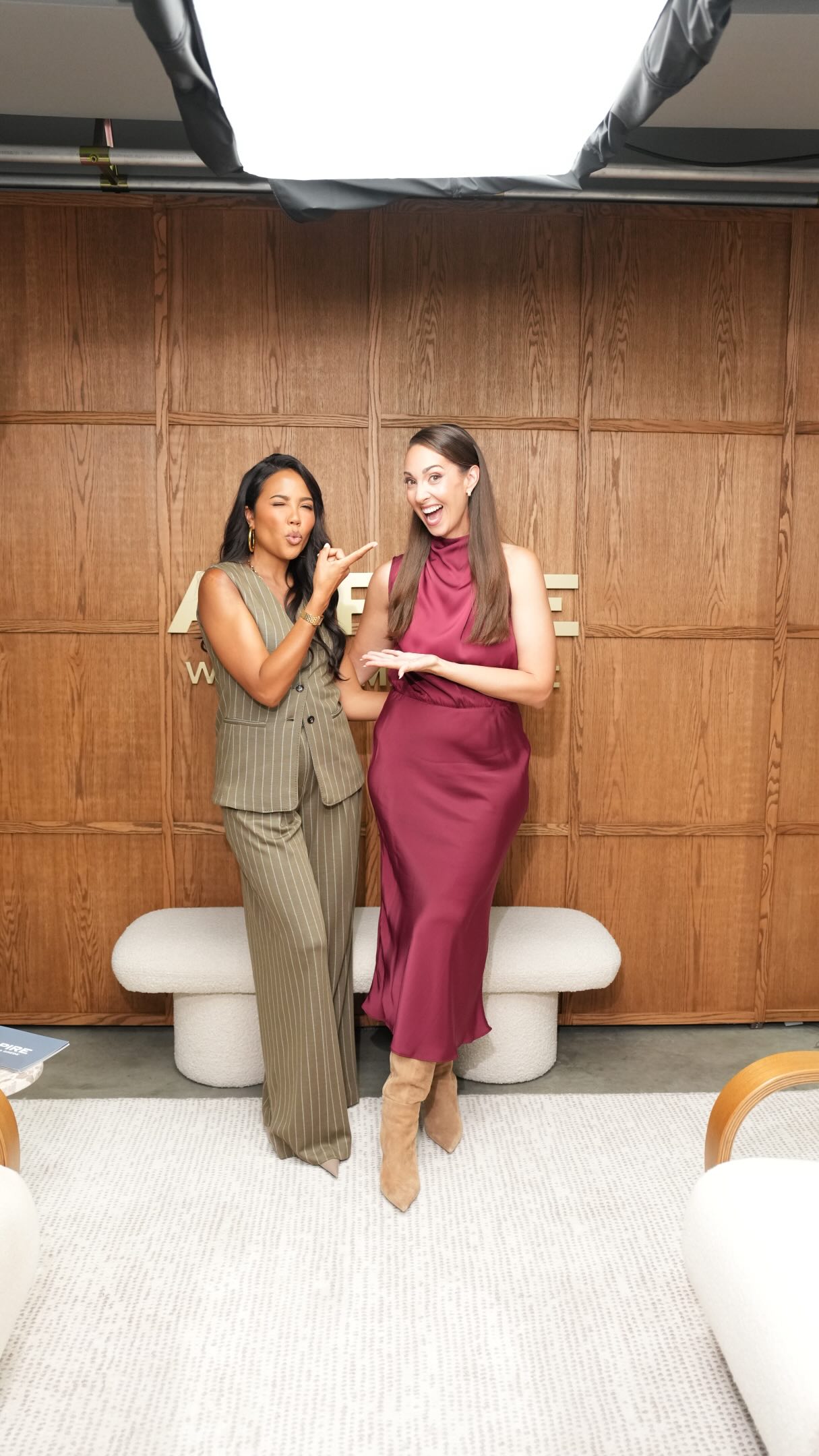
A professional split-screen interview setup with two speakers, where the top speaker is actively gesturing near her face, creating immediate visual interest and a polished look.

[07]

Hook and payoff

The promise the opener makes, and how the video pays it back

Hook

A quantifiable, counter-intuitive, or highly specific claim about a common behavior that creates an immediate knowledge gap and sparks curiosity.

Payoff

The viewer gains a novel insight into human behavior that feels both intellectually satisfying and personally relatable, ending on a positive emotional note.

[08]

Narrative framework

The structural pattern this video runs on

Framework

The Live Deconstruction

An expert makes a specific claim about human behavior and then proves it by analyzing another person in the conversation in real-time, revealing subconscious actions that validate the initial claim.

  1. 1

    The Quantified Thesis

    The expert presents a core, data-supported principle or 'trick' as a universal truth, establishing the video's central premise.

  2. 2

    The Observational Pivot

    The expert transitions from the general principle to a direct, live observation of the other person in the video, making the abstract concept concrete and personal.

  3. 3

    The Surface Interpretation

    The expert provides the obvious, conscious interpretation of the subject's behavior, establishing a baseline of understanding for the audience.

  4. 4

    The Subconscious Reveal

    The expert points out a deeper, more nuanced, and likely unconscious behavior the subject is exhibiting, demonstrating a higher level of insight and creating a 'wow' moment.

  5. 5

    The Unwitting Confirmation

    The subject expresses genuine surprise and confirms they were unaware of their own behavior, which serves as powerful social proof for the expert's claim.

  6. 6

    The Expert Elaboration

    The expert expands on the revealed behavior, explaining its different applications or variations, which solidifies their authority and the utility of the insight.

  7. 7

    The Humanizing Payoff

    The interaction concludes with a lighthearted, often humorous demonstration of the behavior, creating a moment of shared laughter and relatability that resolves the analytical tension.

Themes

  • Active Listening
  • Non-verbal Communication
  • Behavioral Psychology

Techniques

  • Split-screen editing
  • Expert analysis
  • Live demonstration

Trends

  • Podcast clip repurposing
  • Educational content

Post caption

The simplest way to keep someone talking might be something you already do without realizing. Vanessa Van Edwards explains that a slow triple nod can encourage someone to speak 67% longer. It signals that you’re following their pace, listening and giving them the space to continue. You’lll learn: 👂 Great listening isn’t only about what you say 🗣️ A slow triple nod can encourage someone to keep talking 🤝 Small signals can make people feel heard and understood Comment “VANESSA” and we’ll DM you the full episode link. Watch the full conversation with @vvanedwards and @emmagrede now on Aspire on @youtube, @applepodcasts, @spotify and wherever you listen 🎙️✨

Text overlays

  • contextual · beginning

    Behavioral Researcher

  • title · beginning

    THE SIMPLE TRICK THAT MAKES PEOPLE SPEAK 67% LONGER

  • branding · throughout

    ASPIRE WITH EMMA GREDE

Transcript

When someone does a slow triple nod, the other person speaks 67% longer. No when I watch you... I like to watch you mostly more than listen even. So when you nod, you're telling me a couple of things. You're saying, one, I'm with you. I'm following. You'll even nod on my word pace. I don't know if you noticed that. You do. Yeah. So if I was a slower talker, you would nod more slowly, which is beautiful. That's a very, very rare skill. Do you do it, naturally? You don't realize? No. I don't realize it. Okay. So when you have a slow talker, I've noticed you nod more slowly with them. It's as if to say, I'm on your pace. I'm with you. I'm keeping you. Right? And then when you want to say something, you'll often speed up the nods because you're like, I have something to say. I have something to say. Hey. Your turn. Your turn. Your turn. That's so good.

Researcher explains communication body language | Viral Hooks