@itsbobbyfinn
Instagram · Skit
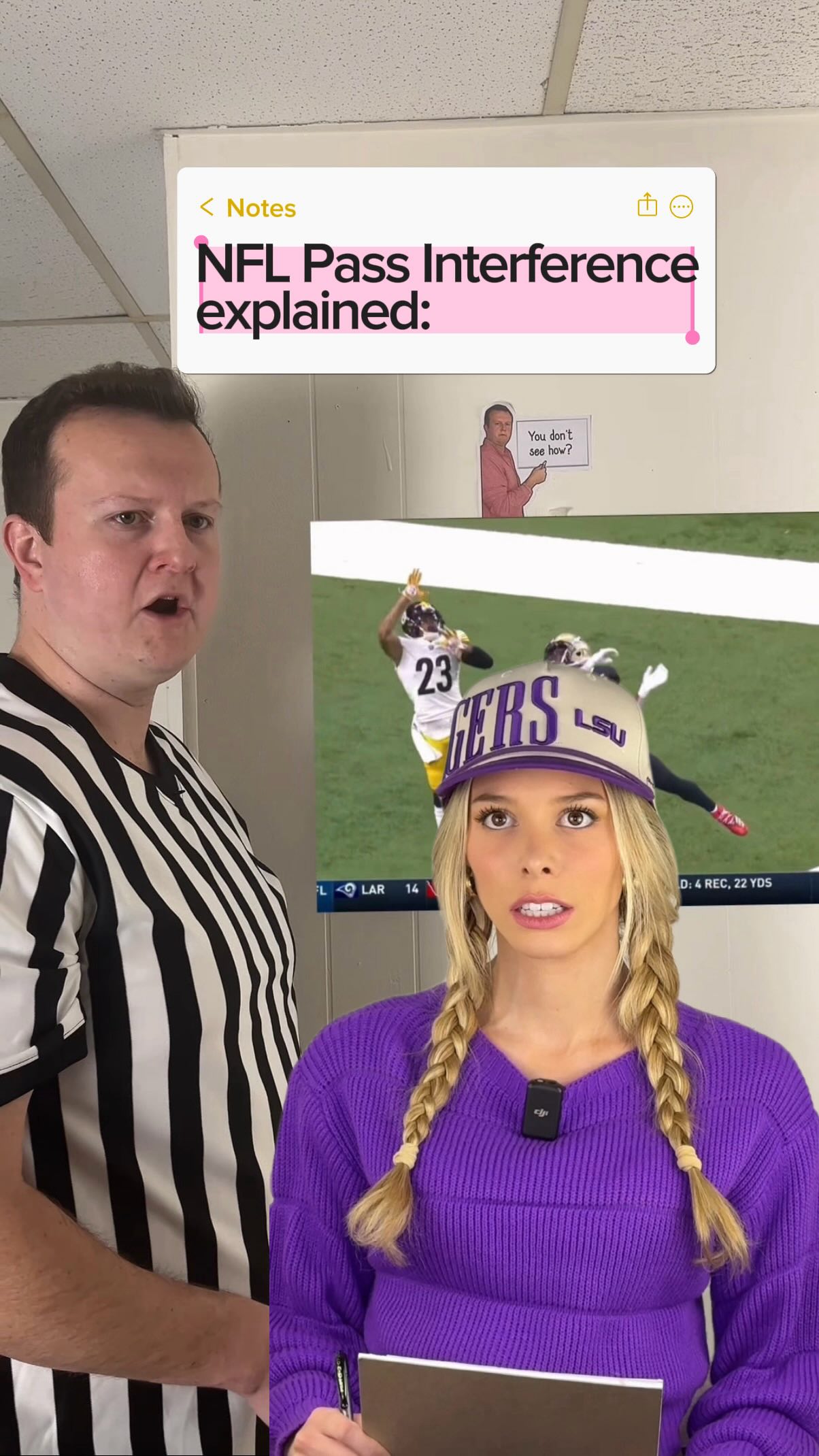
@itsbobbyfinn The NFL is back and I expect my Patriots to be back in the Super Bowl because that’s why. #football

@itsbobbyfinn
Instagram · Skit
@itsbobbyfinn The NFL is back and I expect my Patriots to be back in the Super Bowl because that’s why. #football
Performance
Video #46371 · Skit
[01]
The creator, dressed as an NFL referee, attempts to explain the pass interference rule to a "student" (another creator). He shows various game clips and asks for her judgment, but consistently contradicts her answers with nonsensical, circular logic, creating a comedic loop that satirizes the inconsistency of NFL officiating. The skit culminates with him showing a famously controversial non-call and implying the outcome was influenced by money when he pulls out a wad of cash.
[02]
[03]
 749.4K1.2×Skit impersonating an NBA referee@grillguy · Relatable Skit
 152.6K5.4×Comedic skit about sports heartbreak@nick.knows.ball · Skit
 456.1K3.4×Skit about cameraman filming fan@_devontewest · Relatable Skit
 1.1M16.2×How guys act betting on sports@leogonzall · Relatable One Shot
 651.1K4.8×Actor performs emotional player speech@_devontewest · Relatable Skit
 93.5K1.1×Coach gives player impossible tasks@nick.knows.ball · Relatable Skit
 616.6KMan pranks police officer with money@elyasclaire · Candid Prank
 705K14.1×Comedic skit about old baseball rules@merkkdog · Skit
 656K14.5×Acting out a text-based joke@nick.knows.ball · Skit
 2.5M37×Skit parodying pseudo-profound podcasts@_devontewest · Relatable Skit
 2.3M22.4×Relatable sideline coach character performance@_devontewest · Skit
 622.5KComedic skit reversing catcalling roles@canteen_boi · Relatable Skit
[04]
[05]
What stops the scroll in the first 3 seconds
Title hook
NFL ref explains Pass Interference:
Verbal hook
So when a player interferes with the receiver's opportunity to catch the ball, it's called...
Visual hook
A man dressed in a full referee uniform stands next to a screen displaying an NFL player, immediately establishing a comedic premise of a formal lesson in an informal setting.
[07]
The promise the opener makes, and how the video pays it back
Hook
A title card promises a clear explanation of a commonly misunderstood or controversial topic, presented by an authority figure.
Payoff
The Absurdist Reveal. After the student's final (and most logical) judgment is again shot down, the authority reveals the 'true,' cynical, or nonsensical reason for the inconsistency (e.g., bribery, incompetence), providing the punchline and resolving the comedic tension.
[08]
The structural pattern this video runs on
Framework
The Arbitrary Authority
An 'expert' attempts to teach a simple binary rule but applies it with complete and frustrating inconsistency to a series of examples, only to reveal a cynical or absurd 'true' logic at the end.
The Foundational Rule
The authority figure clearly and correctly states the fundamental rule or principle. A 'student' character confirms their understanding, establishing a baseline of logic for the audience.
The First Contradiction
The authority presents a clear example. The student applies the rule logically. The authority aggressively refutes the correct answer, providing a nonsensical justification that directly contradicts the established rule.
The Double-Cross
The authority presents a second example. The student, now trying to follow the new 'illogic,' gives the opposite answer. The authority again refutes them, this time by correctly applying the original rule, creating maximum confusion and establishing a pattern of pure contradiction.
The Ultimate Test
After a brief reset, the authority presents the most extreme and obvious example of the entire series, forcing the student and audience to make a definitive judgment based on the chaotic logic.
The NFL is back and I expect my Patriots to be back in the Super Bowl because that’s why. #football
title · beginning
NFL ref explains Pass Interference:
contextual · throughout
You don't see how?
contextual · end
NEW DEVELOPMENTS FOOTBALL FALLOUT GROWING OUTRAGE OVER BLOWN CALL
No when a player interferes with the receiver's opportunity to catch the ball, it's called... Pass interference. Which means this would be... That would... No, that would be pass interference. No. It's not pass interference, Eelsiel. It's because the player didn't interfere with the receiver's opportunity to catch the ball, which means this would be... That would... Oh, no. That would not be pass interference. No. It is pass interference. You know, see how it's because the player interfered with the receiver's opportunity to catch the ball. See what I mean? The receiver had no opportunity to catch the ball because the other player committed pass interference. You know, no better me try to be more clear. So when a player interferes with the receiver's opportunity to catch the ball, it's called? Pass interference. Which means this would be... Oh. Oh. That is clearly pass interference. No. What would you think? It's not pass interference. Why would that not be pass interference? It's because that's why.