@thedanrosen
Instagram · Graphic Yap
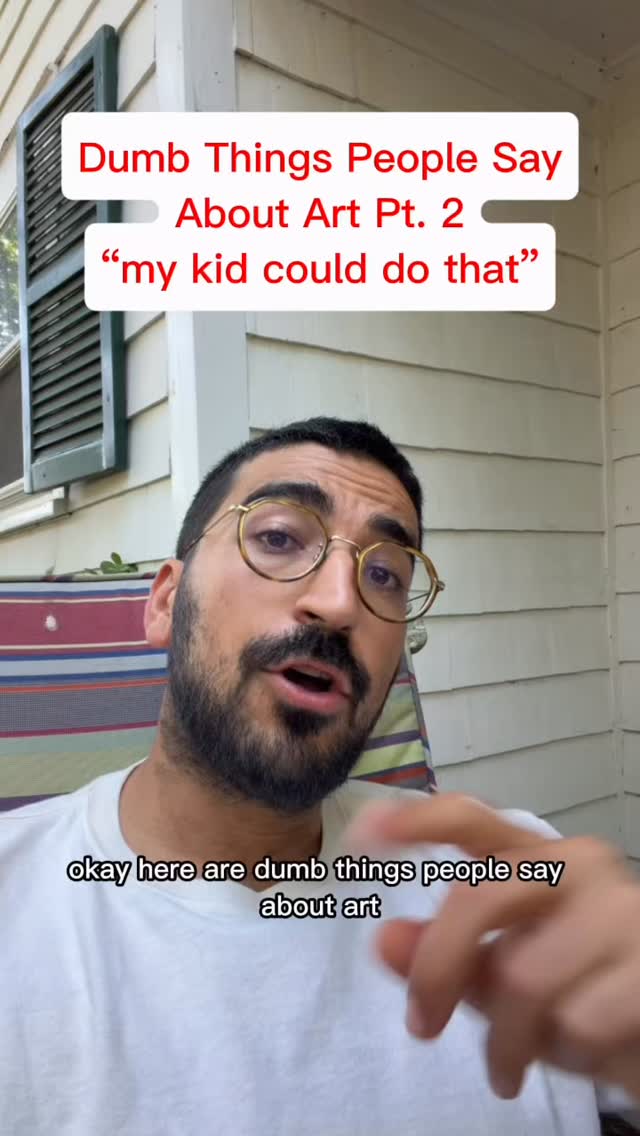
@thedanrosen Please, get a new schtick.

@thedanrosen
Instagram · Graphic Yap
@thedanrosen Please, get a new schtick.
Performance
Video #46545 · Graphic Yap
[01]
The creator debunks the common criticism of abstract art, 'my kid could do that.' He first argues that such art is technically complex and requires immense skill, then pivots to argue that even if a child could replicate it, the value lies in the original artist's innovation and creation of a new aesthetic path.
[02]
[03]
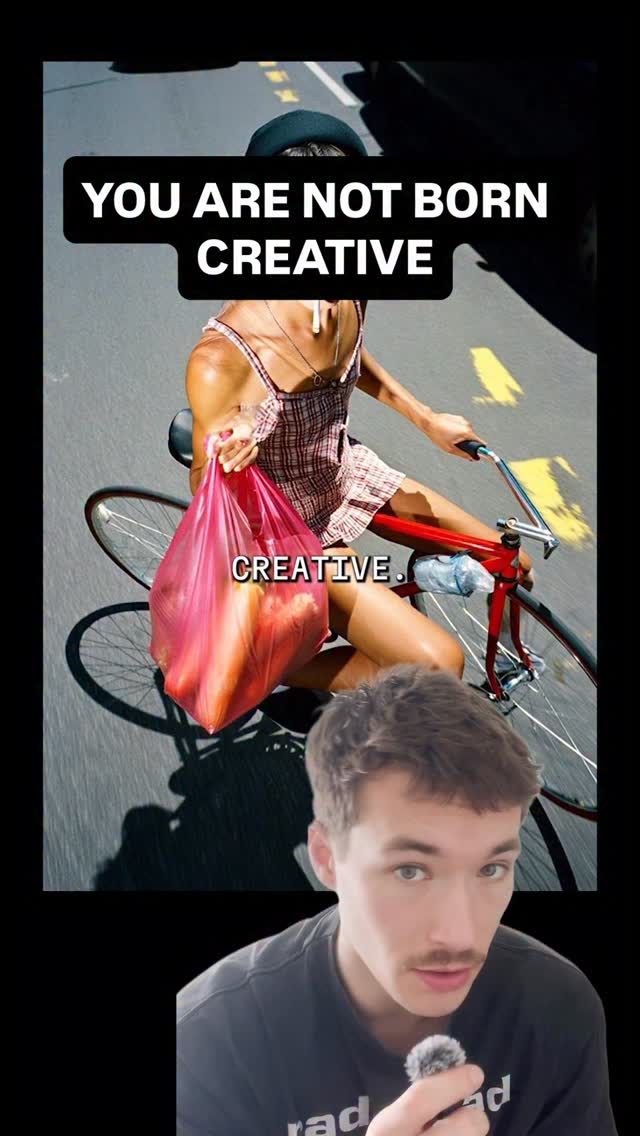 280.4K10.7×Split screen creativity myth debunking@fakeplasticbrands · Breakdown
 131.4K9.9×Hot take on Basquiat's art@alfonsofrfr · Hot Take
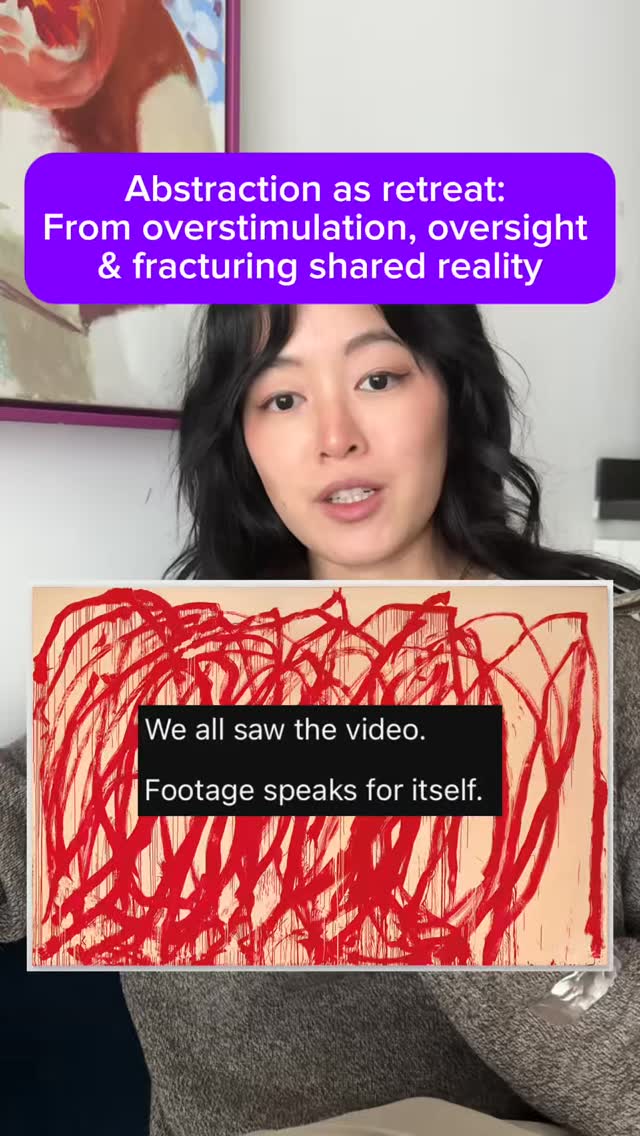 230.2KExplaining cultural shift to abstraction@ghostinthesam · Breakdown
 143.7K7.9×Speaker critiques modern art value@alfonsofrfr · Hot Take
 195.1K87.7×Historical figure success lesson@kolbykirschner · Case Study Reminder
 128.4KHigh-energy creative mindset breakdown@johnbucog · Breakdown
 140.8KComedic rant about photography standards@realdanyang · Hot Take
 7.1MDad's advice on creative work@samandrewsart · Anecdotal Philosophy
 390.1K8.1×Creator's motivational speech on creativity.@johnbucog · Brand Manifesto
 349.3K7.3×Creator reframes making music's goal@owencutts · Motivational Mantra
 591.4K16×Philosophical argument with historical examples@kolbykirschner · Breakdown
 552.4K42.5×Satirical commentary comparing music to farming@realdanyang · Hot Take
[04]
[05]
What stops the scroll in the first 3 seconds
Title hook
Dumb Things People Say About Art Pt. 2 “my kid could do that”
Verbal hook
Okay here are dumb things people say about art part two.
Visual hook
A man with glasses speaks directly and expressively to the camera from a medium close-up shot, combined with a large, high-contrast title text overlay that immediately establishes the video's topic.
[07]
The promise the opener makes, and how the video pays it back
Hook
The video opens by explicitly stating the series title and the specific, common, and controversial phrase that will be debunked, immediately creating conflict and setting viewer expectations for a satisfying takedown.
Payoff
The narrative concludes by articulating a universal truth or a new way of seeing the world, leaving the viewer feeling enlightened and validated for having watched.
[08]
The structural pattern this video runs on
Framework
The Expert Takedown
To debunk a common, simplistic misconception by first attacking it with aggressive humor, then deconstructing it with expert knowledge, and finally revealing a more profound, underlying truth.
The Target Declaration
The creator identifies the specific, widely-held belief or phrase that is the subject of the video, providing concrete examples of the context in which it's typically used.
The Shock Rebuttal
The creator delivers an immediate, forceful, and often humorous or insulting rejection of the initial premise. This acts as a pattern interrupt and establishes a strong, confident point of view.
The Expert's Proof
The creator shifts from an emotional to a logical argument, presenting technical details, specialized knowledge, or evidence that factually undermines the initial misconception. This establishes the creator's authority.
The Concession & Pivot
The creator employs a rhetorical strategy of temporarily conceding the opponent's point ('Okay, let's say you're right...') only to immediately invalidate its relevance ('...who cares?'), shifting the entire basis of the argument.
The Analogy Barrage
A rapid-fire series of analogies from unrelated fields is used to illustrate the core flaw in the original argument, making the abstract concept feel universally and obviously incorrect.
The Value Redefinition
The creator explicitly reframes the opponent's argument, defining their hypothetical success not as an achievement but as a lesser act (e.g., 'copying'), thereby devaluing their entire premise.
The Profound Payoff
The argument culminates in a final, elevated statement that reveals the deeper, more profound principle that the initial misconception misses. This provides an intellectually satisfying resolution that transcends the initial conflict.
Please, get a new schtick.
title · beginning
Dumb Things People Say About Art Pt. 2 “my kid could do that”
K. Here are dumb things people say about art part two. Today, we're doing the classic, my kid could do that. Usually, when dumb people say this, they're talking about abstract expressionism, color field painting, or maybe conceptual art. Okay. First off, no. Your kid cannot do that. Your kid is so zooted out on iPad Cocomelon that their fine motor skills will never develop beyond elephant. And paintings like this are actually extremely technically difficult to pull off. Artists experimented for years relentlessly to get the right pigment, the texture, the way the edges bleed onto each other, the pigment viscosity, all to achieve this exact effect they're going for. But also, okay. Your kid could do that. Who gives a shit? I can say e equals m c squared. What does that mean? I can play Bach prelude on the piano, but I didn't compose them, and my neighbors just yell at me every time I try to play. If your kid did do this, they'd just be copying someone else. And what gives these work their power is that the artist carved a new path forward in art, in aesthetics, one that wasn't there before and showed us a new way to see, to feel.