Viral Hooks
Trending short videosPolitician uses heckler for lesson
T

@thestressdoc

Instagram · Clip
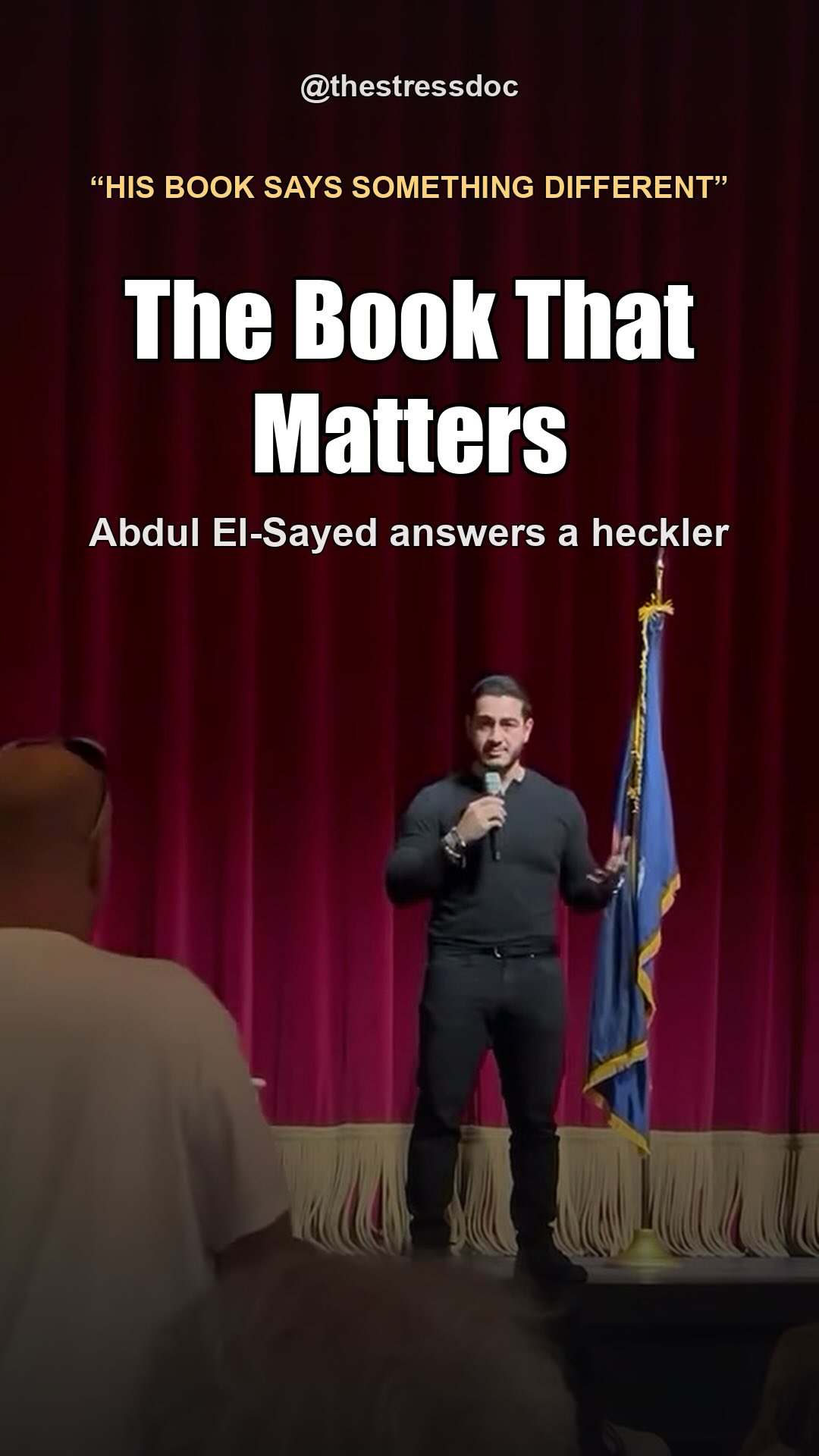
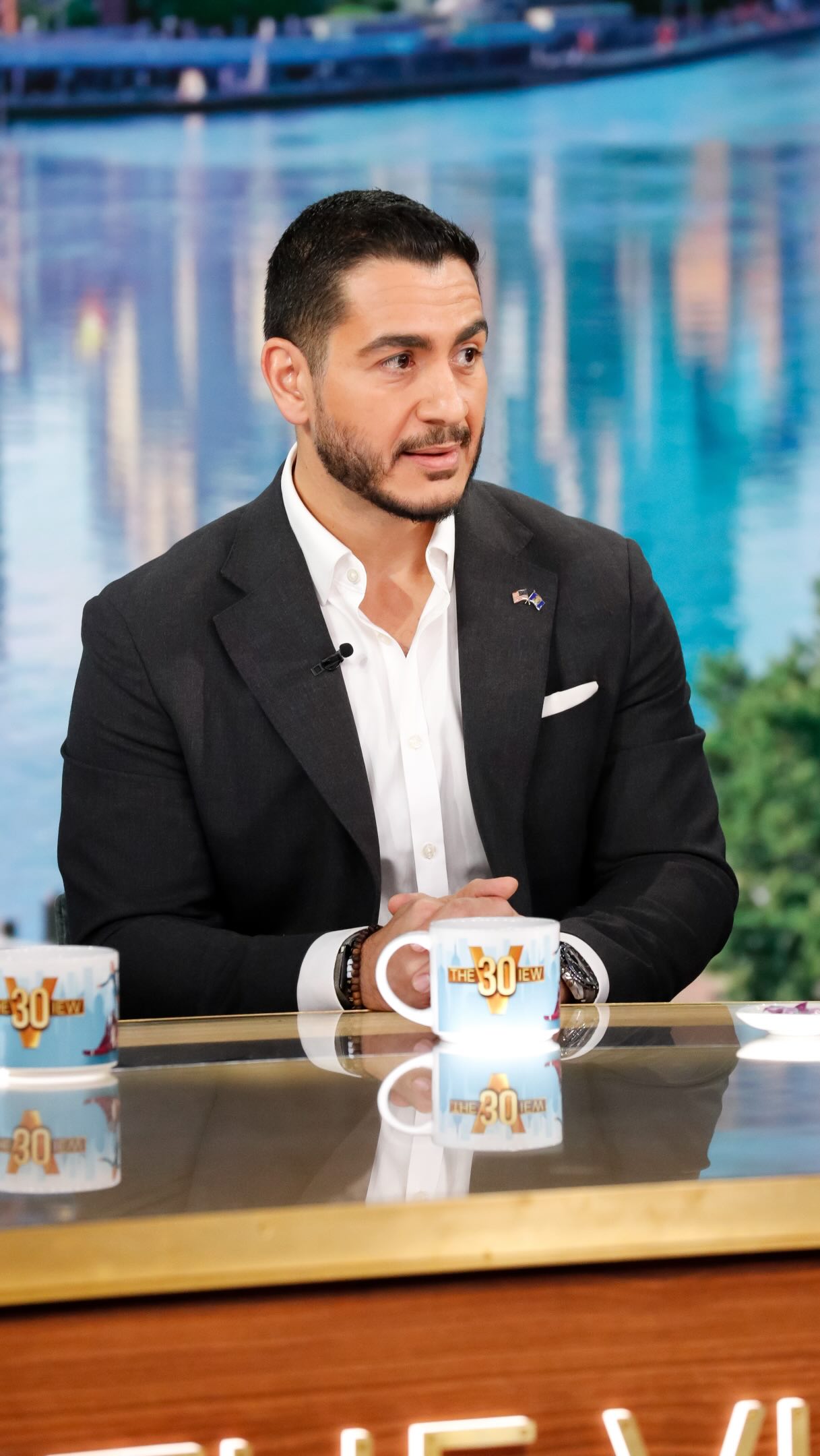
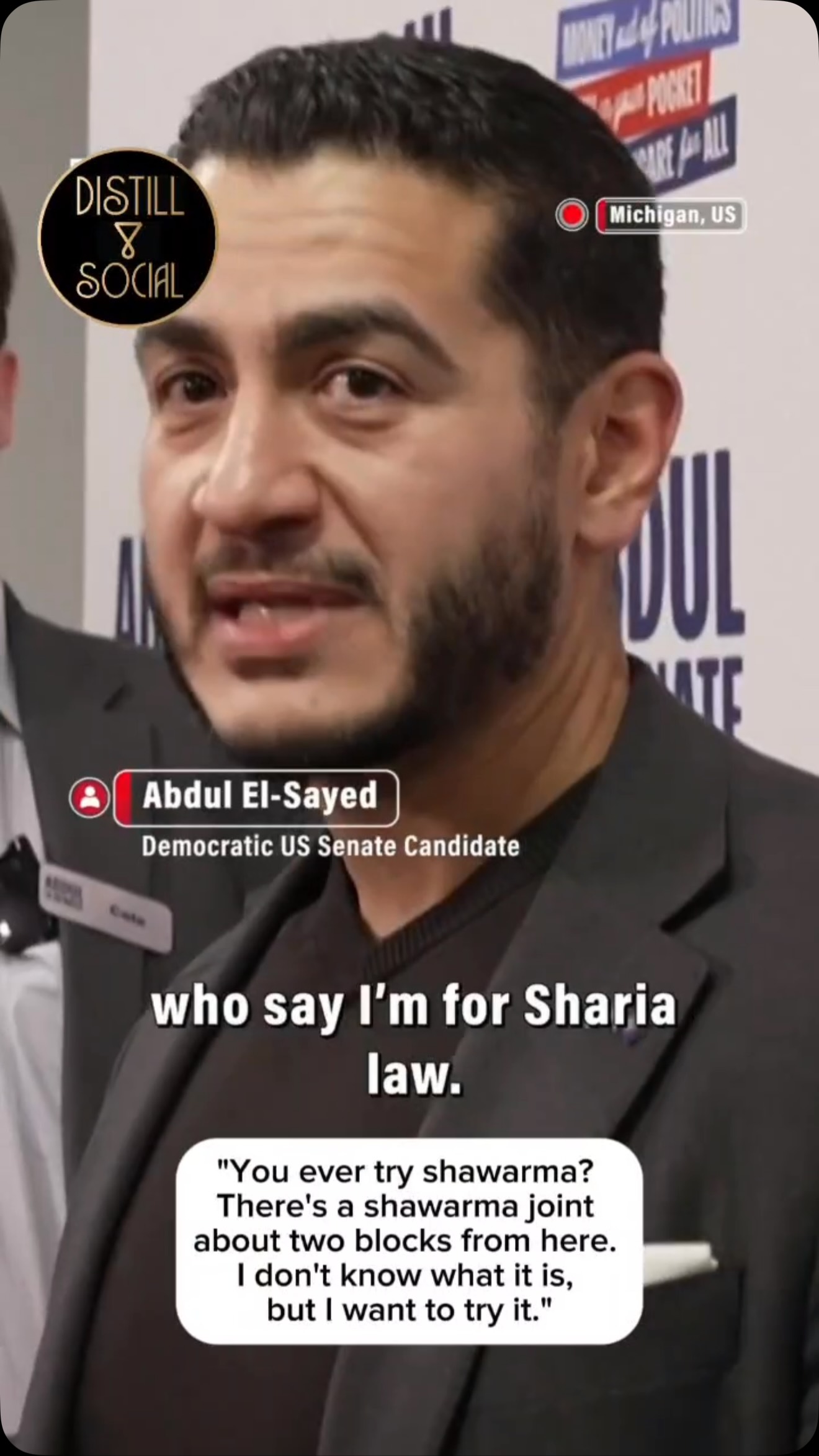
@thestressdoc “His book says something different than my book.” At a campaign event, a man in a red cross shirt stood up and told Abdul El-Sayed, the Muslim Democratic nominee for U.S. Senate in Michigan, that his book (the Quran) says something different than his own (the Bible). El-Sayed didn’t argue scripture. He pointed to the one book every senator swears an oath to support: the U.S. Constitution. Because of it, you have the right to live by your faith. And because of it, you don’t get to enforce your faith on anyone else. “You pray as you choose to pray, I pray as I choose to pray. Some folks may not pray at all.” The Constitution says it plainly: “no religious Test shall ever be required as a Qualification to any Office or public Trust under the United States.” (Article VI) And their books are closer than he thinks. Mary is the only woman named in the Quran, a whole chapter carries her name, and it tells the story of Jesus’ virgin birth. Send this to someone who needs to hear it. ℹ️ Sources: U.S. Constitution, Article VI and First Amendment (National Archives); Prof. Amir Hussain, “Our Lady of the Qur’an,” LMU Magazine (2021); EWTN, “Mary in the Qur’an”; MPR News (2007) on Keith Ellison’s ceremonial oath on Thomas Jefferson’s Quran. 🎥 Original video: @americaweneedtotalk_ 📷 Images: U.S. Senate HELP Committee hearing, July 11, 2024 (public domain); Michaela McNichol, Library of Congress (CC BY 2.0); Mark Anderson, St Mary’s Church, Stainburn (CC BY-SA 2.0); Virginia Gunawan (public domain); Maurycy Gottlieb, 1878 (public domain); Walters Art Museum (public domain); National Archives (public domain); 1983 Code of Canon Law cover (public domain). 🎵 Music: “Sanctuary” by Scott Buckley (scottbuckley.com.au), CC BY 4.0
View original on Instagram

The edit1 shot · 11 text
Shots Text3:00

Performance

Views
394.5K
Likes
23.8K
Comments
1.1K
Engagement
6.3%
Outlier
27.4×
Length · 18 Oct 2026
3:00

Video #47100 · Clip

Politician uses heckler for lessonfrom @thestressdoc

[01]

Overview

At a campaign event, political candidate Abdul El-Sayed is interrupted by a heckler who questions his fitness for office because his religious book, the Quran, differs from the heckler's Bible. El-Sayed calmly de-escalates the situation, repeats the man's concern, and then masterfully pivots the discussion from religious scripture to the U.S. Constitution, which he declares is the only book that matters for public office. He reinforces this by explaining the constitutional principles of religious freedom and the prohibition of religious tests for office, using the heckler's own faith (Christianity and Canon Law) as an example to illustrate that while citizens can live by their faith, they cannot enforce it on others.

[02]

Simple outline

  1. 1Present a direct challenge
  2. 2Reframe conflict with a shared value
  3. 3Prove the shared value's authority
  4. 4Apply the value to both parties
  5. 5Deliver a unifying conclusion

[03]

Related videos

[04]

Classification

Format
Concepts
Opportunity Explainer
Elements
B-Roll CutawayText OverlayLower ThirdJump CutImage OverlayVoiceoverTitle Text Hook

[05]

Hook analysis

What stops the scroll in the first 3 seconds

Title hook

“His book [the Quran] says something different than my book [the Bible].”

Verbal hook

Hey, I voted Biden.

Visual hook

A man on a stage with a microphone reacts with a smile to an off-screen heckler, creating immediate visual tension and curiosity about the disruption of a live event.

[07]

Hook and payoff

The promise the opener makes, and how the video pays it back

Hook

The video opens in the middle of a tense confrontation, with on-screen text immediately framing a core, divisive conflict between two opposing viewpoints.

Payoff

The protagonist delivers a final, memorable, and inclusive summary of the core principle, leading to a cathartic resolution where the audience unites emotionally around the shared value, completely resolving the initial tension.

[08]

Narrative framework

The structural pattern this video runs on

Framework

The Foundational Pivot

Resolving a divisive, binary conflict by introducing and validating a higher-order, unifying principle that both parties are subject to, thereby reframing the debate and leading to a unifying resolution.

  1. 1

    The Provocation

    An antagonist clearly and directly states a challenge based on a fundamental, seemingly irreconcilable difference between them and the protagonist.

  2. 2

    The Narrative Seizure

    The protagonist calmly acknowledges and repeats the antagonist's challenge to the wider audience, taking control of the narrative and building suspense for the response.

  3. 3

    The Foundational Pivot

    The protagonist sidesteps the binary conflict by introducing a third, foundational principle or document that is positioned as the ultimate, shared authority for everyone involved.

  4. 4

    The Authoritative Proof

    The protagonist cites a specific rule or text from the foundational principle, which is then visually reinforced on screen with archival imagery and text overlays to establish its legitimacy.

  5. 5

    The Personal Commitment

    The protagonist declares their personal oath and obligation to uphold this foundational principle, aligning themselves with the higher authority and their official role.

  6. 6

    The Mirror Question

    The protagonist poses a Socratic question to the antagonist that uses the antagonist's own belief system to expose a logical inconsistency or hypocrisy in their argument.

  7. 7

    The Principle of Reciprocity

    The protagonist explains how the foundational principle grants rights and freedoms to the antagonist, establishing common ground and demonstrating the principle's fairness.

  8. 8

    The Boundary of Freedom

    The protagonist delivers the logical checkmate: the same principle that grants the antagonist's rights also prevents them from imposing their views on others.

Themes

  • Religious tolerance
  • American values
  • Constitutional law
  • Civic discourse
  • Inclusivity

Techniques

  • De-escalation
  • Rhetorical pivot
  • Analogical reasoning
  • Educational framing

Post caption

“His book says something different than my book.” At a campaign event, a man in a red cross shirt stood up and told Abdul El-Sayed, the Muslim Democratic nominee for U.S. Senate in Michigan, that his book (the Quran) says something different than his own (the Bible). El-Sayed didn’t argue scripture. He pointed to the one book every senator swears an oath to support: the U.S. Constitution. Because of it, you have the right to live by your faith. And because of it, you don’t get to enforce your faith on anyone else. “You pray as you choose to pray, I pray as I choose to pray. Some folks may not pray at all.” The Constitution says it plainly: “no religious Test shall ever be required as a Qualification to any Office or public Trust under the United States.” (Article VI) And their books are closer than he thinks. Mary is the only woman named in the Quran, a whole chapter carries her name, and it tells the story of Jesus’ virgin birth. Send this to someone who needs to hear it. ℹ️ Sources: U.S. Constitution, Article VI and First Amendment (National Archives); Prof. Amir Hussain, “Our Lady of the Qur’an,” LMU Magazine (2021); EWTN, “Mary in the Qur’an”; MPR News (2007) on Keith Ellison’s ceremonial oath on Thomas Jefferson’s Quran. 🎥 Original video: @americaweneedtotalk_ 📷 Images: U.S. Senate HELP Committee hearing, July 11, 2024 (public domain); Michaela McNichol, Library of Congress (CC BY 2.0); Mark Anderson, St Mary’s Church, Stainburn (CC BY-SA 2.0); Virginia Gunawan (public domain); Maurycy Gottlieb, 1878 (public domain); Walters Art Museum (public domain); National Archives (public domain); 1983 Code of Canon Law cover (public domain). 🎵 Music: “Sanctuary” by Scott Buckley (scottbuckley.com.au), CC BY 4.0
Text overlays

  • title · beginning

    “His book [the Quran] says something different than my book [the Bible].”

  • contextual · beginning

    HECKLER INTERRUPTS Abdul El-Sayed, Muslim nominee for U.S. Senate Watch how he answers.

  • contextual · middle

    ABDUL EL-SAYED Democratic nominee, U.S. Senate, Michigan Epidemiologist. Former Detroit health director.

  • informational · middle

    U.S. Constitution, signed 1787 National Archives

  • informational · middle

    ARTICLE VI “...no religious Test shall ever be required as a Qualification to any Office or public Trust under the United States.”

  • informational · middle

    2007 Keith Ellison, the first Muslim elected to Congress, took his ceremonial oath on Thomas Jefferson's Quran.

  • informational · middle

    CANON LAW The Catholic Church's own legal code (the 1983 Code of Canon Law).

  • informational · middle

    FIRST AMENDMENT “Congress shall make no law respecting an establishment of religion, or prohibiting the free exercise thereof...”

  • title · end

    PRAY AS YOU CHOOSE

  • informational · end

    Their books are closer than he thinks. Mary is the only woman named in the Quran. Chapter 19 of the Quran is named after her. It tells the story of Jesus' virgin birth. She is named more often in the Quran than in the New Testament.

  • call-to-action · end

    “You pray as you choose to pray, I pray as I choose to pray.” Abdul El-Sayed Send this to someone who needs to hear it.

Transcript

I'm doing. I'm doing bigger, Dave. It's time to talk. Hey. Hey. Hey. Hey. Hey. Hey. Hey. Hey. Hey. Hey. Hey. Hey. Hey. Hey. Hey. Hey. Hey. Hey. Hey. Hey. Hey. Hey. Hey. Hey. Hey. Hey. Hey. Hey. Hey. Hey. Hey. Hey. Hey. Hey. Hey. Hey. Hey. Hey. Hey. Hey. Hey. Hey. Hey. Hey. Hey. Hey. Hey. Hey. Hey. I I voted Biden. I'm Devin. I love all you. This guy seems great. Tier really does. I I like this guy. I fucking like this guy. But the problem is his book says something different in my book. We can't go in. What's The book that matters for all of us is the US Constitution. Swear an oath to that US constitution. I did. You're Christian. You do do you follow Canada law? Beg me. Beg me? No follow Canon Law? Vaguely. Vaguely? No. No. No. Let me finish what I'm saying. You vaguely follow Canon Law. I'm just like, I I vaguely am aware of it. You're vaguely aware of Canon Law. I would recommend as a Christian that you go read Canon Law because it is supposed to pattern your life choices as a Christian. Here's the thing about it. Because of the US Constitution, you have the right to live according to Canon Law. Great. And also and also because of the US Constitution, you don't get to endorse Canon Law. You pray as you choose to pray. I pray as I choose to pray. Sometimes we not pray at all.

Politician uses heckler for lesson | Viral Hooks