@pio_vincenzo_
Instagram · Skit
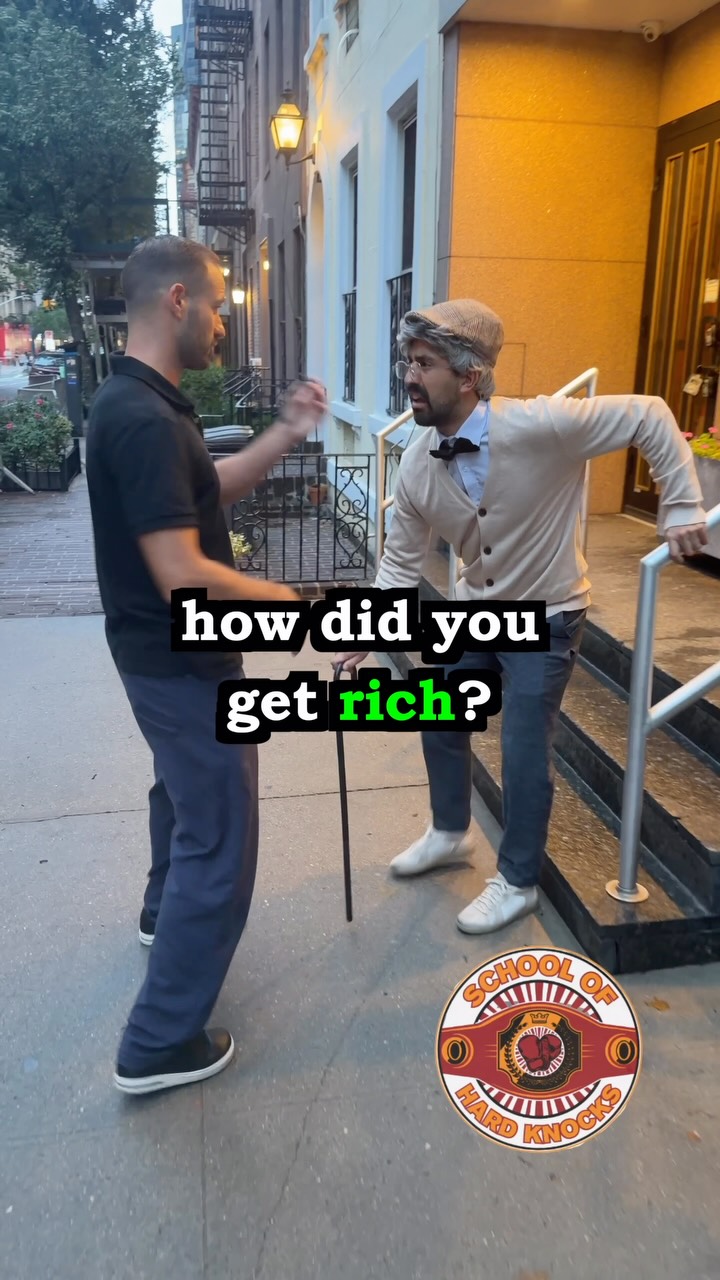
@pio_vincenzo_ You’ll never believe how this boomer got rich 💰🤯 #hustle #realestate #investing

@pio_vincenzo_
Instagram · Skit
@pio_vincenzo_ You’ll never believe how this boomer got rich 💰🤯 #hustle #realestate #investing
Performance
Video #47242 · Skit
[01]
The creator, acting as an interviewer, stops another actor dressed as an elderly man on the street to ask how he got rich. The 'old man' explains he bought a house for $4 in 1952 that is now worth millions. The interviewer then delivers a monologue explaining that this wealth was generated not by skill, but by the economic conditions of the time and currency debasement, which the old man confirms, before sarcastically advising young people to simply be born earlier.
[02]
[03]
 188.3K22.3×Comedic skit about house flipping@thatksenia · Breakdown
 258.4K14.3×Podcast clip satirizing rich kids@richguysradio · Skit
 269.4K34.7×Comedic skit pitching loan business@hardmoneyman_isperov · Satirical Product Pitch
 805.5KRole-playing an annoying angel investor@the.angel.investor · Relatable Skit
 360.3K2×Hard money lender explains trust@hardmoneyman_isperov · Q&A Response
 199.3K14.5×Satirical rich guy podcast clip@richguysradio · Stereotype Satire
 1.8M11.4×Business guy reacts to money@goodworkmb · Reaction
 353.4K47.9×Financial reality check narrative ad@gawx_art · Opportunity Explainer
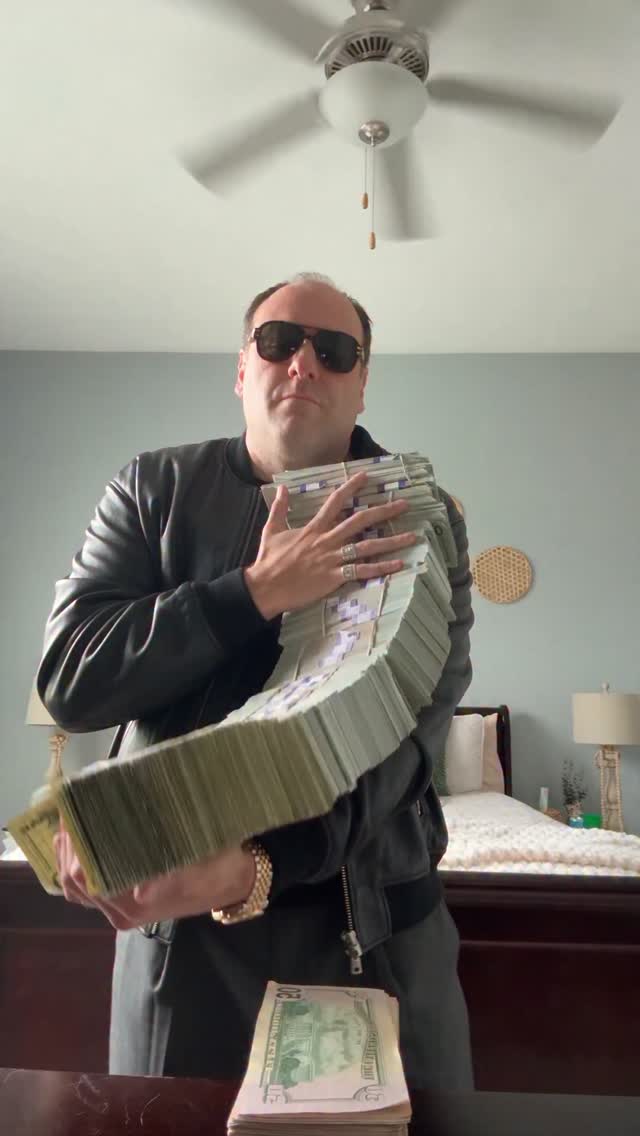 3.9M10.4×Man shows off large stacks of cash@spikeandred · Archetype Performance
 747.1K2×Q&A with a blunt punchline@hardmoneyman_isperov · Direct Advice Q&A
 585.8KExplaining rich family financial secrets@richardgarciaofficial · Opportunity Explainer
 267.4KWalking interview explains his job@hardmoneyman_isperov · Opportunity Explainer
[04]
[05]
What stops the scroll in the first 3 seconds
Title hook · 45%
Excuse me, Excuse me
Verbal hook · 45%
Excuse me. Excuse me.
Visual hook · 10%
A man approaches another man who is dressed in a stereotypical elderly person costume, including a grey wig, a cardigan, a bow tie, and a cane, creating immediate visual curiosity.
[06]
Steal this for your own video
Excuse me, , how did you ?
[07]
The promise the opener makes, and how the video pays it back
Hook
An aggressive, pattern-interrupting man-on-the-street question that immediately establishes a high-value premise (e.g., 'How did you get rich?').
Payoff
A final, brief exchange that reinforces the subject's disconnect from the modern world, followed by the interviewer delivering a concise, modern slang-based judgment that provides a satisfying conclusion for the target audience.
[08]
The structural pattern this video runs on
Framework
The Socratic Subversion
A satirical interview format where the interviewer feigns ignorance to lead a subject through a series of questions that dismantle common assumptions. The interviewer then pivots to deliver a complex, expert-level monologue that reveals the video's true thesis, using the subject as a comedic prop for a larger argument.
The Absurd Origin Story
The subject provides a simple, almost unbelievable explanation for their success that is rooted in a past context that no longer exists. This establishes the core comedic premise.
The Deconstruction of Merit
The interviewer asks a series of conventional follow-up questions assuming the subject's success was due to skill, hard work, or foresight. The subject's naive answers systematically disprove these assumptions, revealing the success was accidental or circumstantial.
The Expository Pivot
The interviewer abruptly drops the simple Q&A format and delivers a rapid-fire, dense, technical monologue that explains the complex systemic reasons behind the subject's success. This reveals the interviewer as the actual expert and delivers the video's core thesis.
The Comedic Confirmation
The seemingly simple subject naively agrees with the complex technical explanation, creating a moment of dramatic irony and validating the interviewer's monologue.
The Impossible Advice
When asked for actionable advice, the subject provides a punchline that is impossible for the audience to replicate (e.g., 'be born earlier'), perfectly summarizing the video's central grievance.
You’ll never believe how this boomer got rich 💰🤯 #hustle #realestate #investing
title · beginning
Excuse me, Excuse me
informational · beginning
how did you get rich?
informational · beginning
I bought a house in 1952 for $4.
informational · middle
how much is that house worth today?
informational · middle
$6.2 million.
informational · middle
I was a janitor and a bad one at that.
informational · middle
Wow, so you were able to buy a house for an extremely affordable price because the currency you were using to buy it hadn't been debased by 99% yet.
informational · end
What advice would you give to the younger generation?
informational · end
Maybe be Born 60 years earlier?
contextual · end
You're so cooked.
branding · throughout
SCHOOL OF HARD KNOCKS
Excuse me. Excuse me. How did you get rich? How did you know I'm rich? You're so old, my man. You must be rich. I guess you're right. How did you make your money? I bought a house in 1952 for $4. And how much is that house worth today? 6,200,000. How did you know the house was going to be such a good investment? I didn't. I mean, they were basically giving them away at that time. But at that time, you were laser focused on your career, and everything was moving in the right direction. Right? Not really. I was a janitor and a bad one at that. That. Wow. So you were able to buy a house for an extremely affordable price because the currency you were using to buy it hadn't been debased by 99% yes, pumping the value of all existing homes on the market rank dramatically reducing the purchasing power of your money in the process. That's exactly right, son. Incredible. What advice would you give to the younger generation? I don't know. Maybe be born sixty years earlier. I connect with all the boomers that got rich by buying a house sixty years ago and then doing nothing else with their lives. Can I get your contact? Do you have a telegraph? You're so cooked. Thanks so much for this interview.