Viral Hooks
Trending short videosDad explains a natural phenomenon
L

@lacrawfishco

Instagram · Talking Head Edit
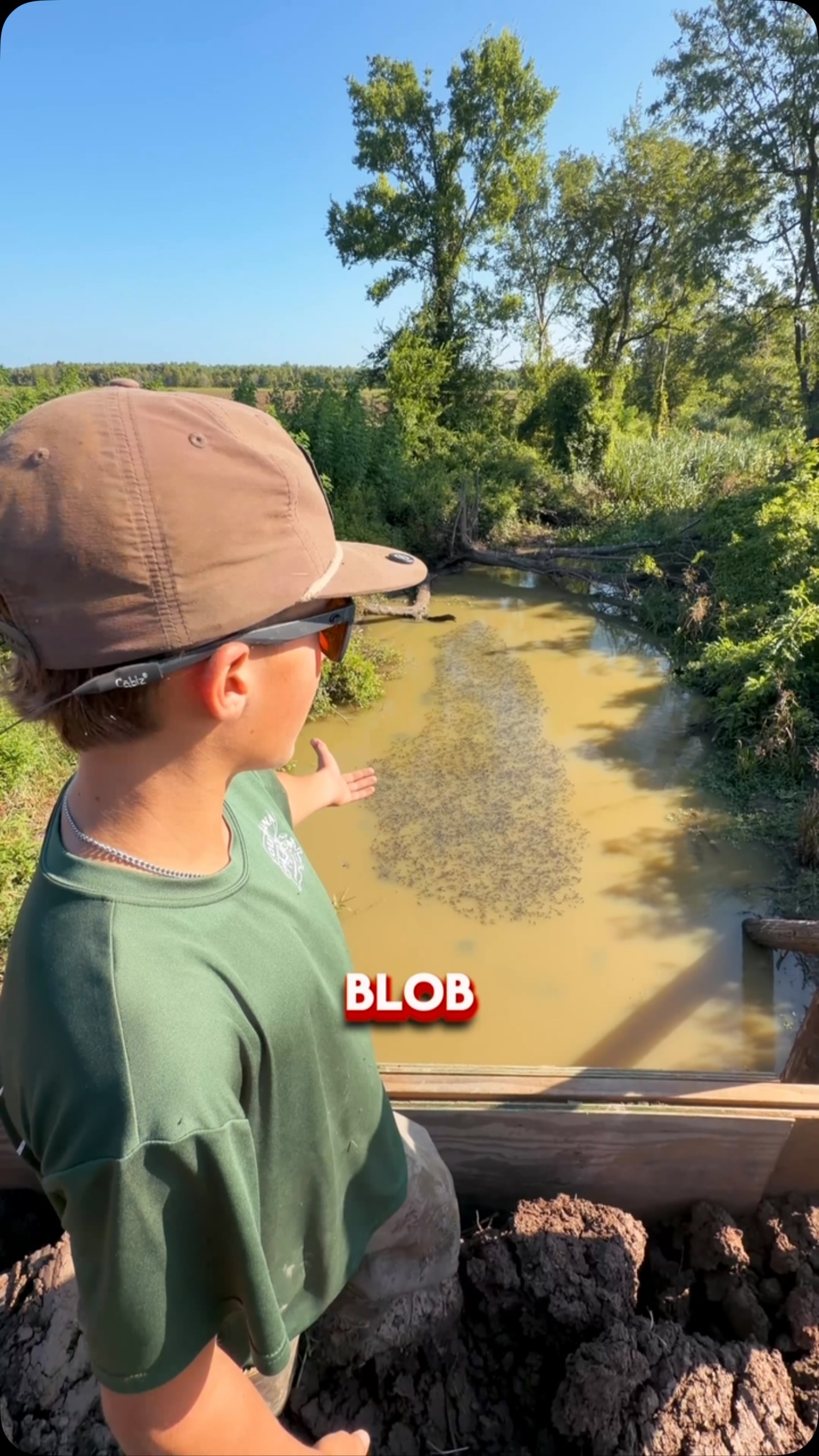
@lacrawfishco Catfish are one of those things we’d rather NOT see in our crawfish ponds. The reason is pretty simple. Fish can become major predators and competitors in a crawfish pond. Smaller crawfish, especially the young ones we depend on for the next crop, can become an easy meal, and fish can also compete with crawfish for the natural food already in the pond. So how do they get in? One of the biggest ways is through the same surface water we use to fill our ponds. Our farm has canals, reservoirs, and other waterways that help us move and reuse water instead of relying entirely on wells. Those waterways naturally have fish in them. When water gets pumped into a pond, or when heavy rain causes water to backflow through drains, fish can sometimes make their way in with it. Larger fish can even swim against the current through drain pipes. That’s why crawfish farmers use screens and other methods to try to keep unwanted fish out. The catfish in this video aren’t actually in one of our crawfish ponds. They’re in our canal. But that canal is also a pretty good example of exactly how fish can eventually find their way into one. Good place for a catfish. Not where we want him once the crawfish season gets going.

View original on Instagram

The edit1 shot · 10 text
Shots Text0:19

Performance

Views
642.4K
Likes
15.8K
Comments
50
Engagement
2.5%
Outlier
92×
Length · 27 Oct 2026
0:19

Video #47651 · Talking Head Edit

Dad explains a natural phenomenonfrom @lacrawfishco

[01]

Overview

A boy asks his father to identify a large, dark mass in a canal. The father explains that it's a school of young catfish, using a zoom-in shot to show them up close and detailing how they group together for safety from predators. The video concludes with a splash in the water, demonstrating how the fish scatter when they sense danger.

[02]

Simple outline

  1. 1Pose a naive question
  2. 2Reveal hidden complexity
  3. 3Explain the underlying principle
  4. 4Demonstrate principle in action

[03]

Related videos

[04]

Classification

Concepts
What Is X?Opportunity Explainer
Elements
B-Roll CutawayVoiceover

[05]

Hook analysis

What stops the scroll in the first 3 seconds

Verbal hook · 70%

Hey, dad. What's that big blob in the canal?

Visual hook · 30%

A wide shot of a murky canal featuring a large, dark, and mysterious mass of moving creatures, which immediately creates curiosity about its identity.

[06]

Hook template

Steal this for your own video

Hey, [trusted expert role]. What's that [mysterious thing] in the [familiar location]?

  • — Hey, Grandma. What's that weird lump in the dough?
  • — Hey, coach. What's that strange shape on the scan of my knee?
  • — Hey, mechanic. What's that strange puddle under the car?

[07]

Hook and payoff

The promise the opener makes, and how the video pays it back

Hook

A direct, relatable question about a visually ambiguous phenomenon, immediately creating a curiosity gap for the viewer.

Payoff

The Kinetic Proof. An external stimulus is suddenly introduced, triggering the exact reaction that was just predicted, providing a satisfying and visually dramatic confirmation of the expert's explanation.

[08]

Narrative framework

The structural pattern this video runs on

Framework

The Predictive Payoff

To create engagement by posing a question about a mysterious phenomenon, explaining the logical principle behind it, and then providing a dramatic, kinetic demonstration that proves the explanation is correct.

  1. 1

    The Innocent Inquiry

    A character asks a simple, observational question about something strange or mysterious in the environment, framing the central mystery of the video.

  2. 2

    The Expert's Invitation

    An authority figure acknowledges the mystery and invites the viewer to investigate more closely, transitioning the perspective from wide to specific.

  3. 3

    The Macro-to-Micro Reveal

    The camera perspective shifts (e.g., zooms in) to reveal that the initial mysterious object is actually a complex collection of smaller, individual components.

  4. 4

    The Core Principle Declaration

    The expert states the single, overarching reason or 'thesis' that explains the observed behavior or phenomenon (e.g., 'safety in numbers').

  5. 5

    The Tactical Breakdown

    The expert provides 1-2 specific, logical reasons that support the core principle, explaining the mechanics of why the phenomenon occurs.

  6. 6

    The 'If/Then' Prediction

    The expert makes a clear, testable prediction about how the subject will react to a specific stimulus, setting up the final payoff.

Themes

  • Nature education
  • Animal behavior
  • Family
  • Farming

Techniques

  • Question and answer
  • Visual demonstration
  • Expert explanation

Post caption

Catfish are one of those things we’d rather NOT see in our crawfish ponds. The reason is pretty simple. Fish can become major predators and competitors in a crawfish pond. Smaller crawfish, especially the young ones we depend on for the next crop, can become an easy meal, and fish can also compete with crawfish for the natural food already in the pond. So how do they get in? One of the biggest ways is through the same surface water we use to fill our ponds. Our farm has canals, reservoirs, and other waterways that help us move and reuse water instead of relying entirely on wells. Those waterways naturally have fish in them. When water gets pumped into a pond, or when heavy rain causes water to backflow through drains, fish can sometimes make their way in with it. Larger fish can even swim against the current through drain pipes. That’s why crawfish farmers use screens and other methods to try to keep unwanted fish out. The catfish in this video aren’t actually in one of our crawfish ponds. They’re in our canal. But that canal is also a pretty good example of exactly how fish can eventually find their way into one. Good place for a catfish. Not where we want him once the crawfish season gets going.

Text overlays

  • contextual · beginning

    DAD

  • contextual · beginning

    BLOB

  • contextual · beginning

    CANAL

  • contextual · beginning

    YEAH

  • contextual · beginning

    LET'S

  • contextual · beginning

    SECOND

  • informational · middle

    SAFETY

  • informational · middle

    MULTIPLE

  • informational · middle

    HARDER

  • informational · end

    SCATTER

Transcript

Hey, bad. What's that big blob in the canal? That one? Ew. Well, let's zoom in for a second. They group up together like that because there's safety in numbers. They're all swimming in multiple directions. It's harder for predator. That way, if one sees something, they all scatter.

Dad explains a natural phenomenon | Viral Hooks