@kolbykirschner
Instagram · Greenscreen Talking Head
@kolbykirschner There are little things that will make a bigger difference faster than this

@kolbykirschner
Instagram · Greenscreen Talking Head
@kolbykirschner There are little things that will make a bigger difference faster than this
Performance
Video #48254 · Greenscreen Talking Head
[01]
The creator explains the key difference between ordinary and extraordinary people is the mindset of 'knowing' versus 'wanting'. He uses the character transformation of Paul Atreides in 'Dune: Part Two' as a central analogy, showing how Paul immediately embodies his future self after a pivotal moment. The creator connects this to the psychological concept of 'self-image' from Maxwell Maltz's book 'Psycho-Cybernetics' and concludes by urging viewers to start acting like their desired future self today, as identity creates behavior and reality follows.
[02]
[03]
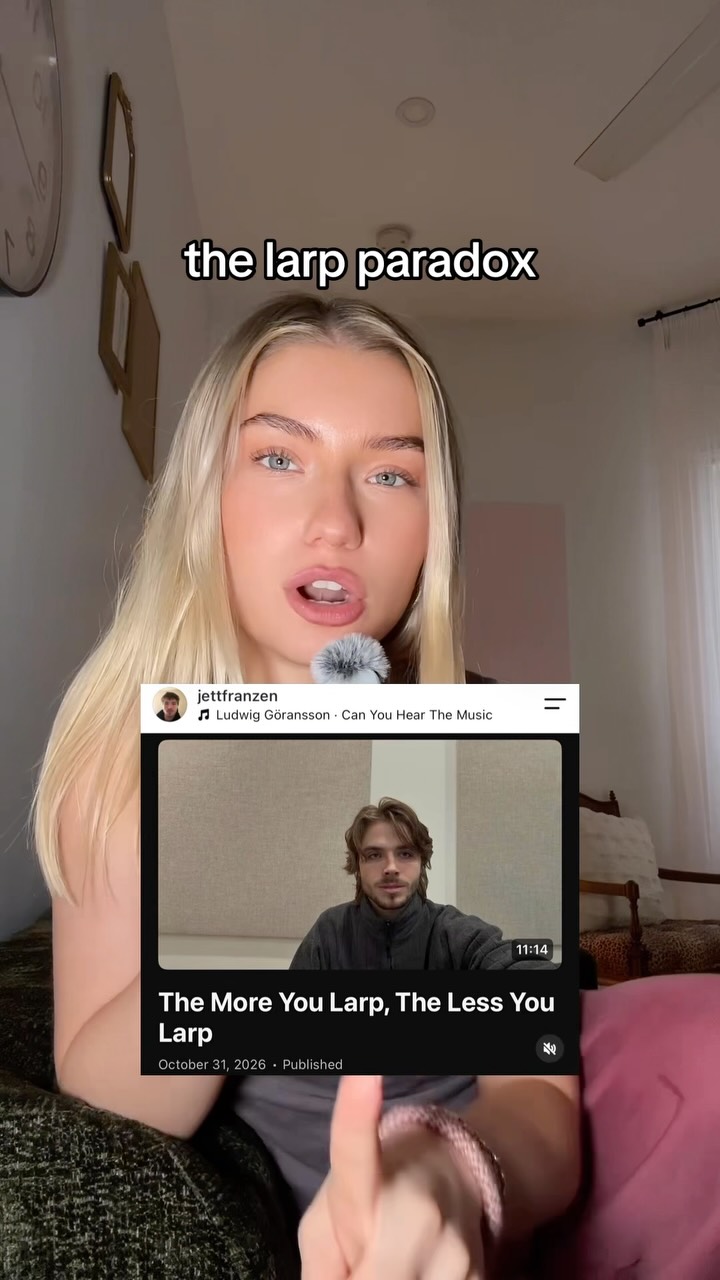 135.4K2.3×Graphic yap about identity shifting@angelinaabalandina · Hot Take
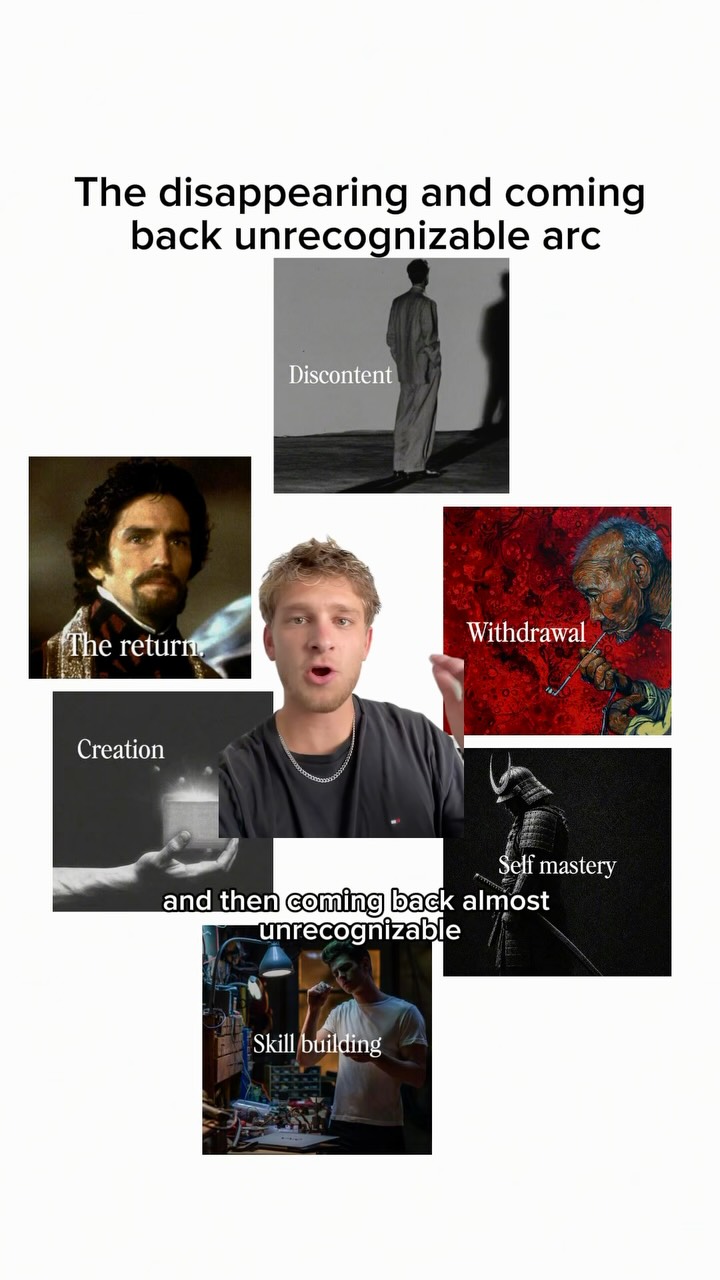 795K287.6×Explaining the hero's transformation arc@kolbykirschner · Breakdown
 3M94.8×Speaker explains delusion and success@thejaunt_ · Anecdotal Philosophy
 441.9KExplains a rare personality archetype@diewithoutregretss · Opportunity Explainer
 374.6KExplains mindset hack using LARP@jaylinleee · Opportunity Explainer
 119.6K1.5×Mindset breakdown with actionable steps@kolbykirschner · Breakdown
 126K15.8×Direct talking head mindset advice@sensei.nick · Hot Take
 263.8K3.7×Creator breaks down the work-to-reward mindset shift needed to scale income dramatically@briarcochran · Anecdotal Philosophy
 558K104.5×Philosophical monologue over illustrative photos@iamfieldnotes · Motivational Mantra
 313.8K1.1×Actions define reality, not stories@mindhackz · Anecdotal Philosophy
 552.4K246.2×Explaining a complex thinking model@kolbykirschner · Breakdown
 226.5K24×Simple framework for changing life@viralclubhouse_ · Motivational Mantra
[04]
[05]
What stops the scroll in the first 3 seconds
Title hook · 35%
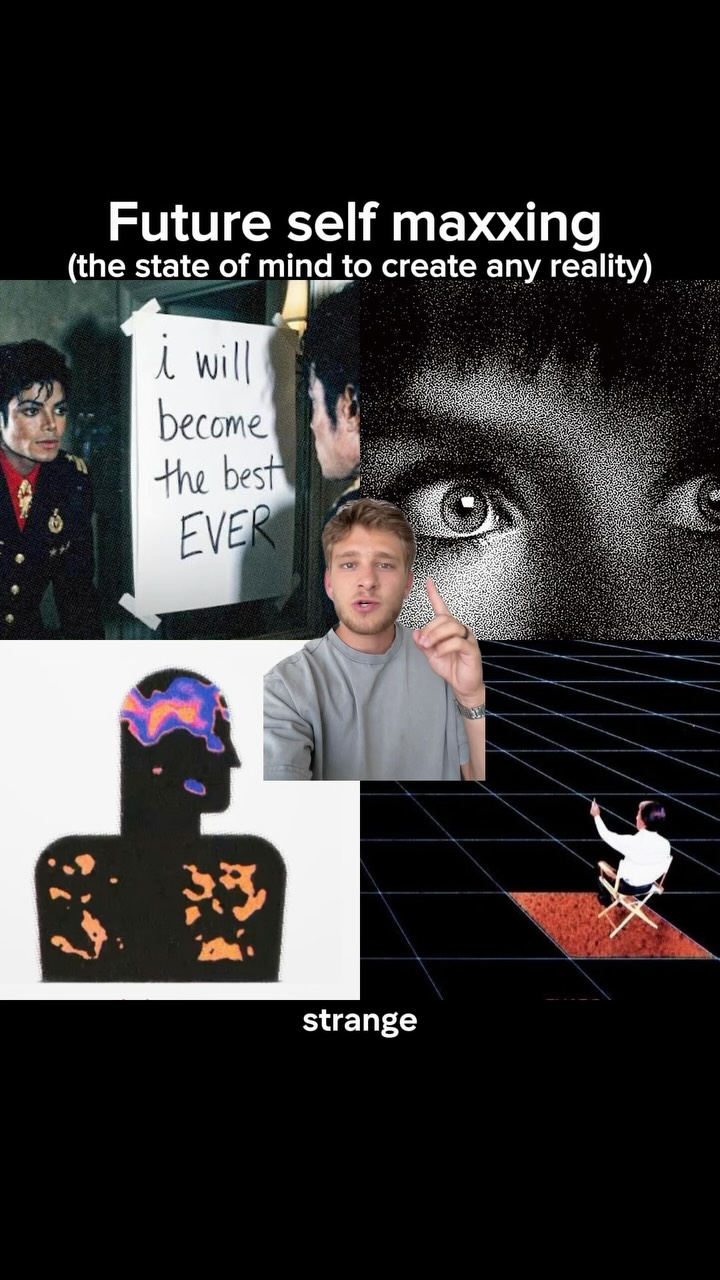
Future self maxxing (the state of mind to create any reality)
Verbal hook · 50%
There is one strange difference between ordinary people and extraordinary people, but it isn't intelligence.
Visual hook · 15%
A four-panel montage of visually distinct and intriguing images: Michael Jackson with a sign, a high-contrast close-up of intense eyes, a graphic of a brain scan on a silhouette, and a retro-futuristic image of a person in a gridded space.
[06]
Steal this for your own video
There is one strange difference between and , but it isn't .
[07]
The promise the opener makes, and how the video pays it back
Hook
Present a bold, counter-intuitive claim that challenges a common assumption (e.g., the difference between ordinary and extraordinary people isn't intelligence), creating an immediate information gap that compels the viewer to seek the answer.
Payoff
Empower the viewer with a new mental model and a clear, actionable directive, leaving them with a sense of clarity and control over their own transformation.
[08]
The structural pattern this video runs on
Framework
The Parable Proof Blueprint
To teach a complex psychological or philosophical concept by first stating a counter-intuitive thesis, then proving it through a relatable pop-culture or historical parable, and finally translating it into an actionable principle for the viewer.
The Contrarian Premise
Establish a binary distinction between two states or groups (e.g., ordinary/extraordinary) and debunk the most common explanation for their difference, promising a deeper, less obvious truth.
The Modern Myth
Introduce a highly relevant and popular narrative (e.g., a movie, book, historical event) as the primary vehicle for explaining the thesis, making the abstract concept tangible and engaging.
The Transformative Analysis
Deconstruct a key moment from the narrative, focusing on the *process* and *speed* of the transformation to highlight the core mechanism (e.g., the change wasn't gradual, it was an immediate identity shift).
The Principle Distillation
Explicitly state the core psychological or philosophical principle demonstrated by the narrative, often by contrasting two states of being (e.g., 'wanting' vs. 'knowing').
The Legacy of Proof
Validate the principle by citing historical figures, intellectual authorities, or established concepts, lending credibility and timelessness to the argument.
The Causal Reversal
Reframe the principle as a simple, powerful, and often paradoxical rule that inverts conventional cause-and-effect wisdom (e.g., 'Identity creates behavior,' not the other way around).
The Future-Self Interrogation
Translate the abstract principle into a direct, introspective challenge for the viewer, prompting them to apply the new mindset to their present actions by asking 'How would that future person act today?'
The Final Mandate
Conclude with a concise, empowering statement that removes excuses and frames the new principle as the sole key to achieving the desired outcome, placing the power entirely in the viewer's hands.
There are little things that will make a bigger difference faster than this
title · beginning
Future self maxxing (the state of mind to create any reality)
informational · end
forget the old me.
informational · end
Your belief in yourself is your greatest weapon.
informational · end
aim higher
informational · end
so my future depends on... me?
informational · end
SHAPE A NEW WORLD AROUND YOU.
There is one strange difference between ordinary people and extraordinary people, but it isn't intelligence. It's the difference between the state of wanting and knowing. There's a scene in Dune part two that explains this better than almost any self help book ever could. Paul Atreides drinks the water of life and suddenly, he doesn't just see the future, but he sees the man he is meant to become. But the strange part is what happens after that. He doesn't slowly grow into that version. He immediately starts walking differently, speaking differently, making decisions differently. But notice something important. Paul Atreides doesn't say, I hope I become that man. He moves immediately as if he already is. He wasn't coming from a place of wanting anymore, but he was coming from a place of no. And this is exactly what the world's greatest minds understood. Maxwell Maltz called it your self image in his book Psycho Cybernetics. Different worse, but the same principle. Your identity creates your behavior. You don't become successful and then think like that worse. You become that person first, then reality catches up. If you already knew with absolute certainty who you wanted to be five, ten, fifteen years from now, how would that person walk today? How would they speak? How would they interact with people? What decisions would they make? Start acting from that frame. You don't need to drink the water of life to see your future self. You just need enough clarity to stop negotiating with the old one.