@npr
Instagram · Skit
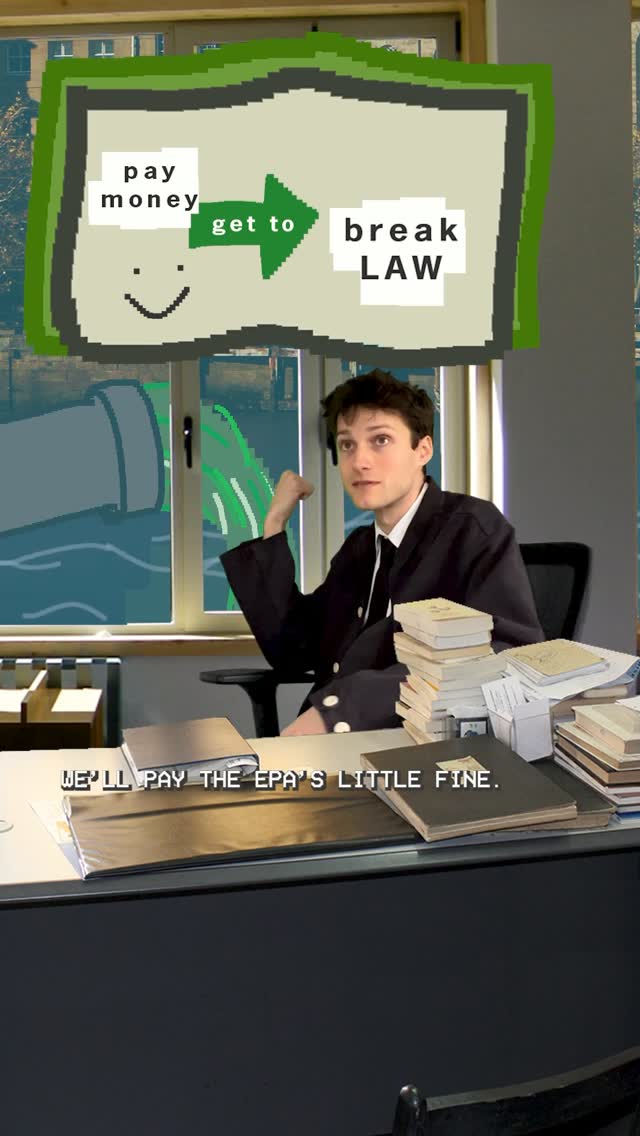
@npr For some, breaking the law is just a business expense. More like this in our book Planet Money: A Guide to the Economic Forces That Shape Our Lives From the @planetmoney archives Producer: @jackcorbe • Jack Corbett / NPR.

@npr
Instagram · Skit
@npr For some, breaking the law is just a business expense. More like this in our book Planet Money: A Guide to the Economic Forces That Shape Our Lives From the @planetmoney archives Producer: @jackcorbe • Jack Corbett / NPR.
Performance
Video #48287 · Skit
[01]
The creator performs a scripted skit between two characters: an employee who frantically reports that their factory is illegally polluting a river, and his boss who calmly explains the 'law-as-price' theory. The boss frames environmental fines as a simple operating cost, dismisses any personal accountability, and concludes they will just hide their actions better and use propaganda if fines increase.
[02]
[03]
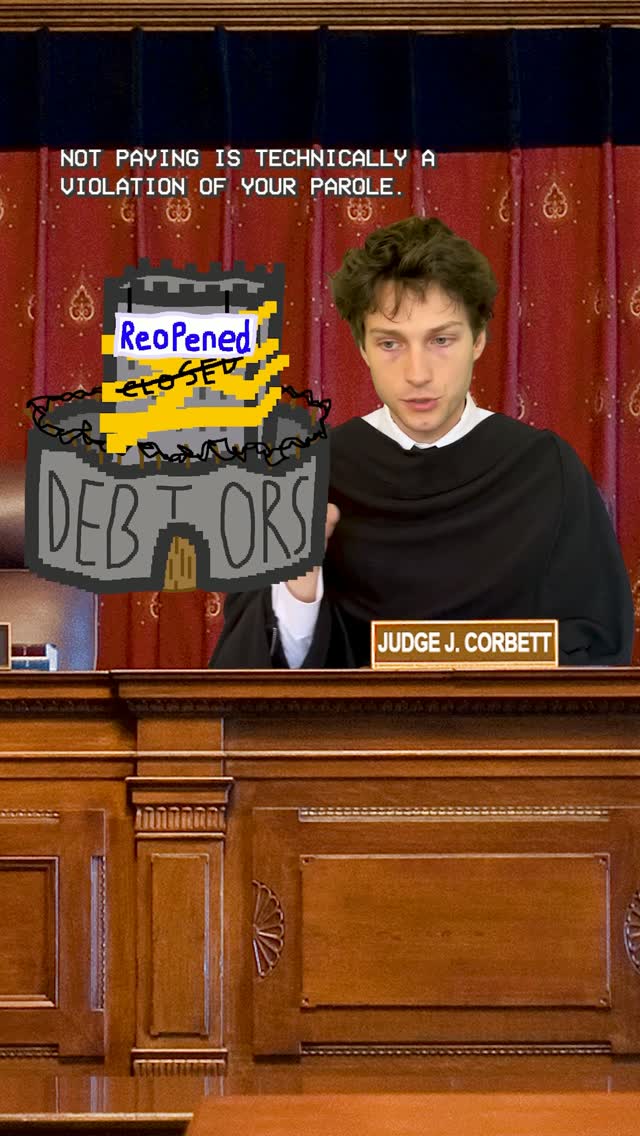 473K15.3×Satirical skit critiques court fees@npr · Relatable Skit
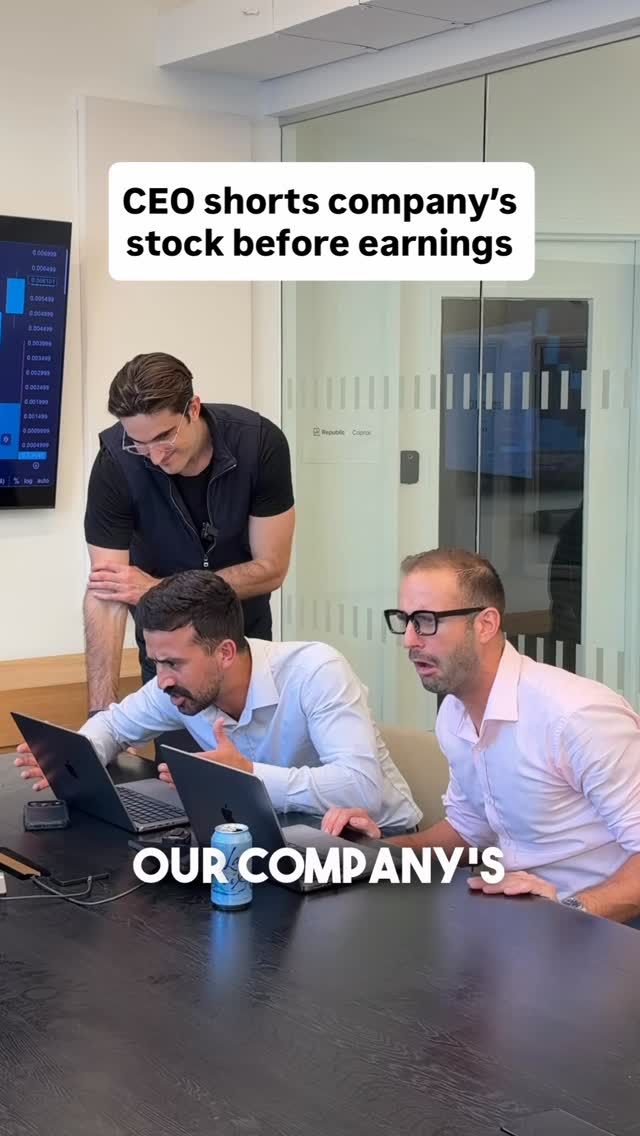 1.4M9.3×CEO convinces employees of crime@clementetv_ · Skit
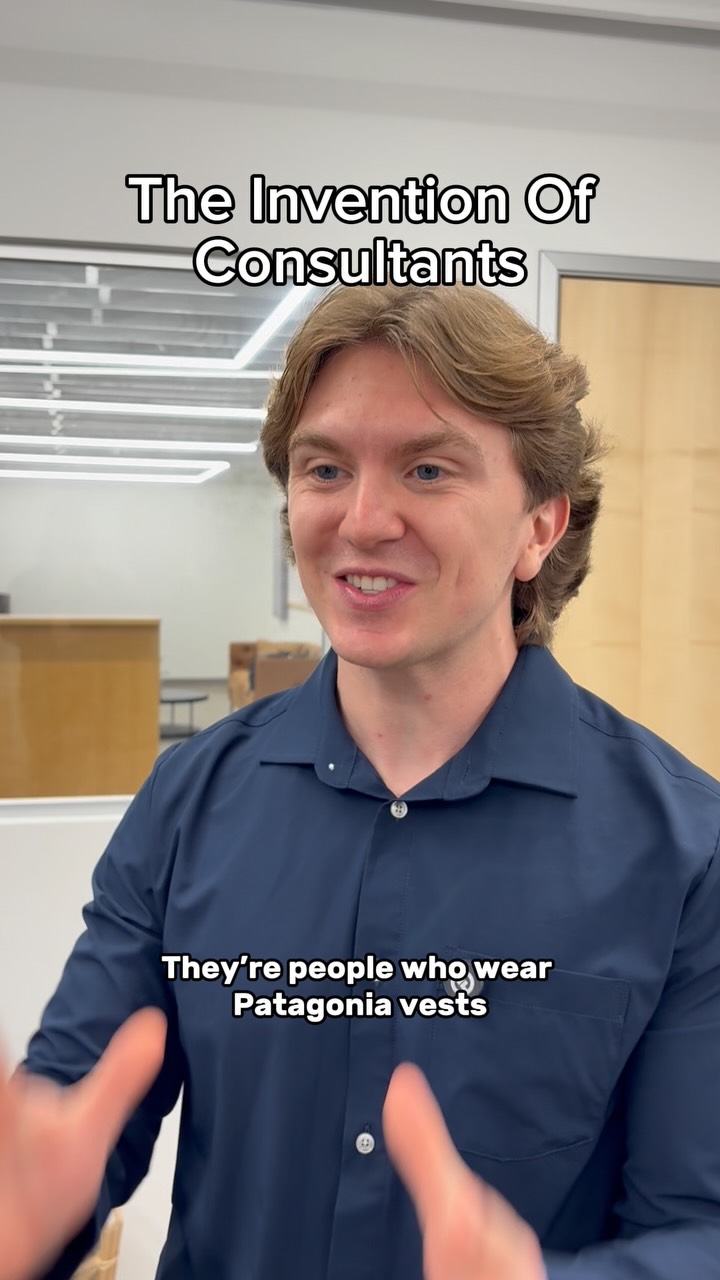 541.3K3.8×Comedic sketch inventing consultants@fentifriedchicken · Skit
 701.3K1.8×The Office style landscaping comedy skit@tigrangertz · Mockumentary Sketch
 266.8K1.8×Comedic video call character skit@johnnyhilbrant · Stereotype Satire
 82.1K7.7×Worker outsmarts arrogant rich guy@cevrico · Skit
 1.8M54×Relatable construction site comedy skit@tigrangertz · Relatable Skit
 70.5K5.7×Startup vs legacy corporate skit@versojobs · Skit
 597.2K1.3×Comedic skit about brand sponsorships@specializedgerman · Skit
 405.9K6.8×Skit contrasting corporate speak vs reality@roxycouse · Relatable Skit
 312.4K48.1×Boss speech versus employee perception@lamottagroup · Expectation vs. Reality
 257.3K7×Comedic job interview gone wrong@thatzonaguy · Relatable Skit
[04]
[05]
What stops the scroll in the first 3 seconds
Title hook · 50%
SIR, OUR FACTORY'S TOXIC WASTE IS POLLUTING THE RIVER!
Verbal hook · 35%
Sir, our factory's toxic worse. It's polluting the river.
Visual hook · 15%
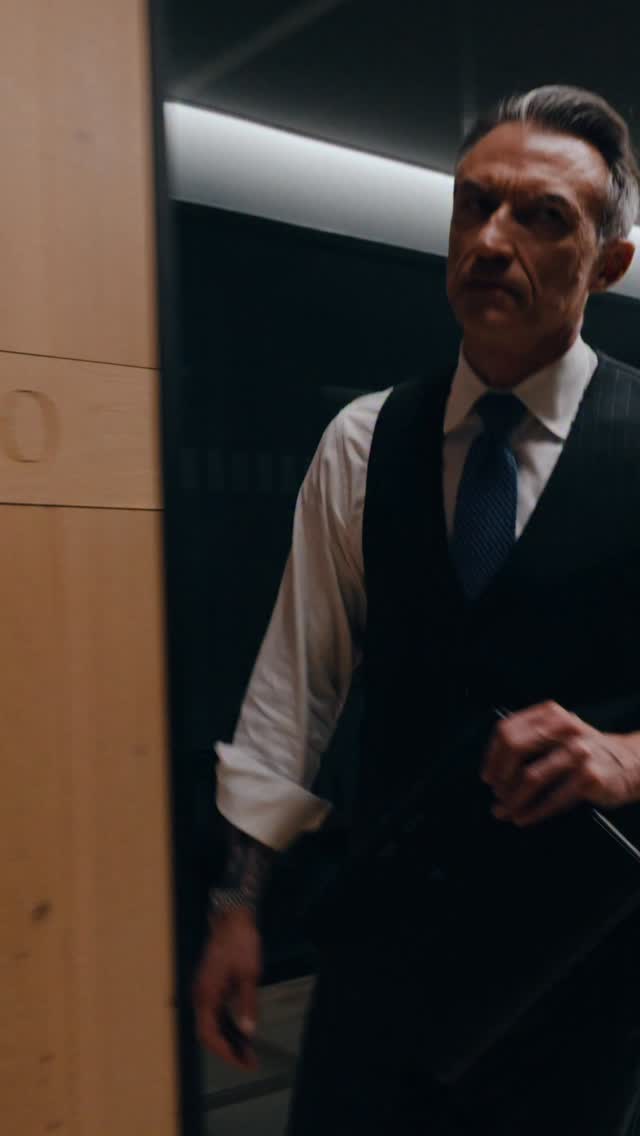
A man with a panicked expression bursts into a room with urgent, forward-leaning movement, creating immediate action and a sense of crisis.
[06]
Steal this for your own video
, IS !
[07]
The promise the opener makes, and how the video pays it back
Hook
A character urgently presents a high-stakes, morally unambiguous problem to an authority figure, creating immediate conflict.
Payoff
The antagonist concludes with a final, darkly humorous statement or pun that summarizes their cynical worldview, leaving the protagonist defeated and the audience with a powerful, unsettling insight.
[08]
The structural pattern this video runs on
Framework
The Cynical Doctrine
A dialogue-based skit where a naive character presents a clear moral or practical problem, and a cynical authority figure repeatedly reframes the problem through a counter-intuitive, amoral worldview, ultimately revealing a systemic flaw.
The Problem Statement
The protagonist clearly and emotionally states a problem that seems obviously wrong, establishing the initial moral stakes.
The Amoral Reframe
The antagonist dismisses the moral dimension of the problem, subverting expectations by reframing it as a simple, calculated transaction or cost.
The Escalation of Stakes
The protagonist introduces an external threat or consequence (e.g., authority, law) to force the antagonist to acknowledge the severity of the situation.
The Unveiling of the Doctrine
The antagonist explains their cynical, counter-intuitive philosophy that justifies their actions, treating rules not as moral imperatives but as prices to be paid for a desired outcome.
The Personalization Attempt
The protagonist attempts to make the consequences personal for the antagonist, shifting from systemic to individual accountability.
The Deflection of Accountability
The antagonist uses their position or a systemic loophole to deflect any personal responsibility, reinforcing their detachment.
The Logical Challenge
The protagonist proposes a seemingly logical, system-based solution that would make the antagonist's behavior unprofitable or impossible.
The Systemic Workaround
The antagonist reveals how they would simply adapt and find a more deceptive way to continue their behavior, demonstrating that the system itself is flawed and can be gamed.
For some, breaking the law is just a business expense. More like this in our book Planet Money: A Guide to the Economic Forces That Shape Our Lives From the @planetmoney archives Producer: @jackcorbe • Jack Corbett / NPR.
contextual · beginning
SIR, OUR FACTORY'S TOXIC WASTE IS POLLUTING THE RIVER!
contextual · beginning
YEAH, WE'RE PAYING TO DO THAT.
contextual · beginning
NO, I DON'T THINK YOU UNDERSTAND, THE EPA IS HERE. WE'RE BREAKING COUNTLESS LAWS.
informational · middle
Law as Price
informational · middle
method: safe disposal, cost: $$$$$ pollution fine: $$
informational · end
green water is nutricieous
Sir, our factory's toxic worse. It's polluting the river. Yeah. We're paying to do that. No. I don't think you understand. The EPA is here. We're breaking countless laws. Let me tell you about the law's price tier. See, you think these laws are if you do this you have to pay money. They're not. They're if you pay money you get to do this. We'll pay the EPA's little fines. It's best an operating cost. Couldn't you go to jail? I don't. Why would I be held accountable for something that happened under my watch? This came at a personal cost to me. We might rethink things. What if they just raise the fine until all that isn't profit? See, you would think that would work, but not usually. We'll just work harder at hiding what we're doing and ramp up our information campaigns. Tier really good at muddying the waters. Did it? Do you like me? The good. Like, out there... The the water out tier?