The creator demonstrates the most common structural failure points in deck construction. He explains and shows the correct way to install a ledger board against a house, including flashing and fastener placement, and then details how to properly size, dig, and pour concrete footings for support posts, finishing with a demonstration of why posts should be kept off wet concrete.
Post caption
Learn how to install a deck and what causes them to fail 💪
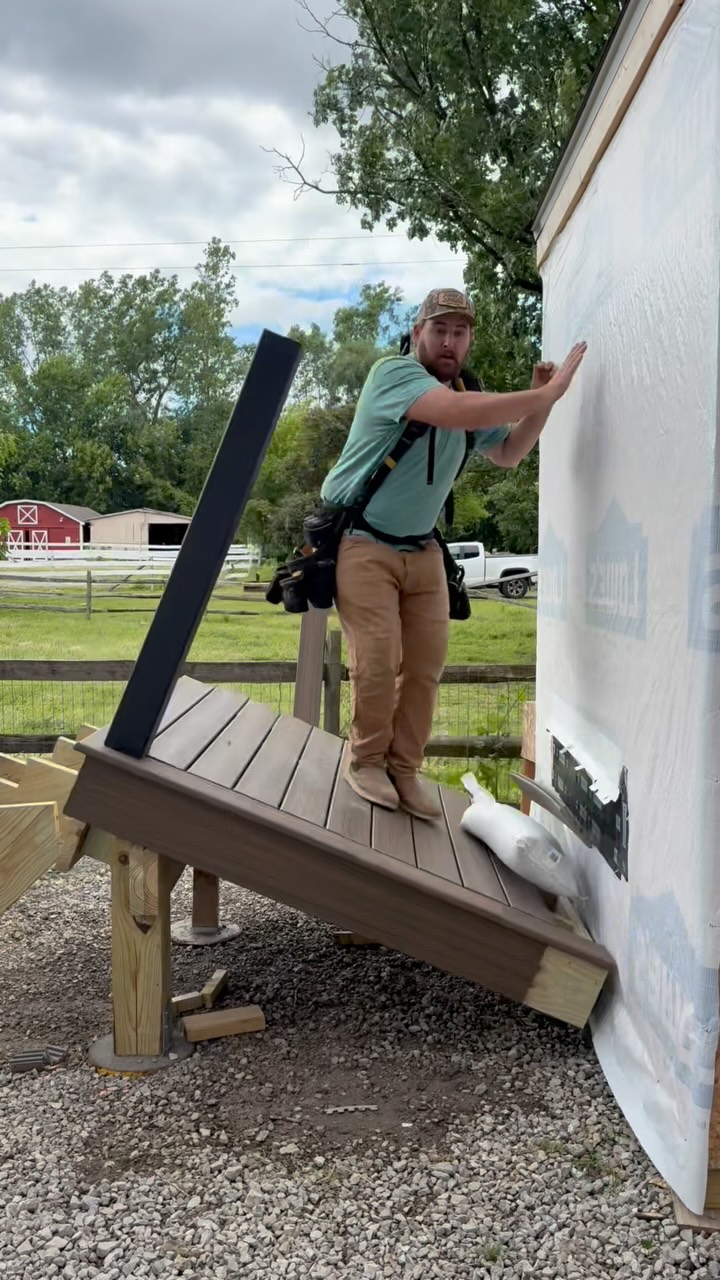
I demonstrate common failure points on a deck such as weak ledgers, rotted posts, overcut stairs, water intrusion, improper fasteners and the importance of joist blocking 👍
Thanks to over 1 million followers in the past couple months 💪
Always follow local codes and plans 🔨
Transcript
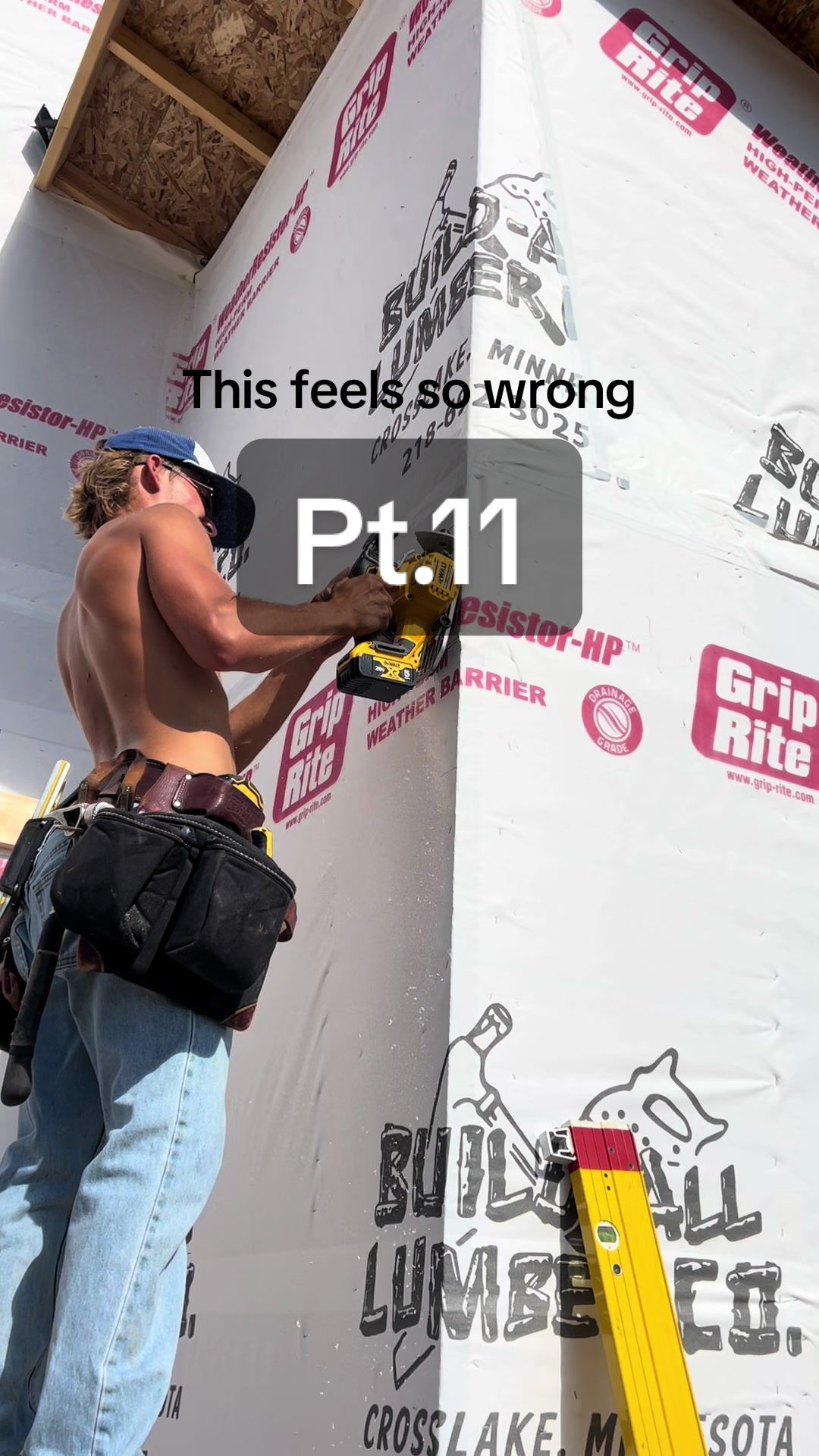
This is why decks fail. Your beam and your ledger is what holds up your deck. Chalk your ledger height, flashes above and below your better. Attach your ledger. Ledgers get installed into the rim joist. For a ledger, you'll never have fasteners two inches from the top and the side or three quarter inches from the bottom. This one's from the top to bottom fastener will be one and five eighths or more. The rim joist is the opposite. Two at the better, three quarter at the top. Ledger can get installed anywhere in this green zone. Call this ledger too low, it can split your rim joist. Footing diameter is determined by the weight of the deck, not the size of your post. Taller decks need thicker worst. Shorter decks can get thinner posts. Measure off structure and make a mark for your hole. Dig out your footing below your frost depth. Hand digging's hard. Augers are a lot easier. Pour concrete. Either bury a post one foot minimum, better set a bracket, or mark and drill out a bracket that has standoff. If this corrodes or the bottom of the post rots, it's much easier to replace. Water doesn't easily penetrate across grain, but it can easily travel up through end grain.