title · photo_0
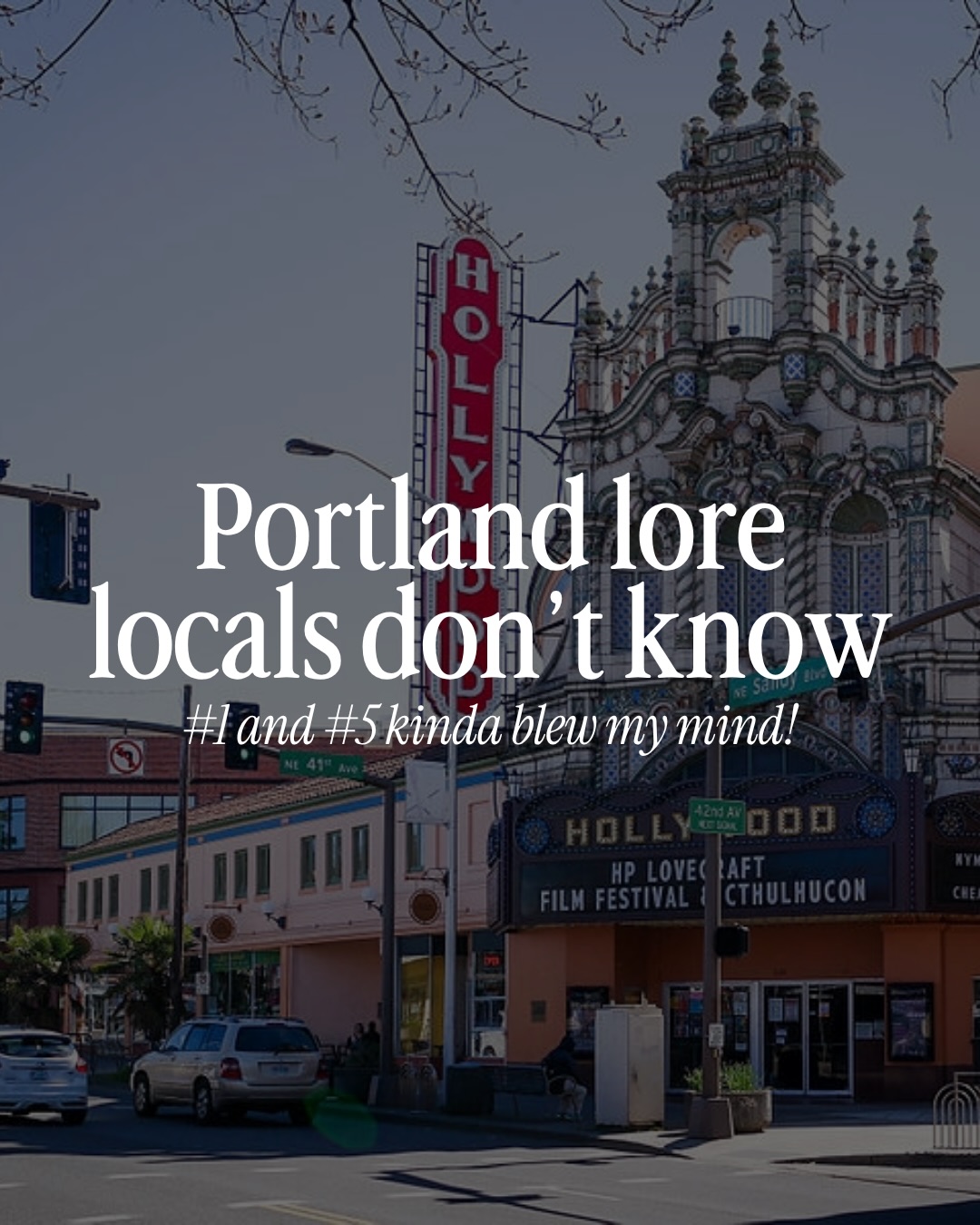
Portland lore locals don't know
#1 and #5 kinda blew my mind!
title · photo_1
Portland's Only World's Fair Included a Human Zoo
informational · photo_1
When Portland hosted the Lewis and Clark Centennial Exposition in 1905 out at Guild's Lake, one of the most popular paid attractions was a staged "Igorrote Village," where about 25 Igorot people from the mountains of Luzon in the Philippines were put on display for fairgoers. Newspapers at the time described them in openly condescending terms, framing the exhibit as proof of America's new colonial reach after taking the Philippines from Spain. The same kind of Igorot exhibit had already run at the 1904 St. Louis World's Fair and toured on to Seattle's 1909 exposition too.
title · photo_2
The Expo Center Used to Hold People, Not Trade Shows
informational · photo_2
Before it hosted the RV show and holiday bazaars, the Portland Expo Center was the Pacific International Livestock Exposition building, and in 1942 the Army converted it into the Portland Assembly Center to detain more than 3,800 Japanese Americans under Executive Order 9066. Families lived in stalls built from thin plywood laid over livestock manure, with no ceilings and a single bare lightbulb per unit. Most people held there were shipped out to the Minidoka camp in Idaho that September. A plaque placed by Multnomah County and the Portland JACL in 1992 marks the spot inside the building today.
title · photo_3
Portland Doesn't Actually Own One of Its Most Famous Bridges
informational · photo_3
The Steel Bridge, built in 1912, is the only bridge in the world where the two decks lift independently, with the lower rail deck telescoping up into the upper deck while cars and MAX trains keep moving on top. When it came time to pay for it, Portland voters balked and passed a measure handing responsibility for the city's Willamette River bridges over to Multnomah County instead. Today the Steel Bridge is actually owned by Union Pacific Railroad, not the city or the county.
title · photo_4
The Japanese Garden's Koi Pond Used to Be a Bear Pit
informational · photo_4
The Portland Zoo's original 1888 home, started by pharmacist Richard Knight with a couple of unwanted bears, moved up the hill in Washington Park in 1925 to the exact spot where Portland Japanese Garden's Strolling Pond Garden sits now. The lower pond under Heavenly Falls used to be the bear grotto, and the hillside behind it held the animals' winter den. Look down at the walkway next to the pond and you'll find seven stones laid out in the shape of the Big Dipper, a quiet nod to the zoo that used to be there.
title · photo_5
Portland Almost Rivaled SoHo for Cast Iron, Then Bulldozed Most of It
informational · photo_5
By the 1880s, Portland's waterfront had one of the largest collections of cast-iron fronted buildings in the entire country, second only to New York's SoHo district. Most of it sat between Front and Third Avenues, and dozens of those buildings got torn down in the 1940s for parking lots and the Harbor Drive freeway before preservationists stepped in. What survived is now protected inside the Skidmore/Old Town Historic District, a National Historic Landmark since 1977.
call-to-action · photo_6
If we haven't met, I'm Stephanie, a proud Portland local
comment LORE for the best things to do in Portland this time of year