Video #49777 · Talking Head Edit
Reporter explains strange ocean phenomenonfrom @theoregonian
The creator, a reporter for The Oregonian, explains a geological phenomenon called Pythia's Oasis off the Oregon coast. He describes what it is (a warm liquid vent), explains why it's in the news, details the origin of its name by connecting it to the ancient Greek priestess Pythia and the Temple of Apollo at Delphi, and concludes by reassuring viewers that scientists say it is not a cause for concern.
- 1Present strange phenomenon
- 2Provide scientific context
- 3Explain historical origin
- 4Address potential fears
ConceptsBreakdownStrange but TrueHeadlines
ElementsB-Roll CutawayLower ThirdArchival FootageUnderwater FootageJump CutVoiceoverText OverlayTitle Text Hook
[05]
Hook analysis
What stops the scroll in the first 3 seconds
Title hook
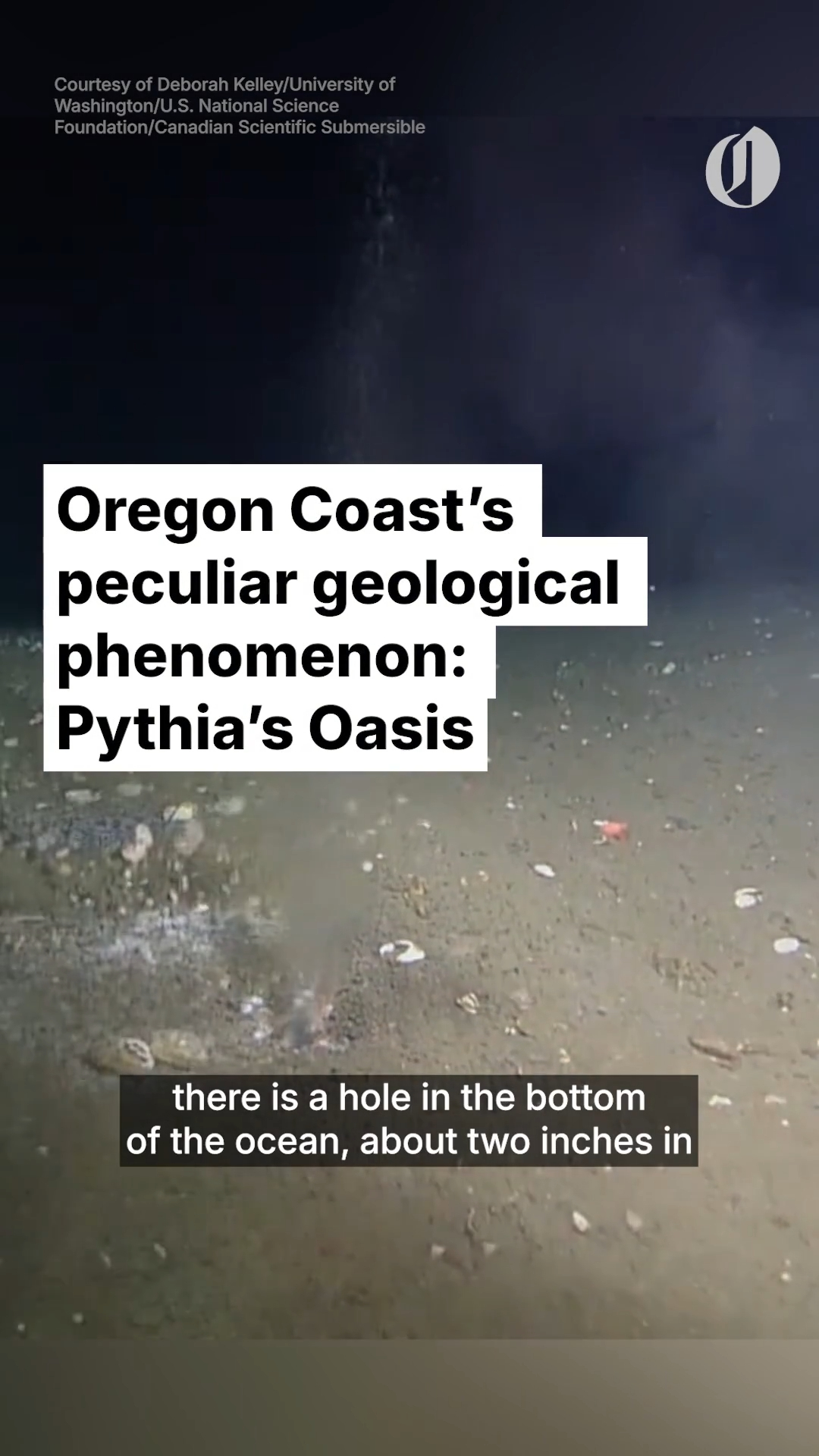
Oregon Coast's peculiar geological phenomenon: Pythia's Oasis
Verbal hook
About 50 miles off the coast of Newport, there is a hole in the bottom of the ocean about two inches in diameter, and warm liquid is flowing up from about two miles below the sea floor.
Visual hook
The video opens with dark, murky underwater footage showing a plume of liquid and bubbles actively venting from a hole in the sandy ocean floor, creating immediate visual intrigue about the unusual phenomenon.
[07]
Hook and payoff
The promise the opener makes, and how the video pays it back
Hook
The Intriguing Anomaly: Immediately presents a specific, mysterious, and unexplained event or object using concrete details (location, size, action) to create a strong curiosity gap.
Payoff
The Threat De-escalation: Directly addresses and neutralizes any implicit fear or concern the viewer might have about the phenomenon, offering a clear, authoritative, and reassuring conclusion from experts.
[08]
Narrative framework
The structural pattern this video runs on
Framework
The Curiosity Deconstructed Framework
Introduce a peculiar or mysterious phenomenon, then systematically deconstruct its scientific, cultural, and emotional significance for the viewer, culminating in a reassuring resolution.
- 1
The Scientific Validation
Establishes the credibility of the phenomenon by citing recent studies, research, or expert discovery. This beat gives the phenomenon an official name and grounds the mystery in fact.
- 2
The Social Relevancy Bridge
Explains why this topic is currently trending or relevant (e.g., social media virality), connecting the core subject to the viewer's immediate social or cultural context and answering 'Why am I seeing this now?'
- 3
The Historical Analogy
Reveals an unexpected and deep historical or cultural backstory related to the phenomenon's name or origin, providing an intellectual 'aha!' moment that adds a layer of depth and intrigue.
Themes
- Scientific discovery
- Natural phenomena
- Historical context
Techniques
- B-Roll Cutaway
- Lower Third
- Archival Footage
Post caption
Off the coast of Newport, warm, mineral-rich liquid spews up like a fire hose through a small hole in the Pacific Ocean floor.
The fluid is believed to originate from two miles below the seafloor, where tectonic plates converge at the Cascadia fault line.
Read more at the link in our bio.
📷: Joel Odom
#pythiasoasis #geology #deepsea #ocean #oceanseep #theoregonian #oregon #newport #newportoregon #oregoncoast
Text overlays
contextual · beginning
Courtesy of Deborah Kelley/University of Washington/U.S. National Science Foundation/Canadian Scientific Submersible
title · beginning
Oregon Coast's peculiar geological phenomenon: Pythia's Oasis
contextual · beginning
Joel Odom
reporter, The Oregonian
contextual · middle
Courtesy of Getty Images
Transcript
About 50 miles off the coast of Newport, there is a hole in the bottom of the ocean about two inches in diameter, and warm liquid is flowing up from about two miles below the sea floor. It hit headlines in 2023 after a study was published by University of Washington researchers about this phenomenon, geological phenomenon that they've dubbed Pythia's Oasis. It's back in the news after, video has been making the rounds on social media about it. Pythia's Oasis is named for Pythia, an ancient Greek priestess who sat in the Temple Of Apollo at Delphi, which itself was built on top of the convergence of two fault lines. Now there's no doom or gloom associated with pithy as the oasis. It's an interesting phenomenon, but nothing to be concerned about, scientists say. It doesn't trick