@averagef1consumer
Instagram · Graphic Yap
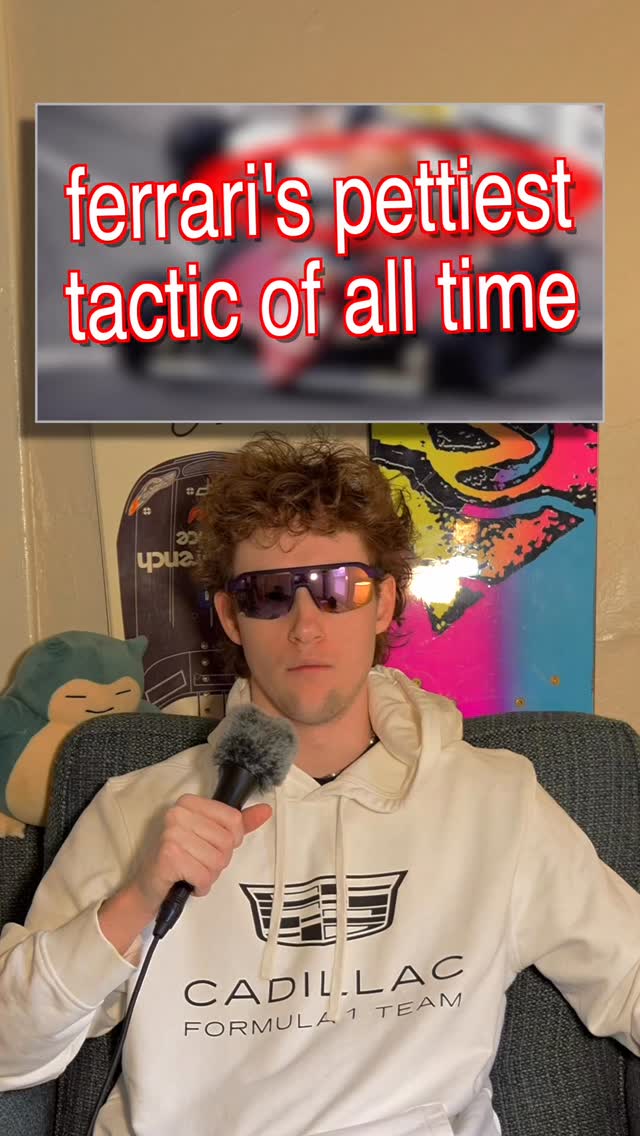
@averagef1consumer ferrari were on their regina george arc in the 80s, read about it on @wikipedia #f1 #formula1 #ferrarif1 #averagef1consumer #WikipediaPartner

@averagef1consumer
Instagram · Graphic Yap
@averagef1consumer ferrari were on their regina george arc in the 80s, read about it on @wikipedia #f1 #formula1 #ferrarif1 #averagef1consumer #WikipediaPartner
Performance
Video #50459 · Graphic Yap
[01]
The creator hooks the viewer with a bizarre historical anecdote about Ferrari intentionally getting disqualified from an F1 race, then transitions into a sponsored breakdown of the FISA-FOCA war using Wikipedia articles as visual aids to explain the key players and the battle for control over the sport.
[02]
[04]
[05]
What stops the scroll in the first 3 seconds
Title hook
ferrari's pettiest tactic of all time
Verbal hook
Remember that one time Ferrari showed up to a race with two rear wings just to purposefully get disqualified?
Visual hook
The video opens with the creator wearing reflective sunglasses and a racing hoodie, holding a microphone, while a large graphic overlay displaying a vintage F1 car and bold text dominates the upper half of the screen.
[07]
The promise the opener makes, and how the video pays it back
Hook
The Absurd Historical Hook: Presenting a highly specific, bizarre, and seemingly illogical event or action to immediately generate curiosity and cognitive dissonance.
Payoff
The Narrative Escalation: Transitioning from the foundational setup into the specific, escalating actions of the key players that will ultimately loop back to explain the absurd event introduced in the hook.
[08]
The structural pattern this video runs on
Framework
The Historical Absurdity Deep-Dive
Hooking the viewer with a bizarre, almost unbelievable historical anomaly, validating its truth, and then rewinding to explain the complex, dramatic context (often factional conflict) that led to it, seamlessly integrating a research-based sponsor.
The Proof of Reality
Validating the absurd hook with visual evidence (a real photo, document, or artifact) to prove it actually happened, which deepens the viewer's investment in the mystery.
The Contextual Pivot
Shifting the narrative focus from the specific micro-event to the broader macro-historical conflict or rivalry that necessitated the absurd action.
The Organic Sponsor Integration
Using the creator's own research process (e.g., 'going down a rabbit hole') to naturally introduce a sponsor that facilitated the storytelling, framing the ad as a tool of discovery.
The Faction Setup
Introducing the 'cast of characters' or opposing sides required to understand the narrative, clearly defining who is involved and their general disposition.
The Core Conflict Establishment
Explaining exactly what the factions were fighting over (power, money, rules, etc.) to set the stakes and lay the groundwork for the ensuing drama.
ferrari were on their regina george arc in the 80s, read about it on @wikipedia #f1 #formula1 #ferrarif1 #averagef1consumer #WikipediaPartner
title · beginning
ferrari's pettiest tactic of all time
Remember that one time Ferrari showed up to a race with two rear wings just to purposefully get disqualified? Yes. This is a 100% real photo from the nineteen eighty two Long Beach Grand Prix. And to understand why Ferrari did this, we gotta talk about the biggest beef in f one history, the best of Foca war. I've been going down a crazy f one history rabbit hole on Wikipedia since partnering with them, and this is definitely one of the wildest situations I've seen so far. There's a lot of backstory to this situation though, so shout out to the Wikipedia editors for putting together an entire article on this. First, we gotta introduce a quick cast of characters. FISA was the governing body rank by a French guy named Jean Marie Best who really loved being in charge. FOCA, on the other hand, was basically a union of the teams, most of the British ones, run by Bernie Ecclestone, who at the time also owned the Brabham tier. And these two organizations spent the entire late seventies and early eighties fighting over who actually controlled f one, whether that be the rules, the money, the TV deals, basically everything. The big manufacturer teams like Ferrari and Renault had turbos and mostly