@tatumbrandt You’ve probably clocked this - legacy brands are going after niche markets.
A prime example in the niche world of fitness I exist in is Adidas and Puma.
Alongside their mass campaigns and big-budget athlete ads, I’ve been noticing brand giants like Puma and Adidas deploying efforts to break into functional fitness, and honestly, they’re crushing it.
It’s what I’ve seen referred to lightly as the “niche at scale” framework.
It’s how massive legacy brands are embedding into niche communities 👉 without looking like tourists.
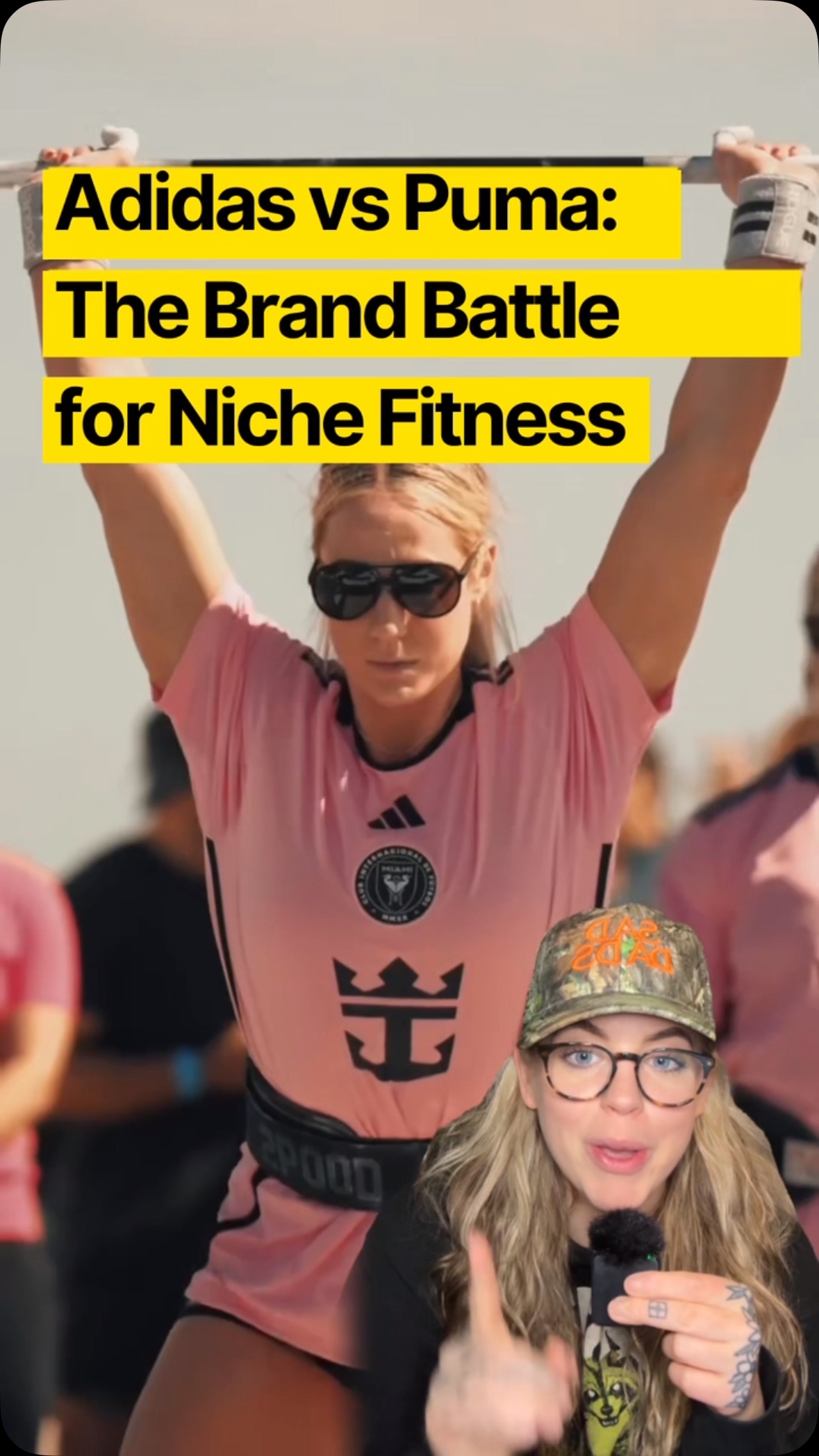
Adidas is going after the CrossFit scene. I saw several athletes back in January (shoutout Broadway Girls) at Wodapalooza which I clocked as interesting- then Adidas hosted an invite-only training camp at their global HQ called The Primer.
The Primer invited out CrossFit icons from athletes to creators with a whole brand experience built around community, not just product.
@butterybros have a GREAT video about this event on their YouTube channel if you want dive deeper.
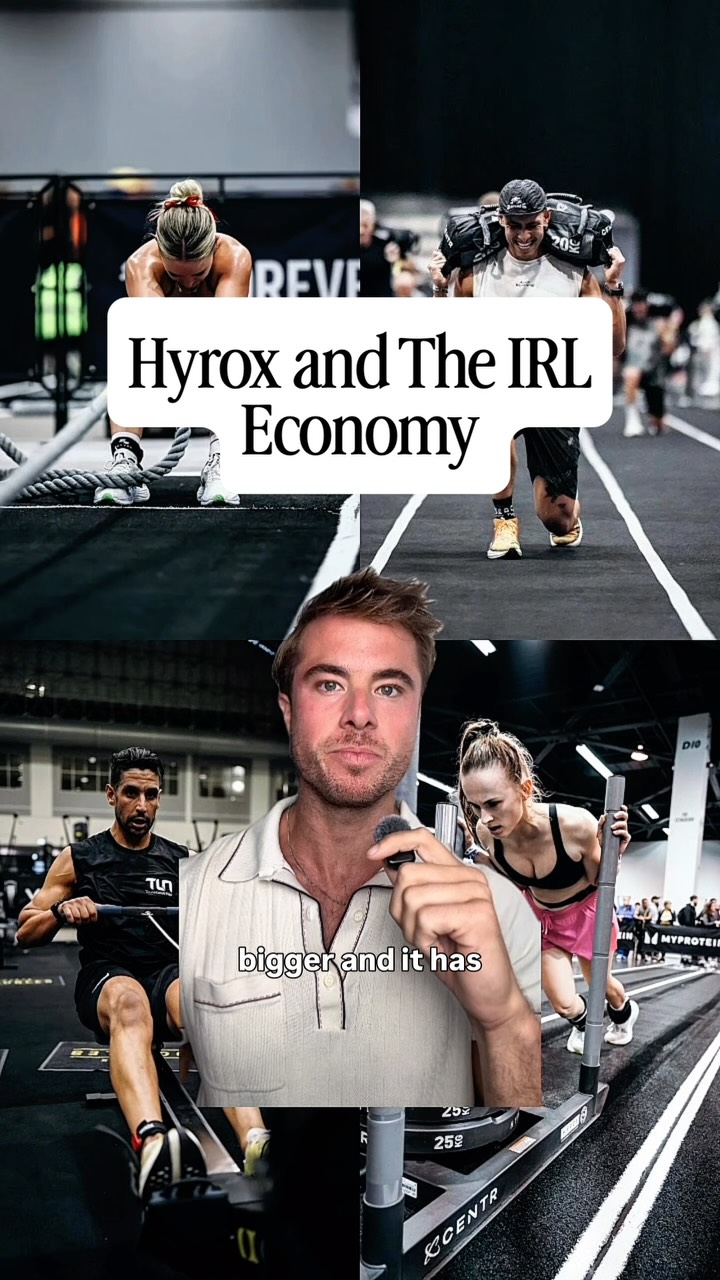
And then there’s Puma, who’s signed on as the official footwear and apparel partner of HYROX through 2027.
Their approach is centered around custom product built for race day needs.
And although Puma has been crushing the specialized product side, I think Adidas’ strategy of investing in cultural icons is the better long-term play to get the lifetime buy-in. It’s what we saw smaller brands doing to break into the market - like NoBull in their pre-Tom-Brady days.
They’re not just slapping logos on banners.
They’re *engineering for culture.*
If you’re trying to build brand equity in fitness right now,
mass reach doesn’t mean much without 👉community buy-in👈
You have to pick a niche,
go deep,
show up with value,
and let the culture carry the message.
THIS is niche at scale.
And it’s the new playbook build brand equity in fitness right now,
Community-first. Athlete-backed.
This is how brands break in—and stay in.
#brandstrategy #marketingstrategy #sportmarketing #crossfitcommunity #fitnessbrand
Brand strategy case study analysisfrom @tatumbrandt
[01]
Overview
The creator analyzes and compares the marketing strategies of Adidas and Puma as they target niche fitness communities. She explains the 'niche at scale' framework, detailing how Adidas is embedding itself in the CrossFit community through athlete summits and community-building, while Puma is focusing on product engineering for the Hyrox community. She concludes by emphasizing the importance of community buy-in over mass reach for building brand equity in fitness.
Adidas vs Puma: The Brand Battle for Niche Fitness
Verbal hook · 50%
Adidas and Puma are quietly waging war in the functional fitness world, and that is because big brands are going niche.
Visual hook · 5%
The video opens with the speaker in a picture-in-picture window overlaid on a scenic beach sunset, which quickly transitions to a high-angle, dynamic shot of a large-scale fitness competition, creating immediate visual contrast and energy.
[07]
Hook and payoff
The promise the opener makes, and how the video pays it back
Hook
Frame a common topic (brand competition) as a high-stakes, behind-the-scenes conflict ('quietly waging war') to create immediate intrigue and establish the video's core premise.
Payoff
Restate the coined framework and summarize the universal lesson into a concise, memorable mantra ('Community first, athlete backed'), providing a powerful and repeatable takeaway.
[08]
Narrative framework
The structural pattern this video runs on
Framework
The Niche at Scale Playbook
Analyzing a hidden competition between two major players within a niche space to extract and prove a universal strategic principle.
1
The Framework Introduction
Coin a memorable name for the strategic concept being analyzed ('niche at scale framework'), establishing the creator's authority and providing a lens for the viewer.
2
The Problem Statement
Define the specific challenge the subjects are trying to solve ('embedding into niche communities without looking like tourists'), setting the stakes for the analysis.
3
Case Study 1: The Primary Argument
Present the first subject's strategy in detail, using a sequence of visual evidence (event footage, articles) to prove their deep investment and community-focused approach.
4
The Strategic Justification
Elevate the first subject's strategy by contrasting it with a weaker, more common approach, framing it as a sophisticated, long-term play.
5
Case Study 2: The Counterpoint
Introduce the second subject as a point of comparison, outlining their different, product-focused strategy to create a clear strategic dichotomy.
6
The Universal Lesson
Synthesize the findings from both case studies into a broad, actionable principle that transcends the specific topic, delivering the core value to the viewer.
Themes
Niche Marketing
Community Building
Brand Authenticity
Marketing Strategy
Techniques
Picture-in-Picture
B-Roll Montage
Case Study Analysis
Trends
Niche at Scale Marketing
Post caption
You’ve probably clocked this - legacy brands are going after niche markets.
A prime example in the niche world of fitness I exist in is Adidas and Puma.
Alongside their mass campaigns and big-budget athlete ads, I’ve been noticing brand giants like Puma and Adidas deploying efforts to break into functional fitness, and honestly, they’re crushing it.
It’s what I’ve seen referred to lightly as the “niche at scale” framework.
It’s how massive legacy brands are embedding into niche communities 👉 without looking like tourists.
Adidas is going after the CrossFit scene. I saw several athletes back in January (shoutout Broadway Girls) at Wodapalooza which I clocked as interesting- then Adidas hosted an invite-only training camp at their global HQ called The Primer.
The Primer invited out CrossFit icons from athletes to creators with a whole brand experience built around community, not just product.
@butterybros have a GREAT video about this event on their YouTube channel if you want dive deeper.
And then there’s Puma, who’s signed on as the official footwear and apparel partner of HYROX through 2027.
Their approach is centered around custom product built for race day needs.
And although Puma has been crushing the specialized product side, I think Adidas’ strategy of investing in cultural icons is the better long-term play to get the lifetime buy-in. It’s what we saw smaller brands doing to break into the market - like NoBull in their pre-Tom-Brady days.
They’re not just slapping logos on banners.
They’re *engineering for culture.*
If you’re trying to build brand equity in fitness right now,
mass reach doesn’t mean much without 👉community buy-in👈
You have to pick a niche,
go deep,
show up with value,
and let the culture carry the message.
THIS is niche at scale.
And it’s the new playbook build brand equity in fitness right now,
Community-first. Athlete-backed.
This is how brands break in—and stay in.
#brandstrategy #marketingstrategy #sportmarketing #crossfitcommunity #fitnessbrand
Text overlays
title · beginning
Adidas vs Puma: The Brand Battle for Niche Fitness
informational · beginning
niche at scale framework
informational · middle
without looking like tourists
informational · middle
community, not just product
informational · end
engineering their product for the culture
informational · end
community buy-in
informational · end
This is niche at scale
informational · end
Community first, athlete backed.
Transcript
Adidas and Puma are quietly waging war in the functional fitness worse, and that is because big brands are going niche. Let's talk about it. Okay. You might have noticed alongside their mass campaigns and big budget athlete bad, I've noticed these big brand giants like Puma and Adidas deploying what I've been calling this niche at scale framework, and it's how massive legacy brands are better themselves in niche communities like CrossFit and High Rocks without looking like tourists. Adidas is going deep into the CrossFit scene. I noticed several athletes decked in full Adidas. I thought that was curious. And then Adidas hosted an invite only training camp at their global HQ called the Primer with elite games athletes and custom programming by CrossFit athlete and icon James Newbury, and a whole brand experience built around community, not just product. Now this isn't a better sponsor a few athletes and hope for the best kind of play by Adidas. It's more of a long term strategy. Right? It's sponsoring top athletes, but also building athlete summits, testing product within the community, and creating content for people who actually care. Now let's take a look at Puma. They took a similar approach with Hyrox. They signed on as the official footwear and apparel partner until 2027. It's not just slapping logos on banners and being a presenting sponsor. They're engineering their product for the culture. And if you're trying to build brand equity in fitness right now, mass reach doesn't mean much without community tier in. You have to pick a niche, go deep, show up with value, and let the culture carry the message. This is niche at scale, and it's the new playbook to build brand equity in fitness right now. Community first, athlete backed. This is how brands break in and stay in.