Post caption
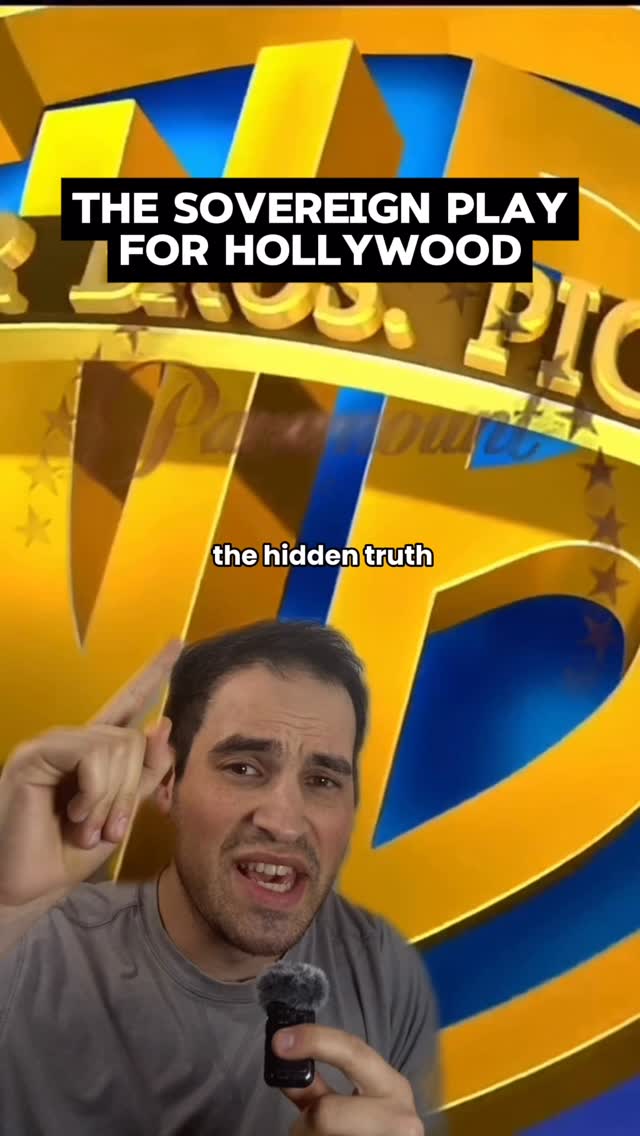
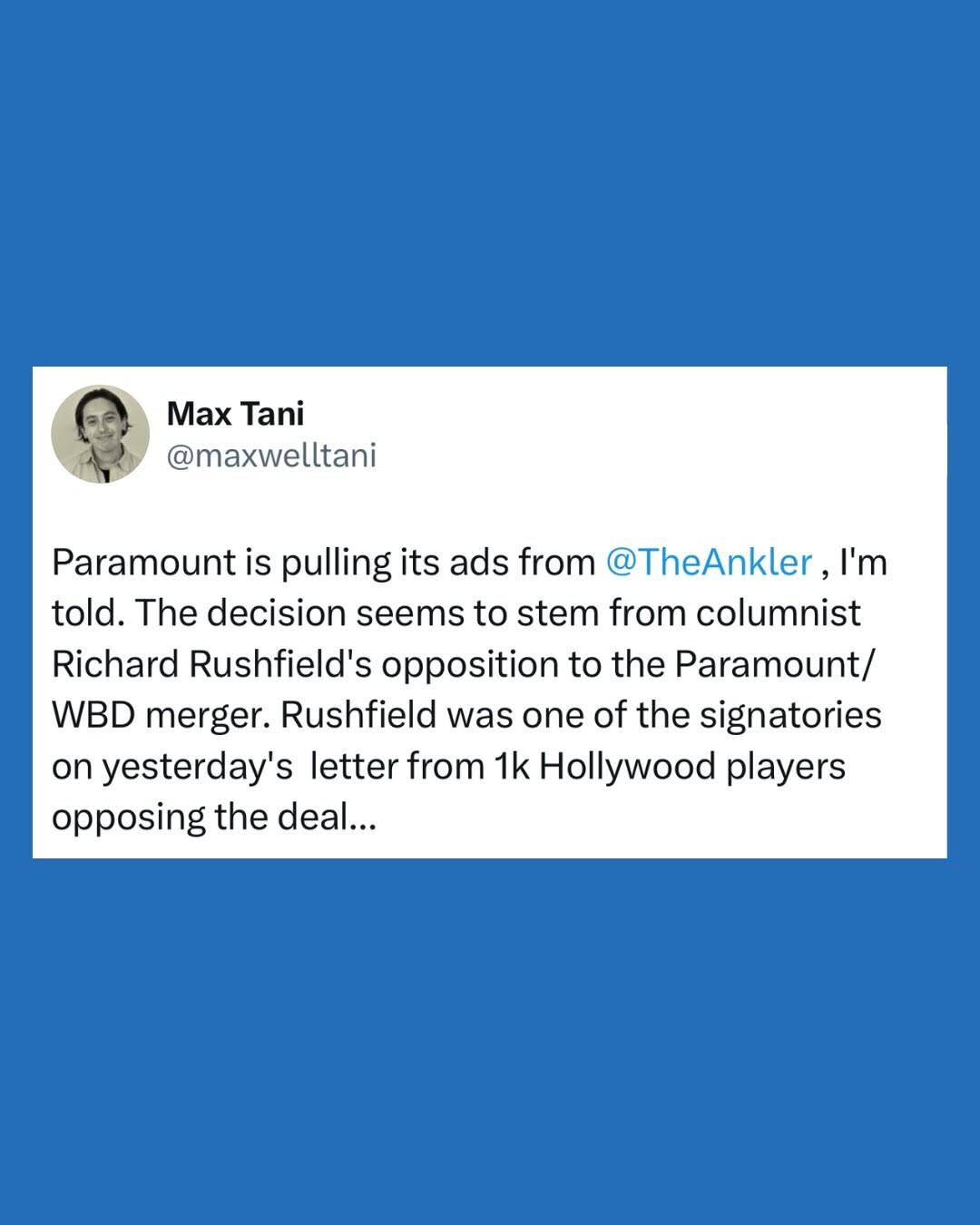
Hollywood’s latest bidding war is being framed as a clash between Netflix and Paramount, but the more revealing story sits beneath the balance sheets. Paramount’s hostile offer is backed not only by private equity but by a coalition of foreign sovereign wealth funds and Kushner-aligned capital. Once the financing is mapped, the bid looks less like a studio defending its relevance and more like an attempt by geopolitical investors to acquire a core piece of America’s cultural infrastructure.
That raises broader questions about influence. A Netflix acquisition would extend platform power inside an attention market already dominated by algorithms. A Paramount takeover, by contrast, would place one of the world’s largest storytelling engines under foreign-backed capital with political proximity in Washington. The outcome will reshape not just Hollywood’s structure but the distribution of soft power itself.
#warnerbros #economics #finance #business
Transcript
We need to talk about the hidden truth of Paramount's hostile bid. Today we learned that Paramount just detonated a $108,000,000,000 all cash hostile bid for Warner Bros days after Netflix secured its $83,000,000,000 carve out. It's an offer that bypasses the board. If Paramount buys 51% of outstanding shares, it effectively replaces the current CEO. But that's not actually the part I wanna focus on here because the headline here isn't the bid size or the hostile mechanics or even the regulatory drama. It's who's financing this takeover and what that capital wants in return. Because once you follow the money, you realize this isn't actually Paramount's bid at all. It's a syndicate of geopolitical investors attempting to buy one of the most powerful cultural engines in The United States. States. The backbone of the financing is affinity partners, Trump's son-in-law, Jared Kushner's private equity fund, which itself was seeded with billions from the Saudi public investment fund layered on top of the QIA, Redbird, and Apollo, forming a structure of a sovereign backed media consolidation vehicle. So the technical story is simple. The real story is that foreign sovereign wealth is trying to buy a controlling share of American storytelling because Warner Brothers is part of The United States cultural plumbing, CNN, HBO, DC, and the distribution machinery that carries those brands across the world. When sovereign wealth funds help finance the takeover of that infrastructure, the motivation extends beyond commercial return. It becomes an exercise in soft power. But this is a familiar strategy. Gulf capital has already reshaped football, formula one, and golf. Hollywood is the next logical tier, global profile, global leverage. But film and television are different from sport. They shape civic narratives, define news frames, and influence how a country sees itself and how others see it. The political proximity also matters because president Trump has signaled he will be involved in the review, a highly unusual posture for a media transaction. So taken together, foreign capital and domestic political capital form something closer to a coalition than a consortium, which tells us the contest is not Netflix versus Paramount. It's a platform consolidation versus a sovereign backed influence. And much attention has been focused on whether the deal will be blocked. That now may be the least important question. The more relevant one is simpler. Who should control America's narrative engine in the decades ahead? A Netflix led future centralizes cultural power under an algorithm largely indifferent to creative rank. And a Paramount led future places it under sovereign bad financing and geopolitical implications that extend beyond entertainment. In other words, one places influence in Silicon Valley in the other place is in Riyadh and Doha. And both paths will reduce competitive breathing room and will be part of the reshape of American soft power. Because the financing is the real tier, the acquisition bad is merely the mechanism.