@pbsamericanmasters
Instagram · Speaker address
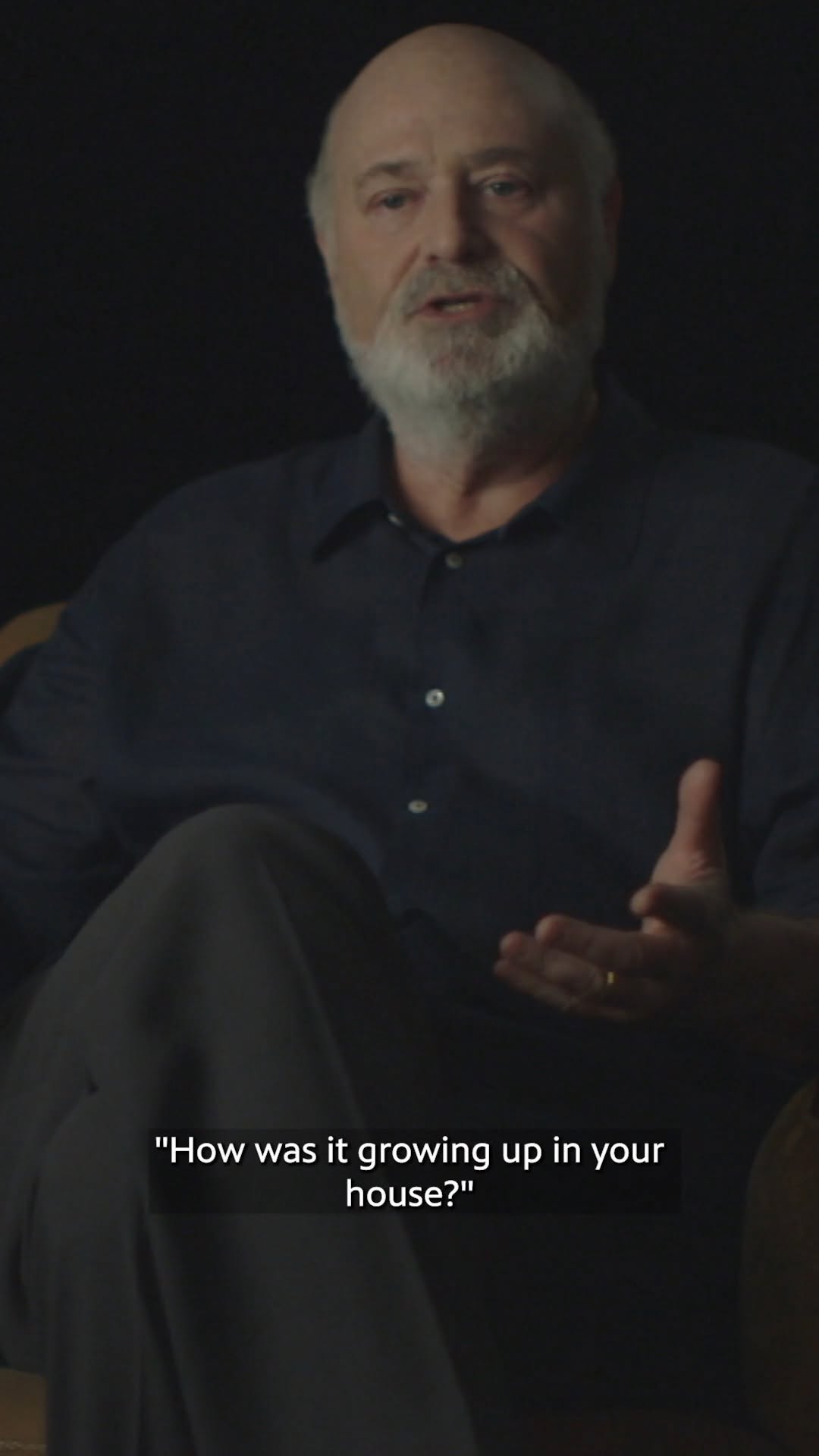
@pbsamericanmasters Remembering Rob Reiner. Interview conducted for "Norman Lear: Just Another Version of You" (2016).

@pbsamericanmasters
Instagram · Speaker address
@pbsamericanmasters Remembering Rob Reiner. Interview conducted for "Norman Lear: Just Another Version of You" (2016).
Performance
Video #11975 · Speaker address
[01]
Rob Reiner discusses his childhood, sharing anecdotes about growing up with famous comedians like Norman Lear, Mel Brooks, Sid Caesar, and Neil Simon. He recounts how Norman Lear was the first to recognize his comedic talent, telling a story about playing jacks with Ellen. He also shares a story about wanting to change his name to Carl, and how his father didn't think he was funny. He concludes by emphasizing Norman Lear's impact on his career, giving him opportunities to prove himself.
[02]
[03]
 991.3K385.9×Stand by Me actor quote graphic@aarp · Nostalgia Highlight
 243.4K96.3×Actor reflects on career journey@aarp · Origin Story
 1.9M15.2×Celebrity shares favorite classic films@criterioncollection · Show and Tell
 3.4M71.5×Stand-up crowd work interaction@rayjlau
 1MActors answer one interview question@guywithamoviecamera · Question Montage
 302.7K4.1×Podcast hosts react to celebrity's real name.@shamelesspodcast · Surprise Reveal
 233.5K8.8×Max Greenfield's SNL bar mitzvah story@kvellercom · Nostalgia Highlight
 481.3K2×Rapid-fire interview questions and answers@oonacmccaughan · Q&A Response
 332.1K2.6×Comedian gives hot take interview@oonacmccaughan · Hot Take
 2.1M89.4×Celebrity rapid fire this or that@davidprotein · Rapid Fire Listicle
 1.4M3.9×Celebrities answer rapid-fire food questions@topjaw · Question Montage
 1M8.5×Comedic ASMR birthday gift skit@robmac · Skit
[04]
[05]
What stops the scroll in the first 3 seconds
Verbal hook · 75%
People have always asked me, you know, was how was it growing up in your worse, you no?
Visual hook · 25%
Close-up shot of Rob Reiner sitting in a chair, looking directly at the camera with a thoughtful expression.
[06]
Steal this for your own video
People always ask me what it was like growing up — here's the truth.
[07]
The promise the opener makes, and how the video pays it back
Hook
Pose a common question about the subject's upbringing to establish a relatable starting point.
Payoff
Conclude by emphasizing the importance of the initial recognition in shaping the subject's career, providing a sense of closure and appreciation.
[08]
The structural pattern this video runs on
Framework
Comedic Talent Origin Story
A retrospective account of how comedic talent was first recognized, contrasting external perception with internal reality.
The Normality Question
Introduce the central question of whether the subject's upbringing was typical, setting the stage for a unique perspective.
The Celebrity Name-Drop
Highlight the extraordinary environment by listing famous figures who were frequent guests, emphasizing the unusual nature of the subject's childhood.
The First Recognition
Describe the moment when someone outside the family first recognized the subject's comedic talent, creating a turning point in the narrative.
The Parental Disagreement
Contrast the external recognition with the family's perception, highlighting the disconnect between the subject's public and private personas.
The Name Change Attempt
Illustrate the subject's desire to emulate a role model, revealing a deeper motivation behind their actions.
The Opportunity Follows
Explain how the initial recognition led to opportunities, setting the stage for the subject's future success.
Remembering Rob Reiner. Interview conducted for "Norman Lear: Just Another Version of You" (2016).
informational · beginning
People have always asked me, you know,
informational · beginning
"How was it growing up in your house?"
informational · middle
I mean, 'cause all you know is what you have in your house.
informational · middle
And you're a kid growing up, so you think it's normal.
informational · middle
the funniest people in the world would be,
informational · middle
you know, at my house.
informational · middle
And I was making commentary
informational · middle
and telling her how to do it and showing her.
informational · middle
He tells my dad, he says, you know,
informational · middle
"Your son is really funny."
informational · middle
That kid? He's like a brooding kid.
informational · middle
He sits in a corner. He doesn't do anything."
informational · middle
"I want to change my name."
informational · middle
to Carl Reiner," and all this stuff.
informational · end
But it was interesting that
informational · end
Norman Lear was the guy
informational · end
that basically recognized these things.
People have always asked me, you know, was how was it growing up in your worse, you no? And I didn't rank, you know, you don't think anything is different. I mean, because you all you know is what you have in your house and your kid growing up, so you think it's normal. I mean, Norman Lear would be there rank Mel Brooks and Sid Caesar and Neil Simon. The funniest people in the world would be, you know, at my house. Norman actually was the first person to recognize that I had a sense of humor because I think he tells the story. I was playing a game of jacks, you know, where you throw the ball up in the air, you pick the rank, with Ellen, and I was making commentary and telling her how to do it and showing her. And Norman thought I was really funny. He tells my bad, he says, you know, your son is really funny. And my dad said, what are you talking about? That kid, he's like a brooding kid. He's he sits in the corner. He doesn't so Norman was actually the first person to recognize that I had any comedic ability. At one point, I went to my better, you know, I think I was about eight, eight or nine. I went to my mother and I said, I wanna change my name. And my better, oh my god, this poor kid is worried about having to live up to Carl Reiner and all this stuff and he and she says, well, what do you wanna change your name to? And I said, Carl. So it wasn't like I wanted to change. I looked up to my bad. He, to me, was a good. I thought I admired him so much. He was so talented, and I wanted to be to be like him. But it was interesting that Norman Lear was the guy that basically recognized these things. Norman was the one who saw that and, you know, gave me a lot of opportunities to either prove tier right or prove them wrong.