Viral Hooks
Trending short videosEducation inequality explained with examples
M

@maisonrickie

TikTok · Speaker address

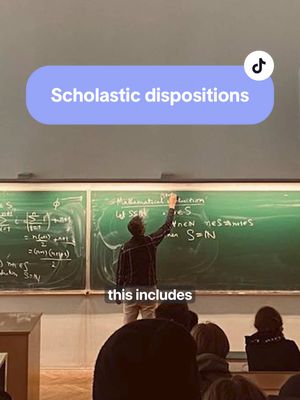
@maisonrickie Let’s talk scholastic dispositions. This is a follow on a video from a few days ago on the topic of “social reproduction”. There is so much to cover on this topic alone and we will be getting it as much as we can on this page. My content diving into taste (art, wine, cuisine, architecture, design, etc) is being worked on in the background and I’m so excited to share that with you in the new year. I have a lot more interesting content coming to round off the year and I am in disbelief at how fast this page has grown ❤️. I’ve been loving reading your messages in the comments about how my videos have impacted you so please, continue leaving them for me!!

View original on TikTok

The edit1 shot · 115 text
Shots Text2:42

Performance

Views
2.9M
Likes
608.1K
Comments
3.7K
Engagement
21%
Outlier
5.4×
Length · 15 Dec 2025
2:42

Video #12102 · Speaker address

Education inequality explained with examplesfrom @maisonrickie

[01]

Overview

The speaker discusses the fundamental problems with education, focusing on scholastic dispositions and how they affect a child's learning experience. He uses comparative examples of two families to illustrate how different home environments can lead to unequal educational outcomes, and concludes by emphasizing the importance of recognizing these disparities.

[02]

Simple outline

  1. 1State education problem
  2. 2Introduce key concept
  3. 3Compare two families
  4. 4Show diverging outcomes

[03]

Related videos

[04]

Classification

Concepts
Breakdown
Elements
Text Overlay

[05]

Hook analysis

What stops the scroll in the first 3 seconds

Title hook · 35%

fundamental problem

Verbal hook · 60%

A fundamental problem with education that we have yet to acknowledge and its implications are devastating.

Visual hook · 5%

The speaker is looking directly at the camera with open hand gestures.

[06]

Hook template

Steal this for your own video

There's a fundamental problem with [system or institution] that nobody wants to acknowledge — and the implications are [emotional consequence].

  • — There's a fundamental problem with healthcare that nobody wants to acknowledge — and the implications are devastating.
  • — There's a fundamental problem with how we hire talent that nobody wants to acknowledge — and the implications are career-ending.
  • — There's a fundamental problem with personal finance advice that nobody wants to acknowledge — and the implications are generational.

[07]

Hook and payoff

The promise the opener makes, and how the video pays it back

Hook

Highlight a fundamental, unacknowledged problem with education.

Payoff

Highlight the need for further exploration and offer future content.

[08]

Narrative framework

The structural pattern this video runs on

Framework

Scholastic Disposition Cycle

Inherited scholastic dispositions create a cycle of educational advantage, while their absence perpetuates disadvantage.

  1. 1

    The Definition Drop

    Introduce the concept of 'scholastic dispositions' as inherited ease with school.

  2. 2

    The Bourdieu Bomb

    Reveal that schools require pre-existing cultural knowledge they claim to teach.

  3. 3

    The Household Contrast

    Present two families with different approaches to learning and curiosity.

  4. 4

    The Question Divide

    Show how questions are either encouraged or discouraged in each family.

  5. 5

    The Kindergarten Clash

    Illustrate how different dispositions manifest in a classroom setting.

  6. 6

    The Teacher's Bias

    Demonstrate how teachers, unconsciously, favor students with pre-existing dispositions.

  7. 7

    The Outcome Split

    Show how the gap widens between the two students over time.

  8. 8

    The Cycle of Advantage

    Illustrate how scholastic dispositions are passed down through generations.

  9. 9

    The Cycle of Disadvantage

    Show how the lack of dispositions perpetuates working-class jobs.

Themes

  • inequality in education
  • impact of family environment
  • social reproduction

Techniques

  • storytelling
  • comparative examples
  • text overlays

Trends

  • educational commentary
  • social analysis

Post caption

Let’s talk scholastic dispositions. This is a follow on a video from a few days ago on the topic of “social reproduction”. There is so much to cover on this topic alone and we will be getting it as much as we can on this page. My content diving into taste (art, wine, cuisine, architecture, design, etc) is being worked on in the background and I’m so excited to share that with you in the new year. I have a lot more interesting content coming to round off the year and I am in disbelief at how fast this page has grown ❤️. I’ve been loving reading your messages in the comments about how my videos have impacted you so please, continue leaving them for me!!

Text overlays

  • informational · beginning

    fundamental

  • informational · beginning

    with education

  • informational · beginning

    to acknowledge,

  • informational · beginning

    are

  • informational · beginning

    previous video,

  • informational · beginning

    about how

  • informational · middle

    inherit much

  • informational · middle

    And in that

  • informational · middle

    I briefly touch

  • informational · middle

    "Scholastic dispositions"|

  • informational · middle

    with school,

  • informational · middle

    that feels like

  • informational · middle

    It's never

  • informational · middle

    explicitly,

  • informational · middle

    of everyday

  • informational · middle

    how questions

  • informational · middle

    are answered,

  • informational · middle

    curiosity

  • informational · middle

    And the toolkit

  • informational · middle

    an environment

  • informational · middle

    this includes

  • informational · middle

    Comfort with abstraction

  • informational · middle

    Willingness to defer gratification

  • informational · middle

    Belief that your questions are legitimate

  • informational · middle

    Ease with formal language

  • informational · middle

    Patience with hierarchical structures

  • informational · middle

    dispositions.

  • informational · middle

    schools

  • informational · middle

    to already

  • informational · middle

    the culture

  • informational · middle

    without

  • informational · middle

    dispositions,

  • informational · middle

    you're marked

  • informational · middle

    as deficient.

  • informational · middle

    So let's begin

  • informational · middle

    households

  • informational · middle

    neighborhood.

  • informational · middle

    even begins,

  • informational · middle

    children absorb

  • informational · middle

    orientations

  • informational · middle

    In Emma's home,

  • informational · middle

    instead of saying,

  • informational · middle

    mother responds

  • informational · middle

    what

  • informational · middle

    vegetables do

  • informational · middle

    The conversation

  • informational · middle

    spirals

  • informational · middle

    spent on

  • informational · middle

    crucial

  • informational · middle

    questions

  • informational · middle

    and adults

  • informational · middle

    alongside her.

  • informational · middle

    Curiosity

  • informational · middle

    she is challenged

  • informational · middle

    and is

  • informational · middle

    by context

  • informational · middle

    Now in Marcus's

  • informational · middle

    at dinner,

  • informational · middle

    Marcus asks

  • informational · middle

    "why is the

  • informational · middle

    His father,

  • informational · middle

    exhausted,

  • informational · middle

    it just is,

  • informational · middle

    eat your food.

  • informational · middle

    learns instead

  • informational · middle

    some questions

  • informational · middle

    not ones

  • informational · middle

    entitled to.

  • informational · middle

    makes mistakes,

  • informational · middle

    a rectangle

  • informational · middle

    for a square,

  • informational · middle

    both families

  • informational · middle

    translating

  • informational · middle

    they go off

  • informational · middle

    both Emma

  • informational · middle

    During

  • informational · middle

    Emma raises

  • informational · middle

    the teacher

  • informational · middle

    partner.

  • informational · middle

    Marcus answers

  • informational · middle

    he doesn't

  • informational · middle

    And when

  • informational · middle

    he's confused,

  • informational · middle

    silent.

  • informational · middle

    without any

  • informational · middle

    conclusions.

  • informational · middle

    That Emma

  • informational · middle

    and articulate.

  • informational · middle

    That Marcus

  • informational · middle

    disinterested.

  • informational · middle

    has begun.

  • informational · middle

    Cognitively,

  • informational · middle

    school,

  • informational · middle

    the gap widens.

  • informational · middle

    Gifted programs

  • informational · middle

    versus reading

  • informational · middle

    Emma gets

  • informational · middle

    more attention.

  • informational · middle

    By high

  • informational · middle

    Marcus's

  • informational · middle

    practical

  • informational · middle

    college

  • informational · middle

    Both feel.

  • informational · middle

    natural

  • informational · middle

    to dinner

  • informational · middle

    conversations

  • informational · middle

    Emma goes on

  • informational · middle

    then transmit

  • informational · middle

    to her own

  • informational · middle

    The cycle

  • informational · middle

    Whereas

  • informational · middle

    class job

  • informational · middle

    to help

  • informational · middle

    The cycle

  • informational · end

    minutes.

Transcript

A fundamental problem with education that we have yet to acknowledge and its implications are devastating. In a previous video, I spoke about how the elite inherit much more than just mine. And in that video, I briefly touch on the topic of scholastic dispositions, which is the inherited best from home with school that feels like natural talent. It's never taught explicitly, but rather a result of everyday family interactions, how questions are answered, how intellectual curiosity is modeled. And the toolkit that you get from growing up in an environment that is conducive to this includes this: These are all learned dispositions, but what French sociologist Pierre Bourdieu revealed was that schools require you to already possess the culture they claim to teach. That if you arrive without the right scholastic dispositions, you are marked as deficient. The best way to show this is with an example. So let's begin with two households in the same neighborhood. Before school even begins, children absorb fundamental orientations toward things like knowledge and authority. In Emma's home, she asks her better, why do we have to eat vegetables? And instead of saying because I said so, her mother responds by asking, well, what do you think vegetables do for your body? The conversation spirals. Fifteen minutes spent on nutrition and while Emma doesn't get most of it, she learns something crucial, that her questions matter and adults will think alongside her. Curiosity is modeled. She is challenged to think things out for herself and is supported by context from her parents. Now in Marcus's home while at dinner, Marcus asks, why is the sky blue? His father, exhausted, says, it just is bad, eat your food. What Marcus learns and said is that some questions don't have answers, or at least not ones he's entitled to. When he makes mistakes like mistaking a rectangle for a square, his errors are fixed but never explored. Now both families love their children, but they're translating radically different relationships to learning itself. Now when they go off to kindergarten, both Emma and Marcus end up in the same class. During a lesson, Emma raises her hand, asks follow-up questions, and treats tier teacher as a thinking partner. Whereas Marcus answers when he's called, he doesn't feel entitled to speculate or ask questions. And when he's confused, he assumes he's not smart enough and stays silent. The teacher, without any conscious bias, starts to form conclusions. That Emma is engaged and articulate. That Marcus is shy and disinterested. The sorting has begun. Cognitively, the two kids are identical, but as tier progress throughout school, the gap widens. Gifted programs versus reading intervention. Emma gets more attention. Marcus gets less and falls behind. By high school, Emma applies to 12 universities and gets into seven, including Yale. Marcus's future is more practical, working, maybe some college classes. Both feel their paths reflect natural abilities, but they don't realize how far back it goes to dinner table conversations at age four. Emma goes on to have a professional career and can then transmit scholastic dispositions to her own children. The cycle continues. Whereas Marcus gets a working class Tier cycle continues. Whereas Marcus gets worse working class job and wants to help his own kids better lacks a specific toolkit and the cycle continues. No, I'm limited to three minutes. So in future videos, I plan on exploring this topic even better, getting into specific traits and what parents can do knowing this information. So if you want that, please like and follow and let me know what you think in the comments.

Education inequality explained with examples | Viral Hooks