Viral Hooks
Trending short videosEmotional reflection on a Tokyo art exhibit
L

@laurenrosekocher

Instagram · Carousel

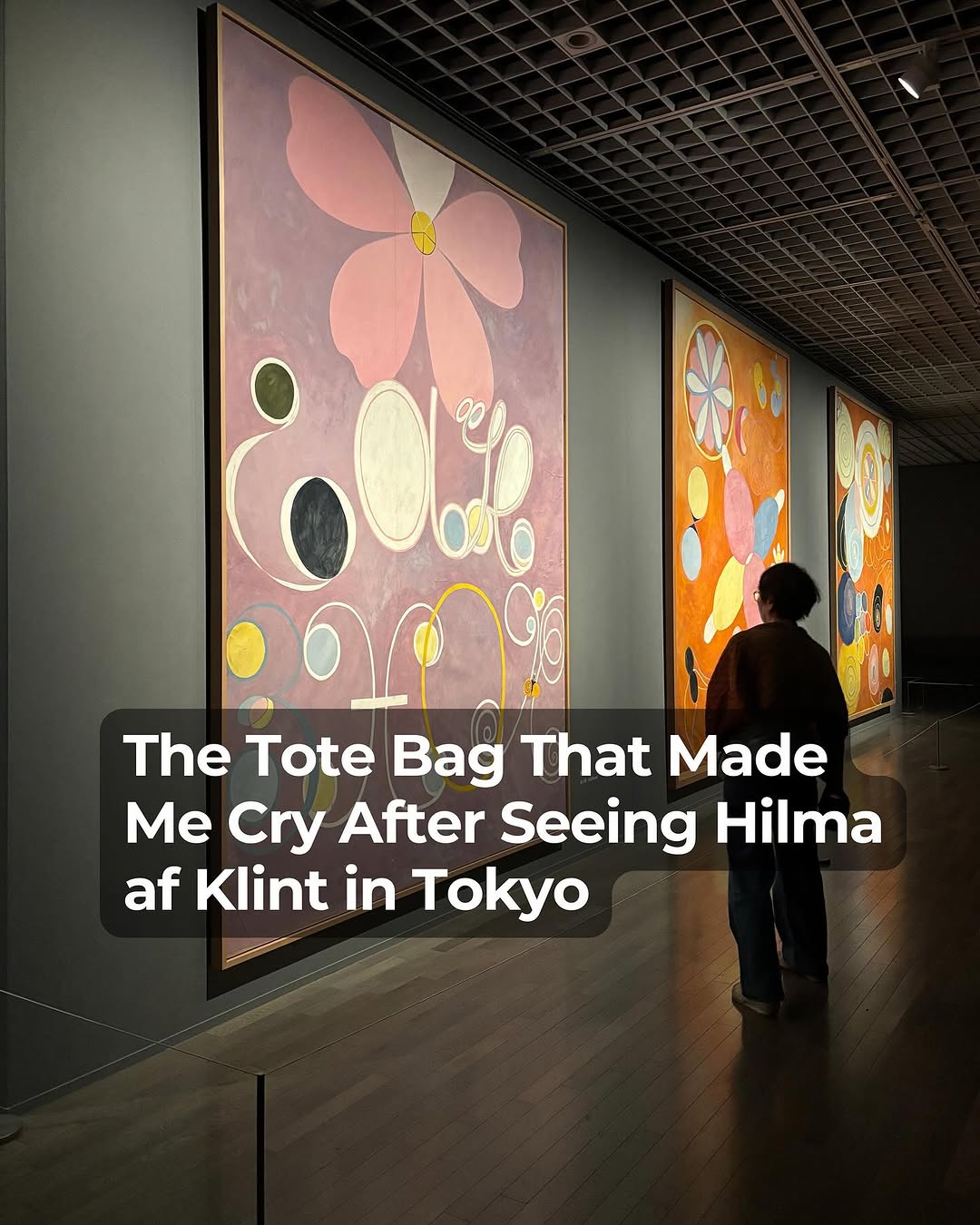
@laurenrosekocher I loved the Hilma af Klint exhibition at the National Museum of Modern Art in Tokyo.  She is now recognized as the first abstract painter in the Western art canon. She painted revelations received directly from the spirit world, and before she died, without having achieved any success to speak of, she wrote in her journal that her audience would find her someday. 100 years later, they did. There’s something about seeing a woman’s mystical work dismissed, only to be re-sold as merch in a museum gift shop that got to me! I keep thinking about the dignity of engaging in meaningful work, and the indignities of having to leave a “legacy.” Especially how it relates to Kaito and the way he left this world… Maybe this will be an essay someday.   #hilmaafklint #japanlife #artinjapan #abstractart #modernart #femalepainters #spiritualart #museumofmodernarttokyo Would you rather leave no legacy, or watch it become perverted?

View original on Instagram

The edit1 shot · 16 text
Shots Text

Performance

Views
282.9K
Likes
18.9K
Comments
342
Engagement
6.8%
Outlier
4.2×

Video #13549 · Carousel

Emotional reflection on a Tokyo art exhibitfrom @laurenrosekocher

[01]

Overview

This carousel post documents a visit to a Hilma af Klint art exhibition in Tokyo. It uses a combination of photos from the museum and personal life, paired with text overlays, to tell the story of the artist's life, her spiritual motivations, her lack of recognition, and her eventual posthumous success, drawing a poignant parallel to the creator's own life and loss.

[02]

Simple outline

  1. 1Hook with emotional paradox
  2. 2Establish subject's historical lore
  3. 3Reveal the emotional trigger
  4. 4Pivot to vulnerable personal parallel
  5. 5Distill into universal lesson

[03]

Related videos

[04]

Classification

Format
Concepts
Editorial CarouselVulnerable MonologueJourney Documentation
Elements
Text Overlay

[05]

Hook analysis

What stops the scroll in the first 3 seconds

Title hook · 65%

The Tote Bag That Made Me Cry After Seeing Hilma af Klint in Tokyo

Verbal hook · 15%

I loved the Hilma af Klint exhibition at the National Museum of Modern Art in Tokyo.

Visual hook · 20%

The initial image features a massive, vibrantly colored abstract painting that fills the frame, creating immediate visual impact through its scale and bold pink and organic shapes. A person is shown observing the art, which establishes the museum setting and emphasizes the impressive size of the work.

[06]

Hook template

Steal this for your own video

The [everyday item] that made me cry after [meaningful experience].

  • — The cookbook that made me cry after my grandmother’s memorial dinner.
  • — The running bib that made me cry after my first marathon.
  • — The house key that made me cry after moving out of my childhood home.

[07]

Hook and payoff

The promise the opener makes, and how the video pays it back

Hook

Present an unexpected emotional reaction to a mundane object connected to a high-status or niche subject to create an immediate curiosity gap that forces a swipe.

Payoff

Distill the dual narrative into a single philosophical takeaway, prompt a value-driven engagement action (Save), and conclude with a creator introduction slide to convert emotionally invested viewers into followers.

[08]

Narrative framework

The structural pattern this video runs on

Framework

The Historical Mirror Pivot

Using an unexpected emotional reaction to a cultural or historical subject as a Trojan horse to share a deeply vulnerable personal story about universal themes like grief, struggle, and legacy.

  1. 1

    The Lore Build

    Establish the objective significance, history, and mystique of the external subject to educate the reader and build foundational context.

  2. 2

    The Proximity Establishment

    Transition from objective facts to the creator's personal connection and physical proximity to the subject, grounding the abstract history in a real-world encounter.

  3. 3

    The Injustice Arc

    Detail the subject's historical struggle, rejection, and ultimate posthumous vindication to build narrative tension and establish the core theme (e.g., unrecognized genius, delayed success).

  4. 4

    The Catalyst Reveal

    Pay off the opening hook by explaining the exact moment or object that triggered the emotional reaction, highlighting a stark thematic contrast (e.g., high art vs. cheap commerce).

  5. 5

    The Vulnerable Mirror

    Execute a sharp narrative pivot from the external subject's history to a deeply personal, vulnerable parallel in the creator's own life, transforming an educational post into an intimate memoir.

Themes

  • Legacy
  • Artistic recognition
  • Feminism in art
  • Spirituality
  • Grief
  • Commercialization of art

Techniques

  • Narrative storytelling
  • Text overlay
  • Juxtaposition
  • Personal anecdote

Trends

  • Vulnerable storytelling
  • Educational carousel

Post caption

I loved the Hilma af Klint exhibition at the National Museum of Modern Art in Tokyo.  She is now recognized as the first abstract painter in the Western art canon. She painted revelations received directly from the spirit world, and before she died, without having achieved any success to speak of, she wrote in her journal that her audience would find her someday. 100 years later, they did. There’s something about seeing a woman’s mystical work dismissed, only to be re-sold as merch in a museum gift shop that got to me! I keep thinking about the dignity of engaging in meaningful work, and the indignities of having to leave a “legacy.” Especially how it relates to Kaito and the way he left this world… Maybe this will be an essay someday.   #hilmaafklint #japanlife #artinjapan #abstractart #modernart #femalepainters #spiritualart #museumofmodernarttokyo Would you rather leave no legacy, or watch it become perverted?

Text overlays

  • title · photo_0

    The Tote Bag That Made Me Cry After Seeing Hilma af Klint in Tokyo

  • informational · photo_1

    Hilma af Klint was born in 1862 and is now considered the earliest abstract artist in Western art.

  • informational · photo_2

    Tokyo was the first exhibit of her works in Asia, ever.

  • informational · photo_3

    Spirits communicated to her and she painted what they shared: visions of invisible, mystical worlds.

  • contextual · photo_4

    I have a Hilma af Klint print in my house, a birthday present from my best friend. I see it every day.

  • contextual · photo_5

    And there it was, the real painting, right in front of me

  • informational · photo_6

    During her life, Hilma's work was mostly ignored, and she died poor. But in recent years, there's been a massive response to this female artist from over 100 years ago.

  • informational · photo_7

    Some critics dismiss her work - calling it illustration, not painting. They say it can't compare to Kadinsky.

  • informational · photo_8

    They dismiss her because she planned for her work to be shown in a custom “temple.”

  • contextual · photo_9

    But as was written in one of the gift shop books - what is a museum, but a temple to art? Maybe she couldn't imagine her work receiving proper respect in a museum, and she dreamed of a place where people could appreciate it in full?

  • informational · photo_10

    As she got old, she begged spiritual and artistic societies to take her artwork, to no avail. In the end she gave them to her nephew, sealed for 20 years, and wrote in her final diary entry, “You have mystery service ahead.”

  • informational · photo_11

    She believed an audience would find her someday, and they did.

  • contextual · photo_12

    Then the gift shop. I became emotional, seeing the contrast between the lofty spiritual realm of her art and the cheap reality of tote bags & keychains. This was “success” for a long-neglected female artist, but it felt cheap.

  • contextual · photo_13

    I kept thinking about beautiful Hilma on the drive home, how she cared for her sick mother and put her art on hold. I also felt like my life was on hold while my husband Kaito was sick. I also watched him leave this life, without his legacy secured.

  • contextual · photo_14

    She believed her audience would find her someday, and they did. I can't stop thinking about it. Save this for a reminder on the dignity of work, and the indignities of legacy.

  • contextual · photo_15

    Hi I'm Lauren, I run several businesses in Tokyo and make niche content about Japanese aesthetics and my life here. I don't usually cry in museums..but Hilma got me.

Emotional reflection on a Tokyo art exhibit | Viral Hooks