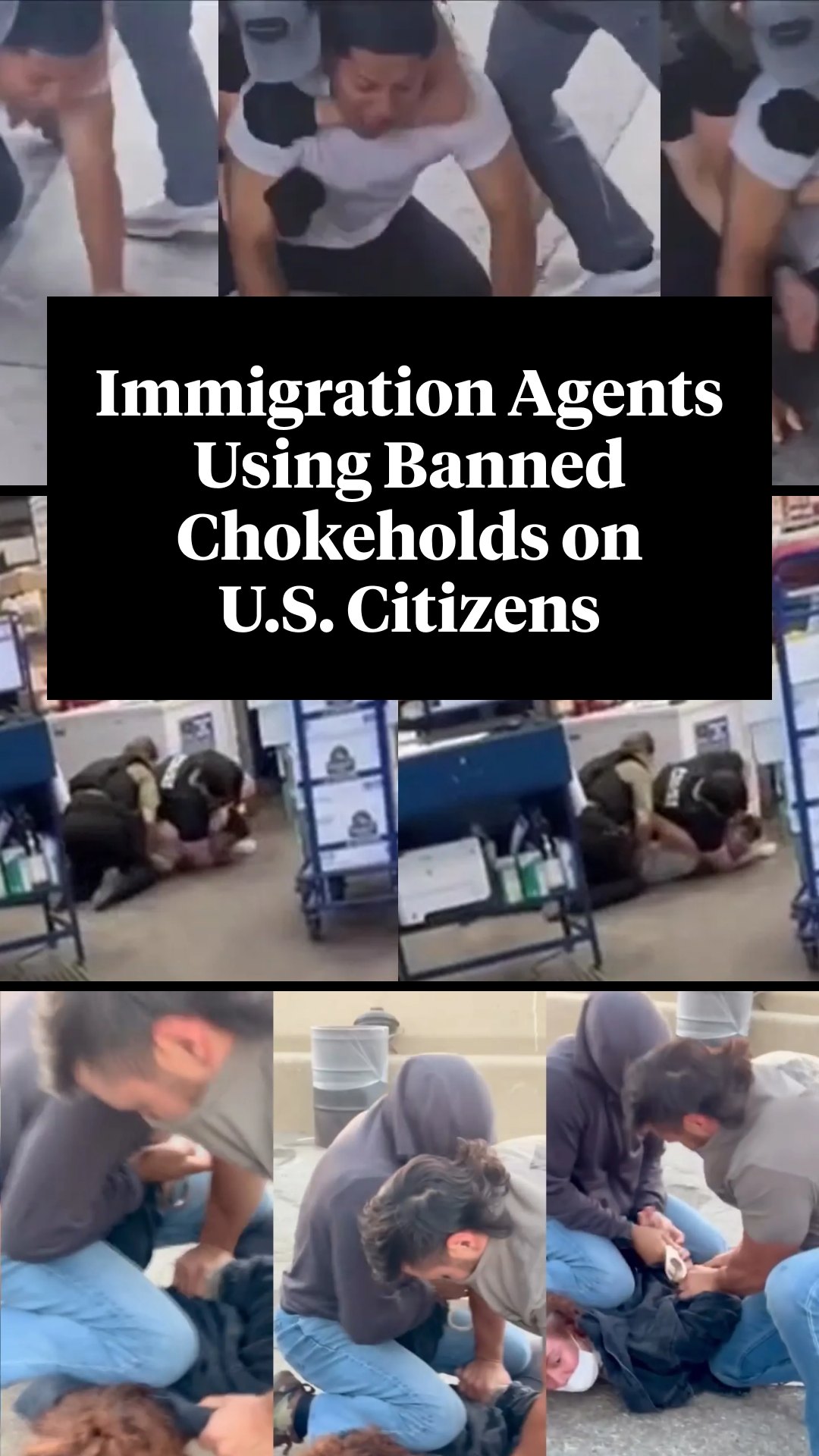
@propublica Tenth grader Arnoldo Bazan and his father were getting McDonald’s before school when immigration agents pulled them over. After a pursuit, agents slammed Bazan’s father to the ground and put the teenager in a chokehold. Arnoldo is 16 years old and a U.S. citizen.
“I started screaming with everything I had, because I couldn’t even breathe,” Arnoldo told ProPublica. “I felt like I was going to pass out and die.”
After George Floyd’s murder six years ago, police across the country banned chokeholds and discouraged other moves that can restrict breathing. The federal government joined in too.
But today, officers are once again grabbing civilians’ throats and kneeling on necks. We found more than 40 cases of immigration agents using banned chokeholds and other moves that can cut off breathing.
The creator, a 16-year-old U.S. citizen named Arnoldo Bazan, recounts the traumatic story of how he and his father were violently stopped and assaulted by federal immigration agents. He describes being put in a chokehold, witnessing his father being beaten, and the subsequent aftermath which included his phone being stolen by the agents and his father being deported. The video combines his emotional first-person testimony with actual footage of the incident and concludes with a call for awareness about such injustices, supported by journalistic context from ProPublica.
A dramatic, shaky, close-up shot of a young man being held down on the floor by a police officer, creating immediate tension and conflict.
[07]
Hook and payoff
The promise the opener makes, and how the video pays it back
Hook
The In-Media-Res Trauma: The video opens with the most intense, emotionally charged moment of the conflict (a physical assault) to immediately capture attention and generate urgent questions about the context.
Payoff
The Journalistic Zoom-Out: The video shifts from personal anecdote to objective information, presenting statistics, facts, and official statements via text overlays. This validates the personal story with external data, lends credibility, and frames the incident within a larger, verifiable societal problem.
[08]
Narrative framework
The structural pattern this video runs on
Framework
The Personal Injustice Chronicle
To frame a broad, systemic issue through a single, emotionally resonant personal story, starting with the moment of peak conflict to hook the viewer before revealing the context and consequences.
1
The Identity Claim
The protagonist introduces themselves, stating their name, age, and status (e.g., citizen). This establishes them as a relatable individual and grounds the narrative, creating an immediate empathetic connection.
2
The Mundane Beforemath
The narrative rewinds to show the ordinary, relatable circumstances just before the incident. This creates a stark contrast with the violence, heightening the sense of shock and injustice.
3
The Escalating Aggression
The protagonist recounts the step-by-step escalation of the conflict, detailing the antagonists' actions. This builds tension and systematically justifies the protagonist's fear and victimhood.
4
The Personal Toll
The protagonist describes their physical and emotional state during the peak of the assault, often including a near-death feeling. This beat focuses on the visceral, human impact of the event.
5
The Irreversible Consequence
The narrative reveals the most significant and permanent negative outcome of the event (e.g., deportation, loss). This serves as the emotional gut-punch of the story.
6
The Moral Appeal
The protagonist reflects on the event's meaning, humanizes the victims, and makes a direct appeal to the audience for awareness and empathy, transitioning from their personal story to a universal message.
Themes
injustice
family
immigration
police brutality
Techniques
first-person narrative
B-roll footage
emotional appeal
Trends
advocacy journalism
personal storytelling
Post caption
Tenth grader Arnoldo Bazan and his father were getting McDonald’s before school when immigration agents pulled them over. After a pursuit, agents slammed Bazan’s father to the ground and put the teenager in a chokehold. Arnoldo is 16 years old and a U.S. citizen.
“I started screaming with everything I had, because I couldn’t even breathe,” Arnoldo told ProPublica. “I felt like I was going to pass out and die.”
After George Floyd’s murder six years ago, police across the country banned chokeholds and discouraged other moves that can restrict breathing. The federal government joined in too.
But today, officers are once again grabbing civilians’ throats and kneeling on necks. We found more than 40 cases of immigration agents using banned chokeholds and other moves that can cut off breathing.
Text overlays
contextual · beginning
I was choking!
contextual · beginning
Oct. 23, 2025
Houston
contextual · beginning
Arnoldo Bazan
U.S. citizen
contextual · beginning
Arnulfo Bazan Carrillo
Arnoldo's father
contextual · middle
He was deported.
informational · end
After George Floyd's murder, police across the country banned chokeholds and discouraged other moves that can restrict breathing. But today, agents are once again grabbing civilians' throats and kneeling on necks.
informational · end
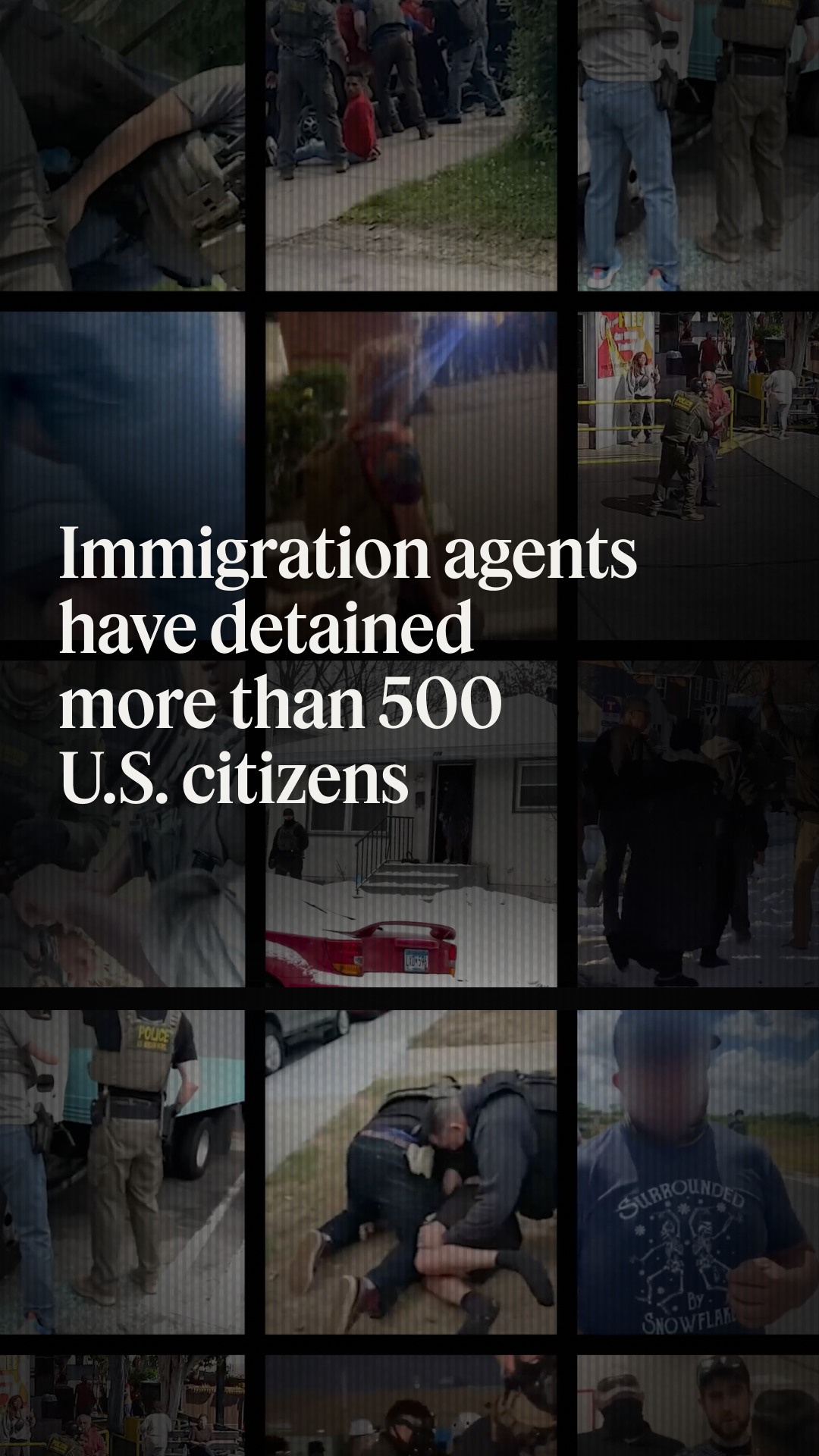
ProPublica documented more than 40 incidents in which immigration officers used tactics that can restrict a person's breathing or blood flow.
informational · end
In almost 20 of the cases, agents appear to use chokeholds and other neck restraints that the Department of Homeland Security's use-of-force policy bans unless there is a threat of deadly or serious harm.
call-to-action · end
To read the full story, head to propublica.org or the link in bio.
informational · end
Department of Homeland Security spokesperson Tricia McLaughlin said allegations that Immigration and Customs Enforcement officers assaulted Arnulfo Bazan Carrillo and Arnoldo Bazan are false.
Transcript
I was choking. I was choking. The agent just pulls me in. He just puts me in a choke hold. I couldn't breathe. I told him I was a US citizen. I was 16. My name is Arnoldo Hassan. Me and my dad were abused by federal agents. We were chose. We were kicked. I was going to school. We were driving to McDonald's, having an all in the morning until a car stopped us. Tier started, like, trying to break our windows. They pointed their gun at us. I remember that I was best standing in the corner seeing how my dad was getting, like, kicked and everything. Honestly, I felt like I was about to pass out. I feel like I was seeing the light. They told me that we worse, like, criminals and stuff. They took my phone with them, and they ended up selling it in a machine. I was thinking, like, what's gonna happen to my dad? He was deported. Better day, I I just think of him. I wanna be just like my dad. He's my role model. Like, I hope Good keeps him safe wherever he is. But tier you gotta realize that hardworking people and everything are going there. People that have families. I don't want no one else to go through this. I want people to open their eyes about what's really going on. I don't think nobody saved anyone.