Viral Hooks
Trending short videosExplaining a Supreme Court education case
D

@dellara

Instagram · Speaker address

@dellara educated communities have stronger economies, higher civic participation, and better public health outcomes. this is not ideology. this is just what the data shows. plyler v. doe has protected children’s right to public education, including mine, for over 40 years. that protection is under threat right now. this video is about what’s at stake, and why it matters to everyone regardless of politics. Follow the National Immigration Law Center, @nilc for updates and resources. #NILCPartner

View original on Instagram

The edit1 shot · 5 text
Shots Text2:28

Performance

Views
98K
Likes
8K
Comments
78
Engagement
8.2%
Outlier
4.1×
Length · 3 Jun 2026
2:28

Video #33216 · Speaker address

Explaining a Supreme Court education casefrom @dellara

[01]

Overview

The creator shares her personal story as a DACA recipient to frame a discussion about the 1982 Supreme Court case Plyler v. Doe, which guarantees undocumented children the right to a public education. She explains the legal precedent, warns of current coordinated political efforts to overturn it, and argues that excluding children from school is a moral failure that creates long-term social and economic harm for everyone. The video concludes with a call-to-action to follow the National Immigration Law Center for more information.

[02]

Simple outline

  1. 1State a controversial problem
  2. 2Personalize the stakes
  3. 3Establish the core principle
  4. 4Reveal the imminent threat
  5. 5Issue a clear call to action

[03]

Related videos

[04]

Classification

Concepts
BreakdownVulnerable Monologue
Elements
Image OverlayGraphic OverlayText OverlayFollow / Subscribe CTA

[05]

Hook analysis

What stops the scroll in the first 3 seconds

Verbal hook · 65%

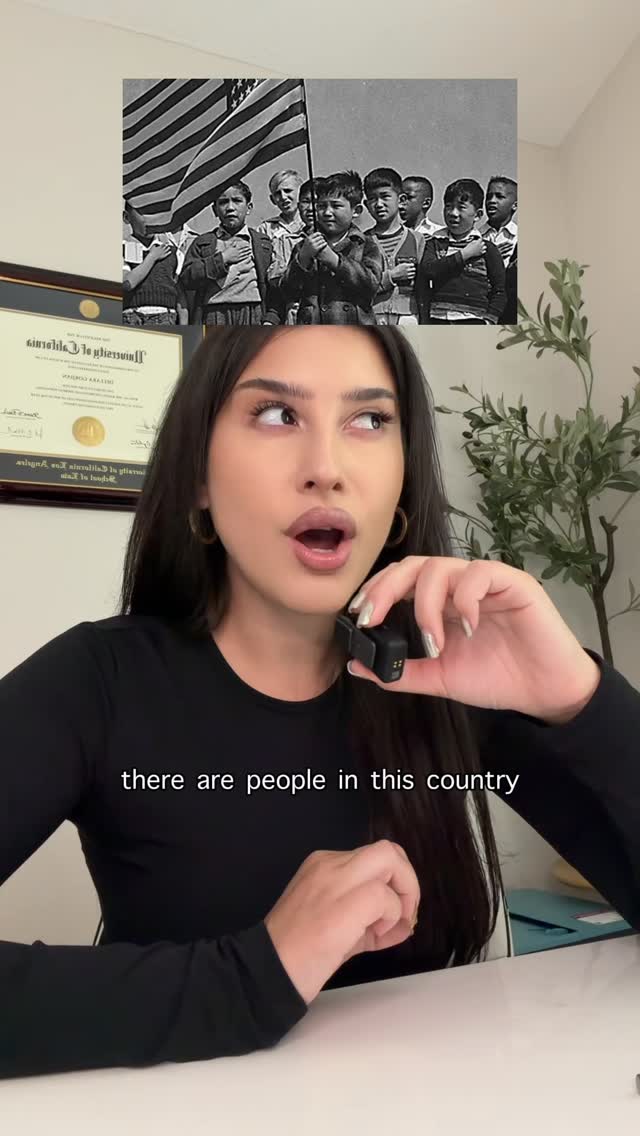
There are people in this country who are actively trying to make it harder for some children to attend public school.

Visual hook · 35%

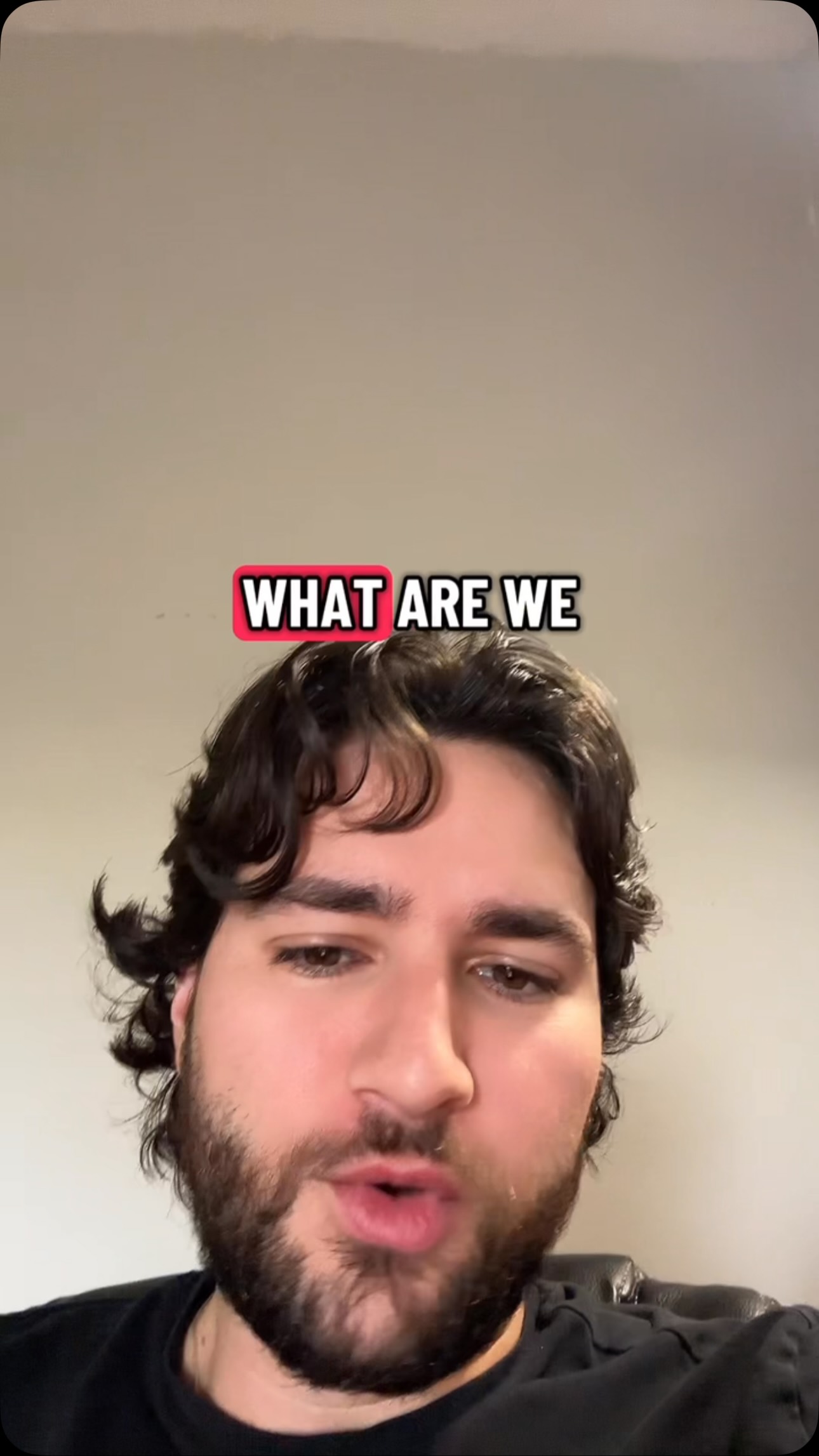
A static, black-and-white archival photo of diverse children pledging allegiance to the American flag is overlaid at the top of the screen, creating a visual contrast with the modern speaker and immediately establishing the video's theme.

[06]

Hook template

Steal this for your own video

There are people right now who are actively trying to make it harder for [identity group] to access [assumed right or basic resource].

  • — There are people right now who are actively trying to make it harder for student athletes to access fair compensation for their name and likeness.
  • — There are people right now who are actively trying to make it harder for seniors to access affordable prescription medications.
  • — There are people right now who are actively trying to make it harder for renters to access basic tenant protections in their own homes.

[07]

Hook and payoff

The promise the opener makes, and how the video pays it back

Hook

State a controversial or alarming claim about a system or value being actively undermined, creating immediate intrigue and establishing a clear conflict.

Payoff

A direct and empowering call to action that provides the audience with specific, tangible steps they can take to defend the principle.

[08]

Narrative framework

The structural pattern this video runs on

Framework

The Principled Stand

To persuade an audience on a complex issue by grounding a personal story in a foundational legal or moral principle, revealing a current threat to that principle, and concluding with a clear call to action.

  1. 1

    The Personal Stake

    The narrator establishes their personal connection to the issue, lending them credibility and emotional weight.

  2. 2

    The Foundational Principle

    The narrator introduces a core rule, law, or widely-accepted principle that governs the issue, providing a factual or historical anchor for the argument.

  3. 3

    The Humanizing Rationale

    The narrator explains the simple, moral logic behind the foundational principle, making it universally relatable.

  4. 4

    The Value Proposition

    The narrator articulates the positive, aspirational outcomes that result from upholding this principle, both for the individual and society.

  5. 5

    The Imminent Threat

    The narrator reveals that this established principle is currently under a new and coordinated attack, creating urgency and conflict.

  6. 6

    The Proactive Reframe

    The narrator directly addresses the audience to dismantle common counterarguments by reframing them as illogical, irresponsible, or immoral.

  7. 7

    The Authoritative Proof

    The narrator cites a high-level authority (e.g., a court, a scientific study) that validates their argument and warns against the alternative.

  8. 8

    The Societal Consequence

    The narrator explains the negative, long-term consequences for society as a whole if the principle is abandoned, making the issue relevant to everyone.

  9. 9

    The Collective Benefit

    The narrator elevates the discussion by defining the principle's ultimate purpose as a benefit to the entire community, not just one group.

  10. 10

    The Simple Moral Framework

    The narrator cuts through the complexity to present the issue as a simple, undeniable moral choice, appealing to universal values.

Themes

  • Social justice
  • Immigrant rights
  • The importance of public education
  • Political activism

Techniques

  • Personal storytelling
  • Legal analysis
  • Persuasive argument

Post caption

educated communities have stronger economies, higher civic participation, and better public health outcomes. this is not ideology. this is just what the data shows. plyler v. doe has protected children’s right to public education, including mine, for over 40 years. that protection is under threat right now. this video is about what’s at stake, and why it matters to everyone regardless of politics. Follow the National Immigration Law Center, @nilc for updates and resources. #NILCPartner

Text overlays

  • informational · beginning

    Plyler v. Doe, 457 U.S. 202 (1982) Argued: December 1, 1981 Decided: June 15, 1982

  • informational · middle

    PRIMARY HOLDING A state cannot prevent children of undocumented immigrants from attending public school unless a substantial state interest is involved.

  • informational · middle

    The Heritage Foundation, the conservative think tank behind the Project 2025 policy playbook shaping much of Trump's agenda, published a document in February calling on more state challenges to trigger lawsuits with the ultimate goal of getting the nation's highest court to overturn the landmark 1982 decision.

  • informational · middle

    The Court also warned that excluding these children from education would create an "underclass" of individuals unable to fully integrate into society, with lasting consequences for both the individuals and the nation.

  • branding · end

    nilc National Immigration Law Center Nonprofit organization Defending and advancing the rights and opportunities of low-income immigrants and their loved ones.

Transcript

Tier are people in this country who are actively trying to make it harder for some children to attend public school. And as someone whose life was shaped by access to education, I have thoughts. I am a DACA recipient, but long before DACA, I was protected by something even more foundational. The right to attend K through 12 public school. A right affirmed by the 1982 Supreme Court decision called Plyler v. Doe. Children don't choose where they're born, where their parents are from, or what legal category the government places on their family, and Plyler recognized that. It said, you cannot deny a child access to school because of their immigration status. And thank Good for that because school gave me structure, confidence, community, and possibility. That is what education does. It doesn't just teach children how to read, write, and rank. It helps children imagine themselves as participants in society. Which is exactly why what's happening right now should alarm all of us. As I'm making this video, there are coordinated efforts to lay the groundwork to challenge pliers protections that have existed for more than forty years. And here's the part I really need people to worst. Excluding kids from school is not smart policy. It's not fiscally responsible, and it's certainly not pro child. The Supreme Court understood that in Plyler. It warned against creating a permanently excluded group of children denied the tools they need to participate and contribute. And that concern has not expired. Barriers to education create long term social and economic harm and then hand the bill to the rest of society later. The point of public education is not to benefit one child in isolation, though of course it does that. But the point is to build a healthier, more stable, more functional society. Denying children access to education does not protect the public good. It undermines it. So whatever your broader politics are, this should be simple. Children belong in school. A child in a classroom is not a threat. A child being denied an education is a moral failure of the adults in power. If you are a teacher, a school administrator, a parent, a student, your voice matters here. Speak out. And make sure to follow the National Immigration Law Center at NILC on social media.

Explaining a Supreme Court education case | Viral Hooks