@reikoslivingroom
Instagram · Clip
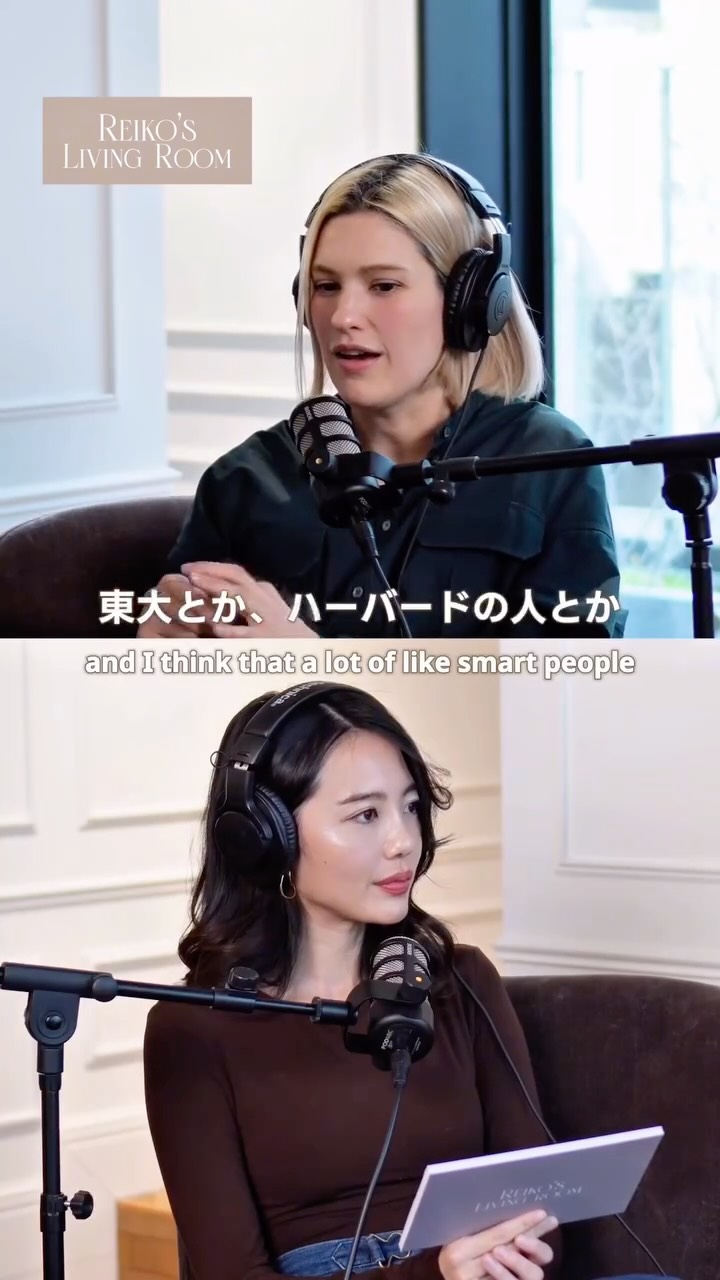
@reikoslivingroom Ep13 | Lauren What matters more than degrees? The strength CEOs share #lauren #ceo #reikoslivingroom #podcast

@reikoslivingroom
Instagram · Clip
@reikoslivingroom Ep13 | Lauren What matters more than degrees? The strength CEOs share #lauren #ceo #reikoslivingroom #podcast
Performance
Video #17936 · Clip
[01]
The host initiates a conversation by stating that most CEOs are street-smart, not book-smart, and asks her guest for the common traits of successful leaders. The guest identifies courage and resilience as the key attributes, explaining that the ability to take risks and persevere through failure is more valuable in business than the perfect planning often taught in academia.
[02]
[03]
 1M26.5×Podcast clip on success mindset@rich_somers · Breakdown
 355.7K27×Motivational podcast clip about entrepreneurship@jamieseaofficial · Motivational Mantra
 186.1K1.4×Founder argues fitness equals success@cormacbuilds · Brand Manifesto
 5.4M30.7×Direct advice with personal anecdote@taylercarraway · Anecdotal Philosophy
 1.4M4.2×Street interview about building confidence@confidenceheist
 412.6K3.6×Explaining a book's high-performance concept.@davidkchoe · Breakdown
 491.8K124.8×Monologue on integrating faith with business@hardknockzmedia · Anecdotal Philosophy
 320.5K3.6×Podcast clip about money mindset@reikoslivingroom · Anecdotal Philosophy
 715.1K52.5×Personal story illustrates wealth concept@thejaunt_ · Anecdotal Philosophy
 389.2KDefining the quiet leader archetype@nategaffney · Culture Profile
 354.8K3.2×Car monologue motivational speech@champwroteit · Motivational Mantra
 944.1K36.3×Podcast clip explains success secret@higherupwellness · Motivational Mantra
[04]
[05]
What stops the scroll in the first 3 seconds
Title hook · 15%
世の中のCEOって
Verbal hook · 75%
Most of the CEOs in the world are usually street smart than a book smart.
Visual hook · 10%
A medium close-up shot of a woman speaking into a professional podcast microphone in a well-lit, clean studio setting, signaling a high-quality conversation.
[06]
Steal this for your own video
Most successful s are more than .
[07]
The promise the opener makes, and how the video pays it back
Hook
A bold, simplifying statement that challenges a common assumption, creating a knowledge gap the viewer wants filled (e.g., 'Street smart is better than book smart for CEOs').
Payoff
A clear, actionable principle that validates the initial hook and leaves the viewer with a satisfying sense of resolution and new insight.
[08]
The structural pattern this video runs on
Framework
The Thesis-Proof-Foil Framework
Making a strong, binary assertion and then proving it by defining its positive attributes while simultaneously highlighting the weaknesses of its opposite.
The Bold Assertion
State a clear, debatable thesis that classifies a group or concept into one of two opposing categories.
The Call for Evidence
Transition from the 'what' to the 'why' by posing a direct question that asks for the specific characteristics supporting the assertion.
The Trait Unpacking
Systematically reveal and define the key attributes that prove the initial assertion, often providing concrete examples for each.
The Contextual Amplifier
Place a key trait into a specific context (e.g., a cultural or situational contrast) to demonstrate its value more vividly and add depth to the argument.
The Foil Breakdown
Introduce the counter-argument or opposing archetype and explain why its characteristics are less effective, thereby strengthening the original thesis by elimination.
The Final Mandate
Conclude with a concise, memorable principle that summarizes the core lesson and reinforces the initial assertion as a practical takeaway.
Ep13 | Lauren What matters more than degrees? The strength CEOs share #lauren #ceo #reikoslivingroom #podcast
branding · throughout
REIKO'S LIVING ROOM
contextual · beginning
世の中のCEOって
contextual · beginning
本で勉強した賢さより
contextual · beginning
現場で鍛えた賢さのほうが ある人が多い
contextual · beginning
本当にそうだと思う
contextual · beginning
あなたは色んなCEOに よく一緒に過ごしてる と思うんだけど
contextual · beginning
そういう人たちの 共通してる特徴って何だと思う?
contextual · middle
1つは間違いなく「勇気」だと思う
contextual · middle
自分で何かを始める勇気
contextual · middle
何かをお願いする勇気
contextual · middle
特に日本では 「あなた何様?」みたいに 言われがちだから
contextual · middle
そういう社会的なプレッシャー
contextual · middle
アメリカは起業家に もっとフレンドリーだと思う
contextual · middle
アメリカって基本 「自分で何か作れ」文化だから
contextual · middle
「人と違うがいい」だもんね
contextual · middle
でも日本だと 「誰が責任取るんですか?」って
contextual · middle
すごくリスクを嫌う感じ
contextual · middle
特に日本では「自分を前に出す」 っていうのが本当に難しい
contextual · middle
だからとにかく勇気が必要で ガッツが必要
contextual · middle
困難を乗り越える強さも 絶対に必要だと思う
contextual · end
物事は必ずずうまくいくわけでないし
contextual · end
お金をほとんど失いかけたり お客さんが怒ったりする
contextual · end
そんな中でも とにかく続ける力
contextual · end
諦めない力が必要なんだよね
contextual · end
この「絶対に諦めない力」って 本当に、本当に大事
contextual · end
東大とか、ハーバードの人とか いわゆる「頭がいい人」たちって
contextual · end
計画立てたり、戦略考えたり 完璧を目指すことに慣れすぎてる
contextual · end
適用しないことが多いと思う
contextual · end
もっとタフで もっとクリエイティブで 強くて、勇気があるほうが大事
contextual · end
完璧な計画なんて、正直必要ない
contextual · end
どうせ計画通りにはいかないから
Most of the CEOs in the world are usually street smart than a book smart. Yeah. I think that's so true. Because you obviously meet so many people, CEOs. You hang out with a lot of them. What do you think the traits that people have? I think one is definitely courage. You have the courage to start your own thing. You have the courage to ask for something. Especially in Japan where people might say, like, oh, who do you think you are? That kind of social pressure. Yeah. I think America is more friendly to entrepreneurs. Right. Because America's always, like, making your own thing and, like Different is good. Yeah. Tier in Japan, it feels like tier, like, anti risk. I think it's, especially in Japan, hard to put yourself out there. So I think that you have to have a lot of courage, like, guts, And I also think you have to have a strong ability to, like, overcome difficulty Mhmm. Because things are gonna go wrong and you almost lose all your money or the customers get angry. And you have to be able to, like, just keep going and, like, not give up. And that ability to, like, never give up, I rank, is really, really key. And I think that a lot of, like, smart people, like Tokyo University, even Harvard, whatever, like, they're so used to planning and making strategizing and trying to be perfect, but that doesn't apply so much in business, I think. I think you have to be more tough, more creative, more strong, like, courageous. Mhmm. But you don't need to have, like, a perfect plan because it's not gonna work anyways.