@djangodegree
Instagram · Split screen
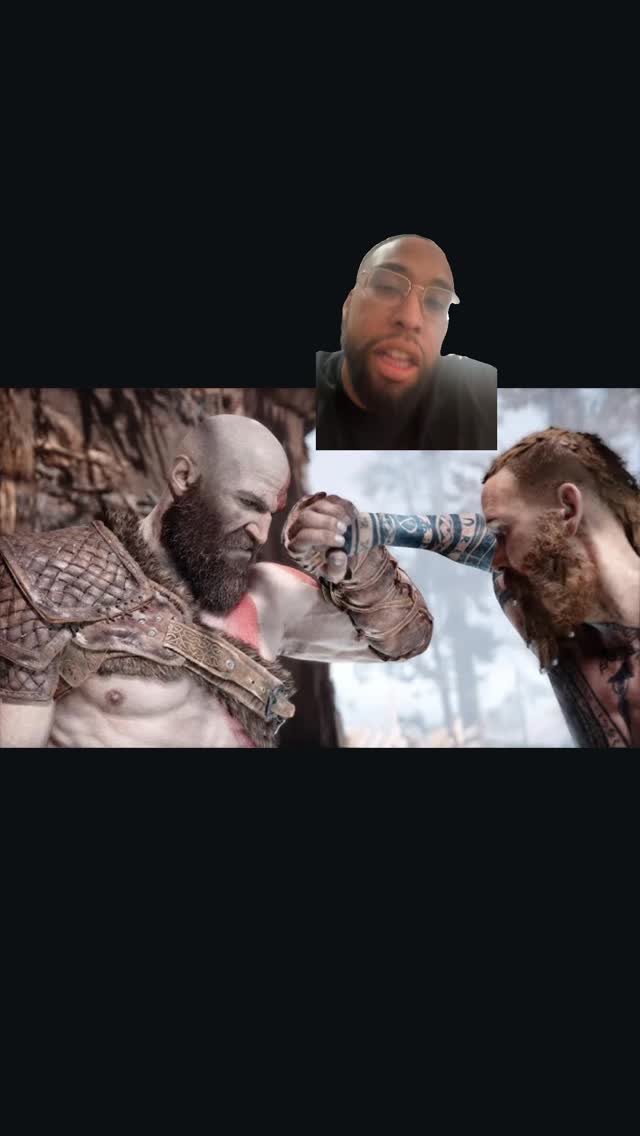
@djangodegree God of War is the last of a dying breed of games. I will say @fortnite is one of the few games they gave me that same level of nostalgia as the story evolved..

@djangodegree
Instagram · Split screen
@djangodegree God of War is the last of a dying breed of games. I will say @fortnite is one of the few games they gave me that same level of nostalgia as the story evolved..
Performance
Video #18660 · Split screen
[01]
The creator delivers a passionate monologue about the 'lost art' of following a video game series over decades, using the 'God of War' franchise as his primary example. He reminisces about specific, impactful moments from the series' history, contrasts it with modern gaming, and explains how this long-term journey creates a deep nostalgic connection for players. He also briefly compares this experience to the evolving storyline of Fortnite.
[02]
[03]
 59.4KCinematic voiceover about enjoying life@therealdanielpark · Motivational Mantra
 70.1KVoiceover personal growth journey montage@coltinhill2 · Vulnerable Monologue
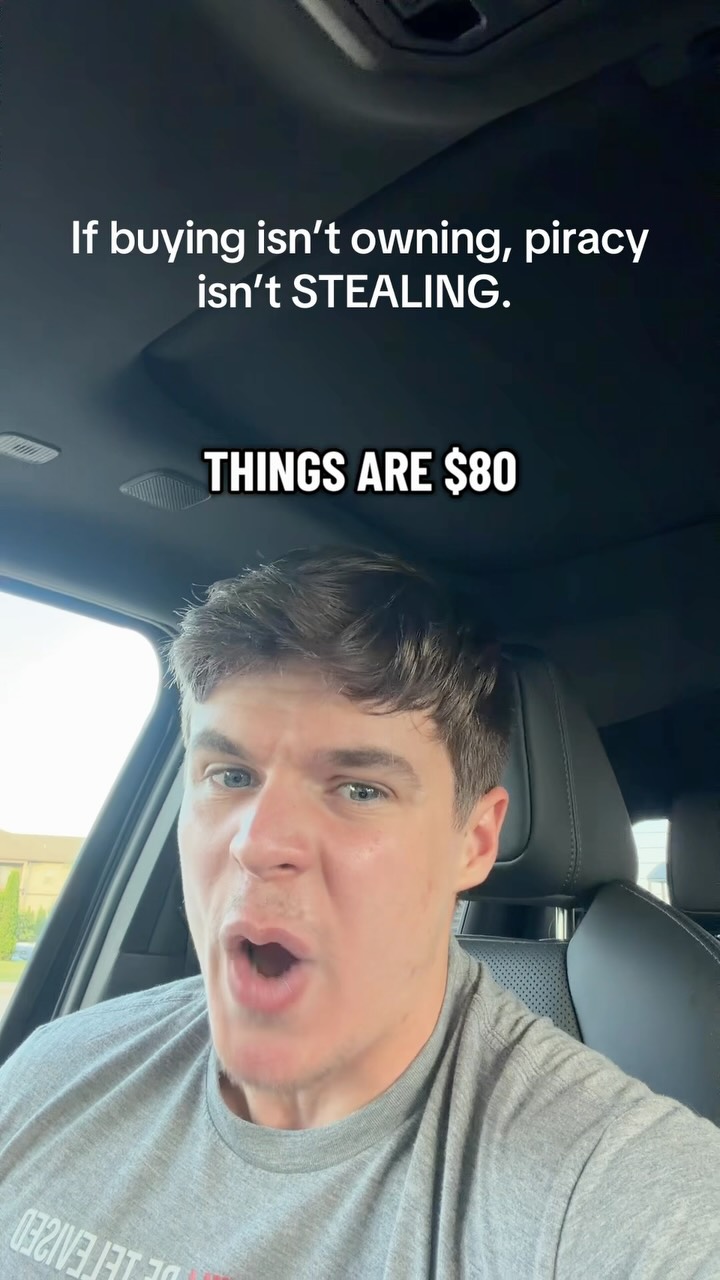 13MPassionate rant about digital game ownership@itsluke_7 · Hot Take
 100.6KMotivational monologue over nature B-roll@leopardcreated · Motivational Mantra
 208.8K7.1×Rant about modern dating apps@couldbaret · Cultural Rant
 228.4K11.8×Casual rant about karma@couldbaret · Hot Take
 6.8M426.1×Philosophical monologue over aesthetic B-roll@wearecalamity_ · Brand Manifesto
 100.1KExplaining the 2000s rail grinding trend.@mike_sunday · What Is X?
 1M55.6×Monologue over B-roll montage@wearecalamity_ · Cultural Rant
 630.7K4.9×Man on bridge philosophizes hope@aview.fromabridge · Cultural Rant
 155.3K2.6×Passionate monologue about watching tutorials@rexxliferaj · Cultural Rant
 1.3M141.8×Intense monologue using celebrity examples@djangodegree · Motivational Mantra
[04]
[05]
What stops the scroll in the first 3 seconds
Title hook · 48%
There is a lost art to video games we don't talk enough about
Verbal hook · 47%
There is a lost art to video games we don't talk enough about.
Visual hook · 5%
The creator's face is in a picture-in-picture overlay on top of a dramatic, high-action still from the God of War video game, showing two characters in a tense, physical confrontation.
[07]
The promise the opener makes, and how the video pays it back
Hook
The 'Lost Art' Proclamation. Make a bold, sweeping statement about a cherished type of experience that is fading away, immediately establishing a nostalgic and slightly melancholic tone.
Payoff
The Full-Circle Lament. Reiterate the initial thesis, now supported by evidence. Use personal, chronological context (e.g., 'I was only X years old when it started') to emphasize the vast passage of time and conclude by reflecting on why this experience is now so rare.
[08]
The structural pattern this video runs on
Framework
The Nostalgic Eulogy
To evoke a powerful sense of nostalgia for a long-term, shared cultural experience by anchoring a broad thesis in specific, visceral memories, and then lamenting the rarity of such experiences in the modern, faster-paced world.
The Generational Divide Thesis
Frame the 'lost art' as something a younger generation cannot fully appreciate, establishing its value and scarcity through a contrast between past and present.
The Anchor Memory
Ground the abstract thesis in a specific, iconic example that the target audience shares. Pinpoint a key moment in time that serves as a cultural touchstone for the in-group.
The Visceral Flashback
Use vivid, sensory-rich details to describe a key moment from the example, forcing the audience to relive the experience emotionally and physically, often including contextual details of the era.
The Nostalgic Payoff
Demonstrate how the long-term investment in this experience pays off later, connecting a past moment to a present reward to validate the audience's dedication.
The Quality Declaration
Briefly assert the consistent high quality of the example as the reason for its enduring impact and the foundation of the audience's long-term investment.
The Unexpected Corroboration
Introduce a surprising, modern example that also embodies the 'lost art,' broadening the argument's scope, preventing it from being purely backward-looking, and engaging a wider audience.
God of War is the last of a dying breed of games. I will say @fortnite is one of the few games they gave me that same level of nostalgia as the story evolved..
title · beginning
There is a lost art to video games we don't talk enough about
There is a lost art to video games we don't talk enough about. My children will never understand what it was like to play a game for two decades across multiple systems, watching an entire storyline just evolve into something beyond your wildest imagination. Any person who loves God of War can tell you right now where they were in 2009 when God of War three was announced. Look. 2005, 2007, the first two, they were solid games. When you go back, you look at the storyline, classics, for sure. But with the new system in 2010, and you watch that scene where Kratos came up from Mount Olympus yelling, Zeus! Poseidon jumps down on some leg, Yeah, I'm about to get this man out of the way. And then you watch this man proceed to gouge his eyes out at the end of the demo? Oh, my Mind you, we're living at a time where TVs are like $3,000 and we don't even got plasmas yet. You can't even move it around the crib. They're like five hundred pounds. Then you watch this man proceed to cut Ermeh's legs off, cut out of the sun god's head off. It was it was it was incredible. And so for a lot of us who remembers that moment, that callback, when we saw this at the beginning, it was just like, bro. And, like, that's just something that's beautiful about the nostalgia of an incredible game. There's something to a game where there's no misses, where every single tier, the thing that matters most to the team is making sure you love the game. Now that's no beef with, like, Cyberpunk or some of the others that maybe when they first rolled out, it didn't work out. It is what it is. Better, like, to love the game. I will say, the closest I felt to that motion was Fortnite. Because when I was playing Fortnite from season one, I was like, bro, this is wild. And then all of a sudden, out of nowhere, we started getting stories mid game. I remember when, like, all of a sudden tier floating. There's a pink cube and you're following it around. It's changing the map. Fortnite to me has always kept it a 100 and tried to make the greatest experience possible from a story. I give it to him. But no matter how we spin it, the timeline is just so sped up. In 2005, I was 13 years old, bro. That means I just literally have gotten to sit with this game since right before I started high school. Yeah. Yeah. Right before I started high school. You know what I'm saying? And so I think, like, that's the thing about video games that's so interesting is, like, the timeline becoming so rank. A lot of us can't quite grow up with the games the same way it was when we were kids, bro. I remember when the first Pokemon came out. Like, I remember when, like, the when the systems took that jump from PlayStation to PlayStation two, we were talking about having a Blu ray player.