Transcript
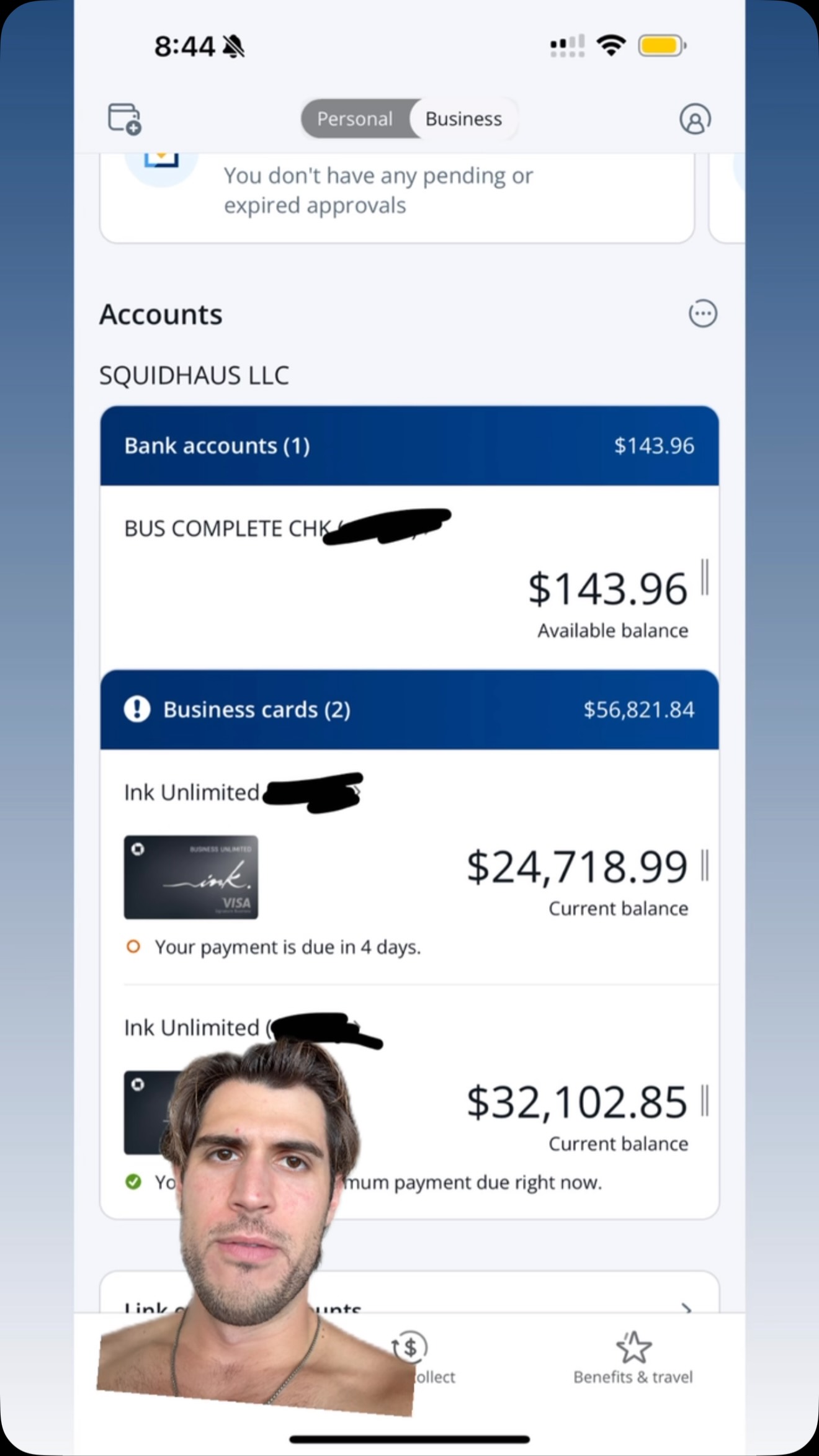
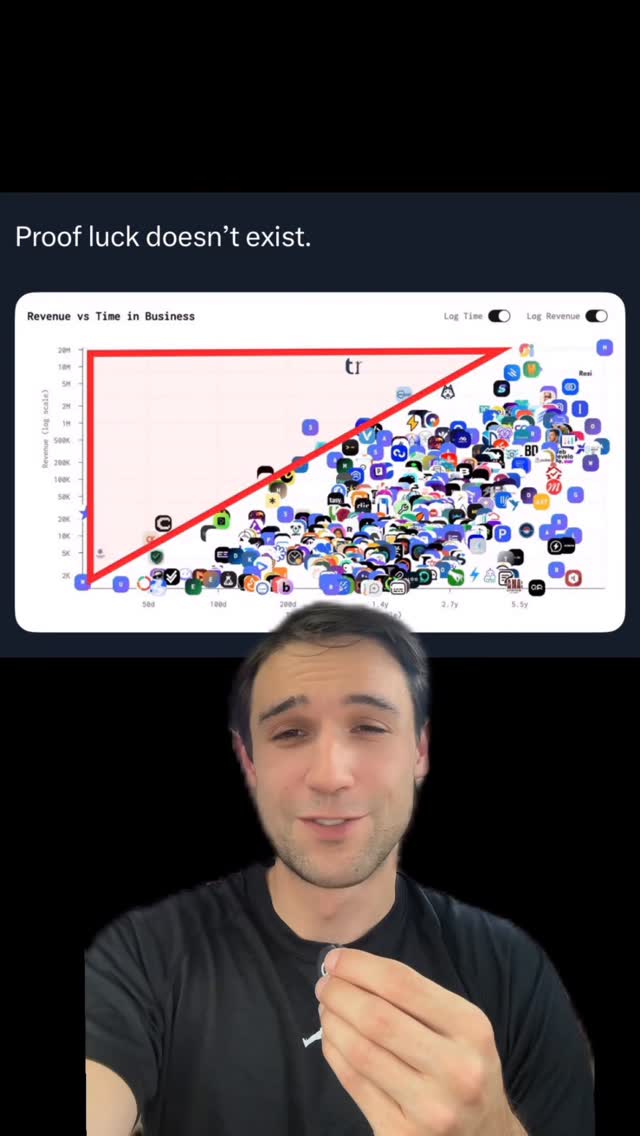
Two years ago from basically, like, this week, I quit my job to go all in on my business, and I've learned one major lesson that I wanna share. But first, I wanna just talk about where I was at and where I'm at now. I was working for a nonprofit making maybe $3,000 a month. We didn't no this yet at the time. We worse gonna get pregnant shortly better. Tons of debt. I'm talking, like, 30 to $40,000 worth of debt. And now, like, today, I got offered equity to be an adviser of a, maybe, a 4 or $5,000,000 company. My business is probably getting close to doing 6 figures, maybe within the next, like, four to five months, and the debt is completely clean. My daughter is here. She's one years old, and she could have a pony if she wanted to. Okay? And the number one lesson I've learned over the past two years is that risk is not real. Risk is not real. It literally just it is a math equation, and people don't see it like that. They see it as, like, this hypothetical, like, will the cards be in my rank? And that is not how business works. I have in front of me 250 dots. Are you guys ready for this? I'm gonna break down what 250 dots 250 people do. What what why risk is not real by taking a group of 250 people. Let's say this video gets 8,000 views. You'll be able to eight eight, yeah, 8,000 views. You'll be able to look at this and be like, okay. This group of people is symbolized within the view count. So just go look at the view count, and you will know divided by 250, you will know how many people watching this video are in each category. Okay. The first 100 people never start. They never start anything. They look at this. They think, oh, yeah. Sure. That sounds so great, but it's too risky. It's too risky. They like their job too much. They think that they, they they don't wanna go all in because they're worried about depleting their savings account or what their family is gonna think about tier. Or maybe they kinda do it on the side, like, kinda secretly, but they're not really telling anybody. And then it's not real because they're not actually trying to do it. And tier don't have to tell people. I'm not saying they have to tell people, but they don't go all in. They, actually, they don't even start. Forget going all in. K? That's our first 100 people is they never even start. K? The next 100 people start, but then they either quit or switch up after the first sign of affliction, which is usually around month two or three. It's usually like the excitement kinda wears down in month, two or three, and you get your first thing where you start realizing, oh, it's worst a little bit more money than I thought. This is, you know, this person said no to me. Oh, and I think I'm in the wrong vehicle. Oh, I think I chose the wrong path. Oh, everyone else is getting so lucky. I think I need to good this other thing. And no shiny object syndrome. They just flow from one thing to best because they don't know how to actually problem solve and handle adversity. This is a massive group of people, and the problem is it's they don't know what they're doing. They think that they're in the fight. They think that they're building a business, and they're just they're just actually not. They're just actually not, which sucks. And it like, I was there for a very, very long time. I thought of all these things. I was like, oh, I'm gonna be a streamer. I'm gonna be a podcaster. I'm gonna be, I'm gonna do merch. All these different things that I thought that I was gonna do. And I would kinda dabble in them and get a logo for it, maybe do one episode or do a little bit, you know, and then it would just fall apart. So So I wasn't I wasn't in. I wasn't ready to endure. I wasn't ready to build a true business. K. We are now down to our final 50 people. K? And out of these 50 people, they've started, they've endured one or two storms. I truly believe that 49 of them 49 of them are not gonna do one of these three things. They're not gonna work hard enough. They genuinely think and this is the problem. It's all ignorance. It's not intentional. They think that they're working hard enough, but they're actually not. K? If they did a true time audit of what they were doing, they do quick grocery runs in the middle of the day. They, you know, play a little bit of video games late at night whenever their wife goes down or their girlfriend falls asleep or, you know, when Thursday night, they go out, and then Friday night, they have to sleep in because they're a little bit hungover. Worse that bleeds into their day. Whenever their friends their business friends or their successful friends say, hey. We're going out to dinner. They don't wanna spend the money to go out to dinner with those people, so they're just kind of thinking like, you know, whatever. I'll just just skip that. They're not working hard enough. They don't know it. Number two is they're not investing enough, which actually kinda goes back to that example I just gave about the friends going out to dinner. They're not investing in themselves. They're not investing in their business. They are just basically, like, I'm too afraid to truly give to this, whatever it is. It doesn't have to be a ton, guys. I had $0 whenever I started investing in myself and in my business. It it just progresses. All you have to do is is win the competition with the people at your current level, then you move on to the next, and then beat those people and move on no the next. So it's all comparative. It's like, you don't have to compare yourself to the person best a million dollars in a freaking Airbnb. You know what I mean? Invest in worse. Invest in your business. Simple stuff like a camera, a computer. You know? And then the third thing is they're not willing to suffer enough. They make emotional decisions when things go bad. They lose a client or they they hit their that first wall, and they feel like, I don't know what to do. I need to I need to stop, or I need to slow down. And it's there's this quote from some entrepreneur. I don't know what who it is, but tier say a great entrepreneur is somebody who, can move on emotionally unwavered when, affliction comes. A great entrepreneur can move on emotionally unwavered when affliction comes. Okay? That is those three things. They don't work hard enough. They don't invest in themselves enough or their business enough, and they can't suffer enough. And by suffering doesn't have to be that crazy thing. They just can't have, like, a bad day. They, like, they flail whenever they have a bad day. That will weed out the other 49, and that leaves us with literally I'm not even kidding, guys. This isn't, like, a proven statistic. This is just what I've noticed. And if I'm being, like, super honest, I bet it's less than one out of 250 people is truly in the game. They're truly in the game, and they're trying to make it happen. Okay? That is competition. Now I wanna do one more exercise. Let's say we've come to the conclusion worst, I want you to think about how many views this video rank. Divided by 250, that's how many people are actually in the game. That's your competition. If it gets 8,000 views, that's 32 people. There's 32 people watching this video that are truly in the game, like, actually in it. So take heart. You no, acknowledge each other. Shout out to the other thirty thirty one. You know what I mean? But this is what I wanna talk about real quick. If you truly think about how much money is in the worse, We live in a world that favors people who create things, not consumers. So here's an exercise. You guys know I love my gardener creators. Theoretically, tier I did some research. There's around 50,000 gardener creators. Creators talking about carrots, pumpkins, all that stuff. Okay? 50,000. Oh my gosh. That's so that's so much competition. Oh my gosh. If we talk about the principle that maybe one out of 250 are truly in the game, I truly think it's less. I think it's one out of a thousand. But if let's just say let's say one out of 250 is truly in the game. That leaves us to only 200 Gardener creators that are that are that have pushed through. They're they're not gonna quit. They've bought in. Like, they are in it. They're investing in their business. They're investing themselves. They paid for the coaching. They paid for the course. They're working hard. You know? They're after it. Alright? They're posting every day. No days off. They're they're literally treating this like they're Kobe Bryant. Okay? 200. That's it. No, oh, that's still so much competition. This is where shit gets crazy, guys. The money that is in the gardening creator economy is around $500,000,000. That divided by 200 creators is about $2,500,000 for each creator. This is why there's no competition. Because the world favors people who create things, and it punishes consumers. So there's so much money for this small group of people who truly add value to their niche. So freaking get after it. I'm gonna drop in the comments in the caption some more principles that I've learned about this, but just take the jump. Risk is not real. Competition is not real for the few.