@swaggylaggygolfdaddy
Instagram · Yap
@swaggylaggygolfdaddy “FUGAZI” (pronounced foo-GAH-zee) is slang for something fake, fraudulent, or severely messed up

@swaggylaggygolfdaddy
Instagram · Yap
@swaggylaggygolfdaddy “FUGAZI” (pronounced foo-GAH-zee) is slang for something fake, fraudulent, or severely messed up
Performance
Video #21568 · Yap
[01]
The creator stands on a golf course holding a driver while casually explaining a historical conspiracy theory connecting the sinking of the Titanic to the creation of the Federal Reserve. She delivers a continuous monologue while overlaid historical photos and detailed text boxes appear above her to support her narrative about JP Morgan, fiat money, and presidential opposition to the central banking system, culminating in her taking a golf swing.
[02]
[03]
 1.6M3.8×Strange historical fact leads to conspiracy@swaggylaggygolfdaddy · Strange but True
 2.7M5.6×Golf course conspiracy theory breakdown@swaggylaggygolfdaddy · Breakdown
 9.1M23.9×Conspiracy theory explained on golf course@swaggylaggygolfdaddy · Conspiracy Breakdown
 10.3M22.8×Conspiracy theory rant during golf@swaggylaggygolfdaddy · Breakdown
 418.7K2.6×Golfing while explaining a conspiracy@swaggylaggygolfdaddy · Breakdown
 7.5M11.2×Golfing while explaining conspiracy theory@swaggylaggygolfdaddy · Breakdown
 11.5M41.2×Explain conspiracy while playing golf@swaggylaggygolfdaddy · Headlines
 1.4M3.5×Explaining conspiracy theory while golfing@swaggylaggygolfdaddy
 25.7M65.4×Conspiracy theory explained while golfing@swaggylaggygolfdaddy · Conspiracy Breakdown
 2.9M5.8×Casual golf course conspiracy breakdown@swaggylaggygolfdaddy · Breakdown
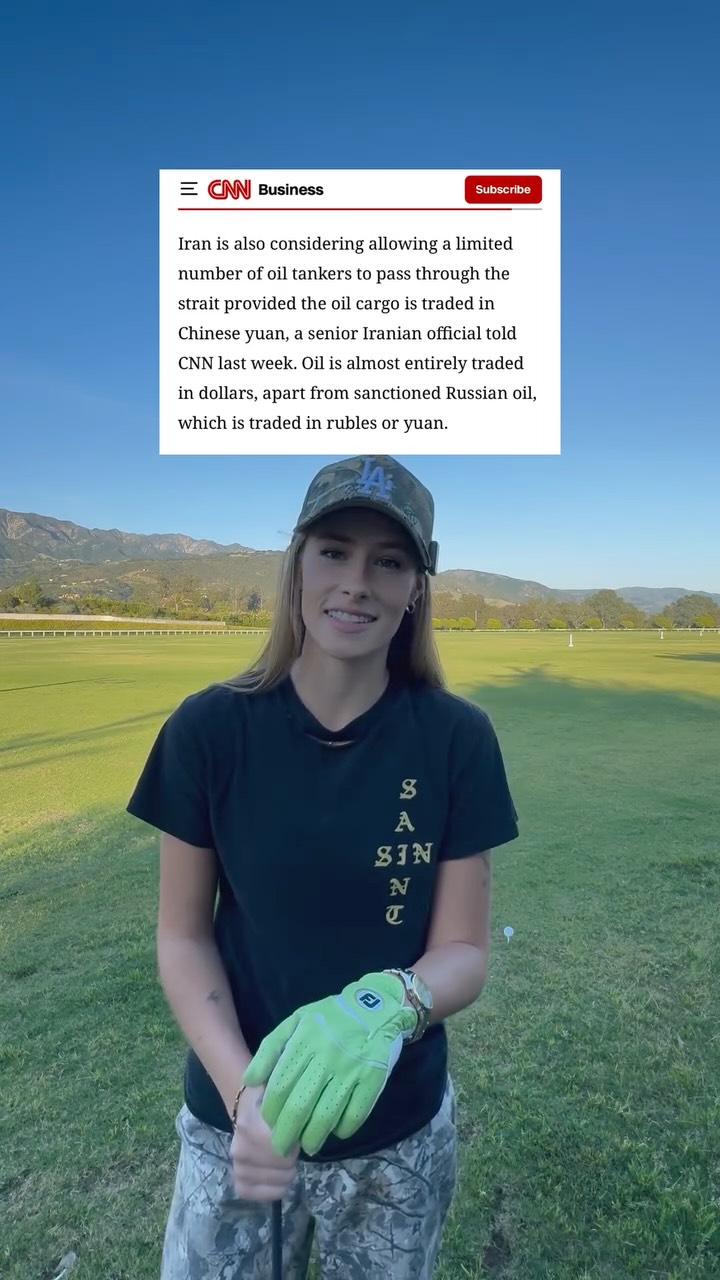 684.9K1.2×Golfing while explaining global politics@swaggylaggygolfdaddy · Breakdown
 1.9M4.6×Conspiracy theory with sarcastic pivot@swaggylaggygolfdaddy · Conspiracy Breakdown
[04]
[05]
What stops the scroll in the first 3 seconds
Verbal hook · 65%
JP Morgan was the owner of the Titanic, and he bailed out of the voyage last minute.
Visual hook · 35%
A young woman in casual streetwear stands on a golf course holding a golf club, while a historical black-and-white portrait of JP Morgan abruptly appears floating above her head against the blue sky.
[06]
Steal this for your own video
Did you know secretly right before ?
[07]
The promise the opener makes, and how the video pays it back
Hook
The Intrigue Anchor - Presenting a widely known subject but immediately introducing a suspicious or lesser-known detail to spark curiosity.
Payoff
The Kinetic Punctuation - Delivering a final thought-provoking statement immediately followed by the execution of the physical action, acting as a visual and auditory mic-drop.
[08]
The structural pattern this video runs on
Framework
The Activity-Anchored Monologue
Juxtaposing a dense, controversial, or complex informational rant with the casual preparation and execution of an unrelated physical activity, using the physical action as a metaphorical mic-drop.
The Stakeholder Setup
Introducing key figures and establishing their high status or power to elevate the narrative stakes.
The Hidden Motive
Revealing the underlying conflict, usually financial or political, that connects the stakeholders to the initial hook.
The Suspicious Resolution
Delivering the grim or convenient outcome of the conflict, validating the initial conspiracy or theory.
The Modern Implication
Bridging the historical or complex narrative to a present-day reality that directly affects the viewer.
The Metaphorical Pivot
Abruptly breaking the heavy monologue to acknowledge the casual physical activity being performed, assigning the heavy topic to the physical prop.
“FUGAZI” (pronounced foo-GAH-zee) is slang for something fake, fraudulent, or severely messed up
informational · beginning
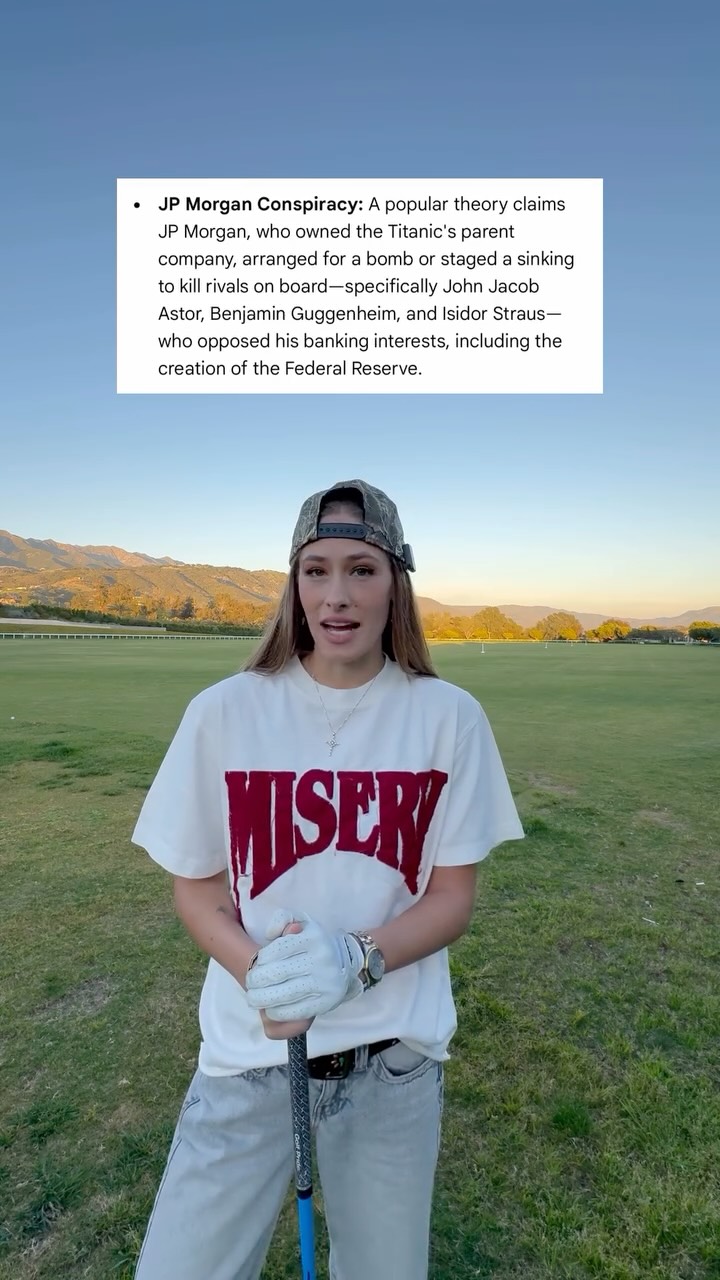
JP Morgan Conspiracy: A popular theory claims JP Morgan, who owned the Titanic's parent company, arranged for a bomb or staged a sinking to kill rivals on board—specifically John Jacob Astor, Benjamin Guggenheim, and Isidor Straus—who opposed his banking interests, including the creation of the Federal Reserve.
contextual · middle
big money meant political power especially in the early 20th century
informational · middle
The real "authority" is global trust. The dollar stays valuable because: Stability: People believe the US government will stay in power and honor its debts. Oil & Trade: Most of the world's oil and commodities are priced in dollars (the "Petrodollar" system), meaning other countries must hold dollars to buy energy. Scarcity: If the Fed prints too much, that trust evaporates. If you have 100 rare cards, they are expensive; if you print 100 million of them, they are used as wallpaper.
informational · middle
The Federal Reserve Act was a bloodless coup that shackled the American economy to a parasitic architecture of debt, stripping the people of their financial autonomy to enrich a shadow elite through the systematic, slow-motion theft of every dollar's purchasing power.
informational · middle
Fiat Money [fee-aht muh-nee] A government-issued currency that is not backed by a physical commodity, such as gold or silver, but rather by the government that issued it.
informational · end
In the last 30 years (from March 1996 to March 2026), the cumulative inflation in the United States has increased by approximately 108.5%.
informational · end
George Washington (Stanchly opposed "paper money"/hyperinflation) Thomas Jefferson (Opposed the First Bank of the United States) James Madison (Initially opposed the First Bank, though later signed the Second Bank into law for war needs) Andrew Jackson (Famously "killed" the Second Bank of the United States)
informational · end
Martin Van Buren (Established the Independent Treasury to keep government funds out of private banks) John Tyler (Vetoed several attempts to bring back a national bank) James K. Polk (Re-established the Independent Treasury system) Grover Cleveland (A "Gold Democrat" who fought to keep the U.S. strictly on the gold standard) William McKinley (Signed the Gold Standard Act of 1900)
informational · end
grocery prices aren't going up, the value of the dollar is going down and quickly
JP Morgan was the owner of the Titanic, and he bailed out of the voyage last minute. Two really important people died on that trip. John Astor was the richest man in the world at the time, and, Benjamin Guggenheim was the giant a giant heir to the mining industry that just boomed. K? They strongly opposed the Federal Reserve because they were like, what do you mean we're gonna tie money to money? We can't tie money to paper agreements. That's circular. That doesn't make sense. Either way, they died. And then Woodrow Wilson signed the Federal Reserve Act, and, now money is fugazy, basically. But we all agree that it means something. Anyways, this is my driver, and that is the Federal Reserve Act. There's a reason that so many presidents fought against it and wanted it to be tied to something real, tangible, gold, silver, even, like, barrels of oil it could have been tied to. But no. But no, we have to be the new world order, don't we?