Post caption
The difficulty of communicating leftist politics is that it is inherently complex. It requires systems level thinking that is much harder to access than simple blame-narratives. That’s why good political communication is more important than ever to reach others.
Note that this is for conversations where the goal is to EDUCATE. This might not always be the goal of a conversation, and that’s ok.
But, if it is, then from an educational standpoint, call-out culture is not a very good rhetorical strategy. Less moral policing and more empathy-centered communication is necessary to build effective solidarity networks
#leftism #politics #communication #education
Transcript
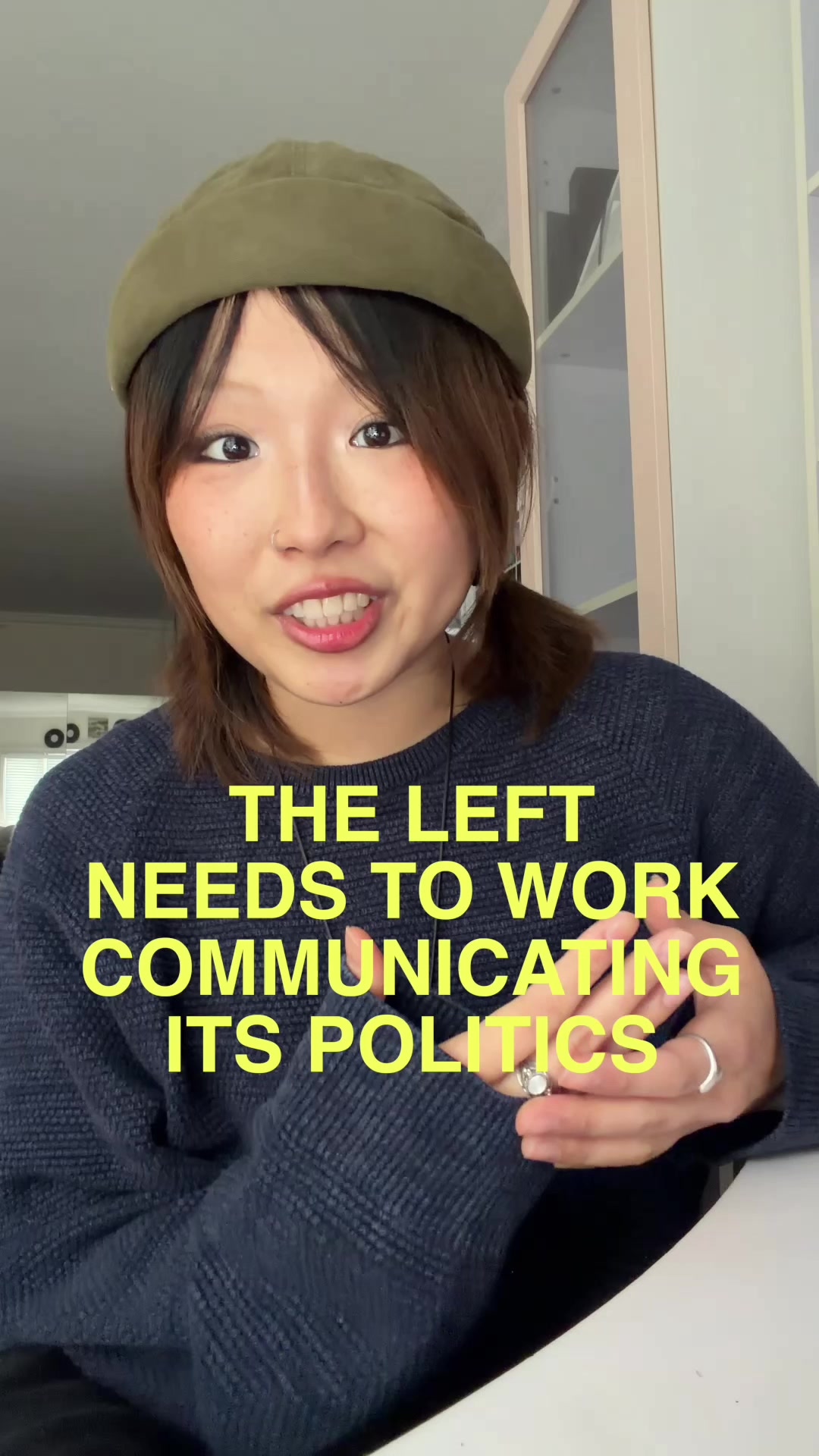
Needs to work on how they communicate their politics. Something I've been thinking about a lot is that one of the biggest challenges in accessing left wing politics is that it requires a working knowledge of systems. To understand why you got laid off or why dating feels impossible or why gas is so expensive, you have to understand things like capitalism, patriarchy, and neoliberalism. And these frameworks are really powerful, but they also take a lot of time and energy to learn. And if you haven't been exposed to these spaces or ideas before, if you're just a regular person with no political vocabulary, then these concepts can feel really inaccessible because the average person isn't thinking about how the system harms some and privileges others. They're just focused on their immediate reality. No, of course, it's hard to get them to hear what you're really saying because you're operating under fundamentally different understandings of reality. But if your goal is to get others to care about left wing politics and issues, then bridging this gap is necessary in our conversations. Because if your first encounter with the left is being told that you're privileged, ignorant, or sexist, even if it's true, your immediate reaction is gonna be one of defensiveness, not curiosity. People inherently feel defensive about the validity of their own experiences. How can I be privileged if I had to work a drop through high school to support my family? I treat my mom and sister so nice, so how can I be a misogynist? If you have no framework for understanding systems like white supremacy or patriarchy, then being called out for benefiting from it feels like a personal attack. So of course people aren't gonna wanna listen because what you're saying doesn't feel true. And if it doesn't feel true, well then, it must be a lie. And this feeling of dissonance is what right wing narratives latch on to. Because for this person, the message that the right offers sounds a lot more appealing. It offers a simple understanding of the world to complex issues. And regardless of its truth, as long as it feels true, then it'll continue to act as the path of least resistance for these people. They take the very real frustrations that people might have, difficulty dating, trouble finding work, and redirect the blame onto convenient targets, sabotage. Tier do little to address the crux of the issues they claim to be solving because these issues are all of sabotage. They do little to address the crux of the issues they claim to be solving because these issues are all systemic. So in our conversations surrounding politics, we need to do a better job at breaking down complexity and speaking to people's real lived experiences so that they can first begin to understand systems level thinking.