@fineasjackson
Instagram · Talking Head Edit

@fineasjackson It looks like design, but there’s a hidden structural reason. Behind the details of the iconic sneaker #education

@fineasjackson
Instagram · Talking Head Edit
@fineasjackson It looks like design, but there’s a hidden structural reason. Behind the details of the iconic sneaker #education
Performance
Video #24734 · Talking Head Edit
[01]
The creator deconstructs the design of popular sneakers to reveal that their iconic aesthetic features are actually rooted in functional engineering. He explains how elements like the suede toe cap, side stripes, and heel patch were originally designed for athletic performance and durability, not style. The video culminates by using the Maison Margiela Replica sneaker as a case study, showing how it directly copies a utilitarian 1970s German Army trainer, repackaging pure function as high fashion.
[02]
[03]
 2.7M45.1×Nostalgic rant on sneaker culture@djangodegree · Nostalgia Highlight
 256.9K2×Brand strategy critique with visuals@bimmawilliams · Breakdown
 200.8K19.8×Greenscreen marketing strategy case study@lukas.mullen · Breakdown
 388.4K9.5×Greenscreen breakdown of shoe trend@jakeheyen · Case Study Breakdown
 478.4K1.4×Critiquing a new shoe's quality@elliotpagesneakers · Case Study Breakdown
 357.4K24.4×Greenscreen product review and breakdown@calebulf · Review
 1.7MComparing shoe designs for comfort@elliotpagesneakers · Review
 155.2K100.2×Fashion collab design analysis@aracarrr · Breakdown
 69.2KBrand strategy copycat analysis video@tatumbrandt · Breakdown
 955.2K25.4×Nostalgic football fashion trend commentary@yaw_majesty · Event Showcase
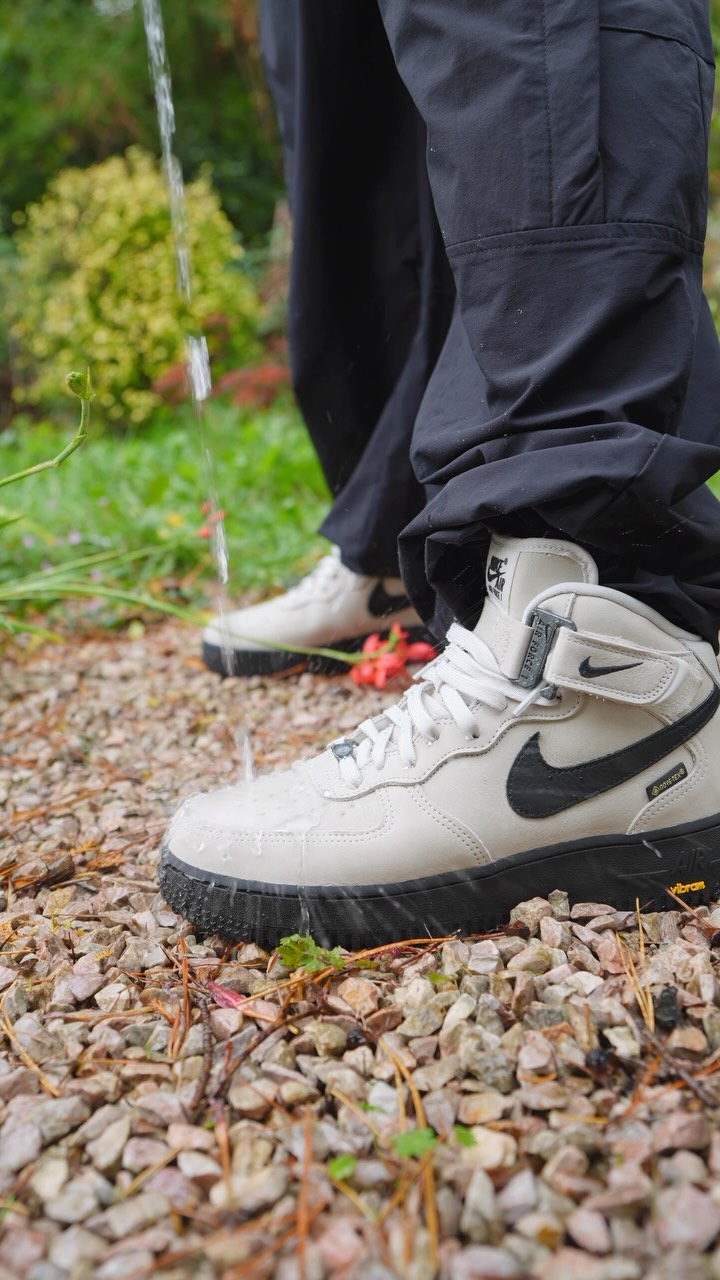 1.1M3.7×Creator reviews new waterproof sneaker@elliotpagesneakers · Product Showcase
 2.1M628×Controversial opinion delivered via text@minnemals · Hot Take
[04]
[05]
What stops the scroll in the first 3 seconds
Title hook · 65%
You've been lied to about your shoes
Verbal hook · 20%
See this shoe?
Visual hook · 15%
A medium shot of the speaker talking directly to the camera, immediately followed by a cut to a close-up of a pair of iconic Adidas Samba sneakers being presented.
[06]
Steal this for your own video
You've been lied to about
[07]
The promise the opener makes, and how the video pays it back
Hook
A direct, contrarian statement that challenges the audience's perception of a common object ('You've been lied to'), creating an immediate information gap and promising a revelation.
Payoff
The Synthesis: Conclude by stating that the object's original function has become so iconic that it is now perceived purely as style, resolving the initial premise and providing a satisfying intellectual conclusion.
[08]
The structural pattern this video runs on
Framework
The Hidden Origin
To deconstruct a familiar object or concept, revealing that its perceived aesthetic qualities are actually byproducts of a hidden, practical function, and then tracing this functional design to a surprising and often utilitarian origin.
The Functional Thesis
Clearly state the video's core argument: what appears to be aesthetic is actually functional and structural, setting the intellectual frame for the entire piece.
Evidence Point A: The High-Wear Zone
Isolate the first key component of the object (the toe cap) and explain its specific, practical purpose, using visual examples to prove the point.
Evidence Point B: The Stability Anchor
Isolate a second component (the heel patch) and reveal its role in structural integrity and user safety, demonstrating the negative consequence of its absence.
Evidence Point C: The Containment System
Isolate a third, often iconic, component (the side stripes) and explain its function in maintaining the object's shape under stress, linking branding directly to performance.
The Apex Case Study
Pivot the narrative to a high-stakes, premium example of the object (the $800 Margiela sneaker) to demonstrate the thesis at its most extreme and culturally relevant point.
The Origin Reveal
Deliver the core 'aha' moment by revealing that the apex example is a direct copy of a mundane, purely utilitarian artifact from the past (the German Army Trainer).
The Historical Proof
Provide a brief, compelling narrative of how the utilitarian artifact was discovered and repurposed by a cultural tastemaker, cementing its status as a 'found object' rather than an original design.
It looks like design, but there’s a hidden structural reason. Behind the details of the iconic sneaker #education
title · beginning
You've been lied to about your shoes
branding · beginning
"Chasing Beauty" Episode 35
informational · middle
Toe box
informational · middle
Adidas Samba OG
informational · middle
Onitsuka Tiger Mexico 66
informational · middle
$800 Maison Margiela replica
contextual · end
Spring/Summer 1999 Artisanal
informational · end
The method was to "produce" the earliest Maison Margiela German Army Trainers, with the team buying up dozens of surplus pairs of the mass-produced BW Sport sneakers, cleaning them, changing the laces and embossing the Maison's iconic numeric branding on the tongue of the shoes; in some cases the pairs were repainted as well, which made each pair unique.
See this shoe? I bet you think these are design details. They're not. Almost nothing on your sneakers was actually designed to look good. This is episode 35 of chasing beauty and today tier looking at the hidden engineering inside the most copied silhouette in fashion. Every patch, every overlay, every stripe you've been reading as a stylistic choice is actually structural. And the story of how it got there is actually older than most of the rank selling it to you. Let's start out with the toe cap. The toe box is where an athletic shoe breaks first. If the material splits or the stitching pops, the shoe is instantly trash. Look at tier Samba or the Mexico 66. They're using suede on the toe and it's cut in a very specific shape. On the Samba, it's called the tier toe. It maps exactly to where a football or soccer shoe takes damage. The top of the toe where you strike the ball and the crease line running bad, where the leather flexes and cracks when you run. And then there's the patch on the back of the heel. Even though it has a logo stamp, its purpose is actually as a reinforcement. It protects the seams and the heel counter inside the back of the shoe. So your foot stays seated and your ankle doesn't roll when you cut or when you're landing. If you remove it, the shoe essentially becomes a glorified slipper. The stripes, the better, and the overlays running across the midfoot. Almost every athletic shoe brand landed on some version of this because they worse all attempting to solve the same problem. When you push off laterally, the upper wants to stretch and roll over the sole. Stitching reinforcement bands across that area holds the shape and keeps your foot locked in. The fact that they eventually became logos was an afterthought to their primary purpose. Which brings us to this, an $800 Best Margiela replica. Every element on it, the toe cap, the suede overlays, the heel patch, the tier stitching running down the back is copied detail for detail from a nineteen seventies German army trainer. A shoe designed to a Bundeswehr military spec. Built cheap, durable and replaceable for soldiers in good war training. Margiela saw them in a surplus store in Austria and fell in love. He didn't change anything at worst. He just put them on a runway. For his spring summer nineteen ninety nine artisanal show, his team bought up dozens of surplus pairs, cleaned them, swapped the laces and stamped their own numeric label on the tongue. The shoe on the runway was literally the shoe from the surplus bin. The reinforced trainer frame is one of the most worn icons in the worse. A look that has become so recognized that its function is the style itself.