Viral Hooks
Trending short videosOminous hiking photo about 'alpine divorce'
N

@nymag

Instagram · Carousel
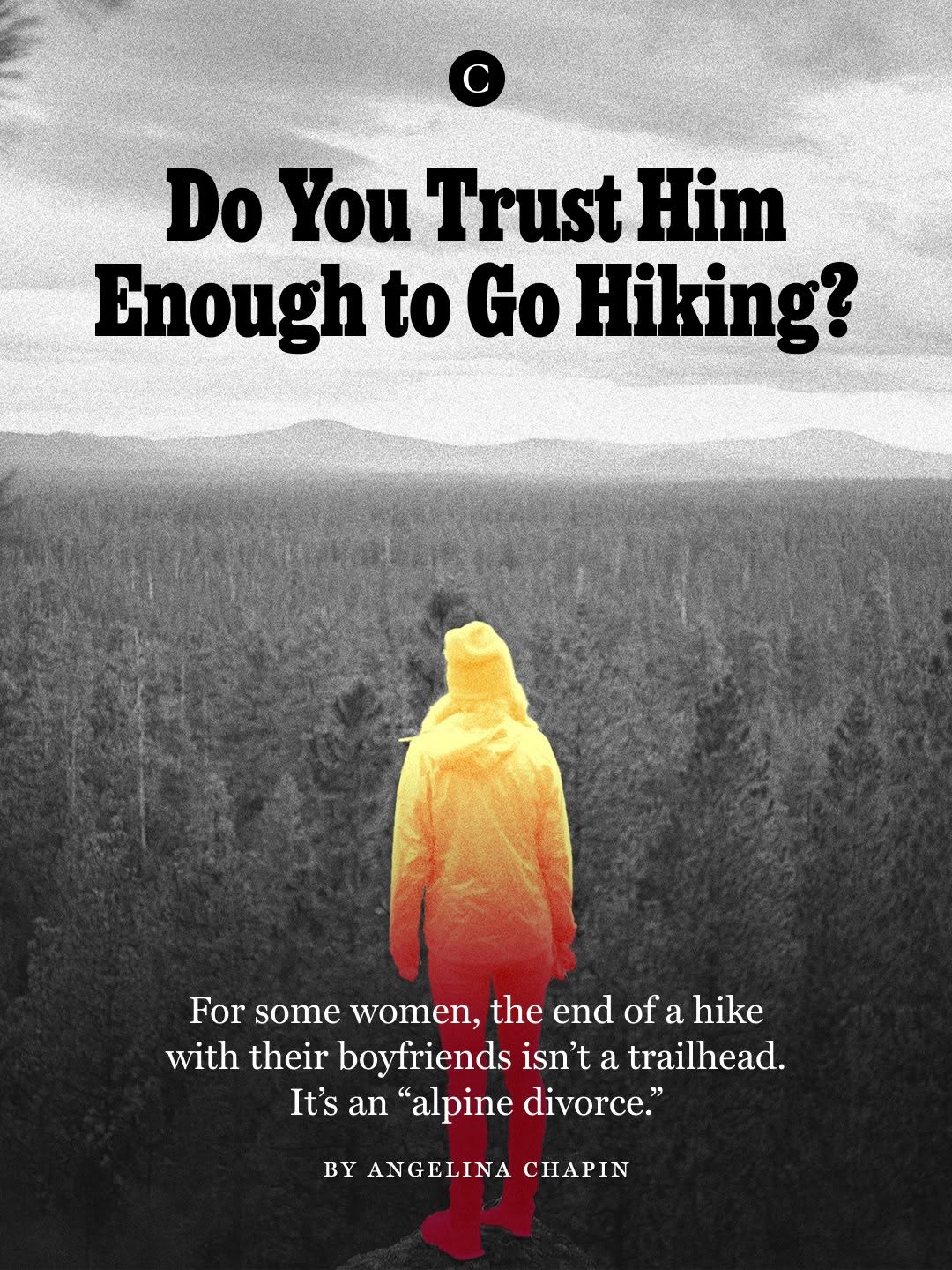
@nymag The term “alpine divorce,” which comes from an 1893 short story about a husband who plans to push his wife off a mountain in the Alps, has become a social-media catchall to describe any time a man, whether out of malice or idiocy, leaves his girlfriend or wife in the wilderness. TikToks of women sharing their personal anecdotes started going viral after an Austrian climber was found guilty of manslaughter for leaving his girlfriend at the top of the country’s highest mountain, where she died of hypothermia. During the trial, an ex-girlfriend took the stand to say he had also once left her on the same mountain. Women were horrified. Was this man simply reckless or a psychopath who got off some twisted form of wilderness torture? Since then, “alpine divorce” has become a Me Too–style hashtag used in explainer videos and first-person confessionals where women talk about being left in canyons with twisted ankles and injured knees or abandoned on hikes in foreign countries. Some have expressed shock that such a nightmarish trend even exists and is prevalent enough to have a name. The idea that on top of everything else, women need to worry about being ditched by their boyfriends on a secluded trail or pushed off the edge of a lookpoint sounds too cartoonishly evil to be true. But the reality is, the person most likely to harm a woman isn’t a wild animal or a stranger lurking in the woods; it’s the person sleeping next to them at night. At the link in our bio, read Angelina Chapin on the phenomenon of the “alpine divorce” and how it’s tapped into the rage women feel at being abandoned in other situations, too. Photo-Illustration: The Cut; Photo: Getty


View original on Instagram

The edit1 shot · 4 text
Shots Text

Performance

Views
1.2M
Likes
80.5K
Comments
2.8K
Engagement
6.9%
Outlier
47.3×

Video #28054 · Carousel

Ominous hiking photo about 'alpine divorce'from @nymag

[01]

Overview

This is a photo illustration for an article about the 'alpine divorce' phenomenon. It features a lone woman in a colorful jacket looking over a bleak, monochrome forest, with provocative text overlays that question trust in relationships. The image is designed to evoke a sense of dread and curiosity, prompting viewers to read the associated article.

[02]

Simple outline

  1. 1Pose a provocative question
  2. 2Reveal a sinister meaning
  3. 3Introduce a chilling term
  4. 4Establish authority

[03]

Related videos

[04]

Classification

Format
Concepts
ShowcasePublic Service AnnouncementStrange but True
Elements
Faceless FramingText Overlay
Account

[05]

Hook analysis

What stops the scroll in the first 3 seconds

Title hook · 45%

Do You Trust Him Enough to Go Hiking?

Verbal hook · 10%

The term “alpine divorce,” which comes from an 1893 short story about a husband who plans to push his wife off a mountain in the Alps, has become a social-media catchall...

Visual hook · 45%

The strong visual contrast created by a single person in a bright yellow and red raincoat standing out against a completely black-and-white, desolate forest landscape. This selective color technique immediately draws the eye and creates a powerful, unsettling mood.

[06]

Hook template

Steal this for your own video

Do you trust [person you rely on] enough to [high-stakes situation]?

  • — Do you trust your contractor enough to renovate your kitchen?
  • — Do you trust your financial advisor enough to manage your retirement savings?
  • — Do you trust your hiking partner enough to take the remote trail?

[07]

Hook and payoff

The promise the opener makes, and how the video pays it back

Hook

A single, self-contained slide that functions as a complete narrative teaser. It uses a large, direct question layered over an atmospheric image to stop the scroll and create immediate engagement.

Payoff

The payoff is intentionally withheld from the slide. The entire structure is designed to create unresolved tension, compelling the user to read the caption and click an external link (e.g., 'link in bio') for the full story and resolution.

[08]

Narrative framework

The structural pattern this video runs on

Framework

The Sinister Reframe

To hook the audience by posing an innocent, relatable question and then immediately subverting it with a dark, ominous explanation that introduces a memorable, threatening term. This creates a powerful information gap that drives curiosity.

  1. 1

    The Relatable Question

    The main headline poses a direct, seemingly simple question about a common situation (e.g., a relationship test, a daily activity) to establish an immediate, personal connection with the viewer.

  2. 2

    The Ominous Premise

    A sub-headline immediately re-contextualizes the initial question, revealing a hidden danger or dark alternative outcome. It introduces a specific, memorable, and threatening term that defines this negative outcome, creating intrigue and alarm.

  3. 3

    The Credibility Anchor

    A byline or source credit is placed at the bottom to frame the content as a serious piece of journalism or an authored work, lending weight and authority to the provocative claims.

Themes

  • Trust
  • Danger
  • Vulnerability
  • Domestic Violence
  • Gender Dynamics
  • Fear

Techniques

  • Photo-illustration
  • Selective Color
  • Text Overlay
  • Monochrome Background

Trends

  • TikTok Trend Explainer
  • True Crime Storytelling

Post caption

The term “alpine divorce,” which comes from an 1893 short story about a husband who plans to push his wife off a mountain in the Alps, has become a social-media catchall to describe any time a man, whether out of malice or idiocy, leaves his girlfriend or wife in the wilderness. TikToks of women sharing their personal anecdotes started going viral after an Austrian climber was found guilty of manslaughter for leaving his girlfriend at the top of the country’s highest mountain, where she died of hypothermia. During the trial, an ex-girlfriend took the stand to say he had also once left her on the same mountain. Women were horrified. Was this man simply reckless or a psychopath who got off some twisted form of wilderness torture? Since then, “alpine divorce” has become a Me Too–style hashtag used in explainer videos and first-person confessionals where women talk about being left in canyons with twisted ankles and injured knees or abandoned on hikes in foreign countries. Some have expressed shock that such a nightmarish trend even exists and is prevalent enough to have a name. The idea that on top of everything else, women need to worry about being ditched by their boyfriends on a secluded trail or pushed off the edge of a lookpoint sounds too cartoonishly evil to be true. But the reality is, the person most likely to harm a woman isn’t a wild animal or a stranger lurking in the woods; it’s the person sleeping next to them at night. At the link in our bio, read Angelina Chapin on the phenomenon of the “alpine divorce” and how it’s tapped into the rage women feel at being abandoned in other situations, too. Photo-Illustration: The Cut; Photo: Getty
Text overlays

  • branding · photo_0

    ©

  • title · photo_0

    Do You Trust Him Enough to Go Hiking?

  • informational · photo_0

    For some women, the end of a hike with their boyfriends isn’t a trailhead. It’s an “alpine divorce.”

  • branding · photo_0

    BY ANGELINA CHAPIN

Ominous hiking photo about 'alpine divorce' | Viral Hooks