Viral Hooks
Trending short videosExplaining the tortured golfer mindset
H

@howlowcanyougopodcast

Instagram · Clip

@howlowcanyougopodcast “The tortured golfer” might actually be the mid-single figure handicapper… In this clip, Jon Sherman explains why golfers in that range often struggle the most mentally with expectations, scoring, and the pressure of trying to “finally get good.” Because shooting in the 70s sounds close when you’re a mid-single figure golfer… but the reality is, it’s still incredibly difficult to do consistently. There’s a reason that number feels so special. It takes time, experience, smarter decisions, emotional control, and learning how to manage your game under pressure. Jon also references a brilliant point from Ben Hogan: Every golfer might be capable of shooting in the 70s… but whether you actually do it comes down to the work you’re willing to put in. If you’re stuck in that cycle of expecting more from your game but struggling to break through, this conversation will hit home. Part 1 with Jon Sherman is OUT NOW on Spotify and Apple Podcasts 🎙️ #Golf #GolfTips #GolfImprovement #MentalGolf #JonSherman


View original on Instagram

The edit1 shot · 2 text
Shots Text0:41

Performance

Views
91.7K
Likes
1.2K
Comments
238
Engagement
1.6%
Outlier
3.5×
Length · 17 May 2026
0:41

Video #29702 · Clip

Explaining the tortured golfer mindsetfrom @howlowcanyougopodcast

[01]

Overview

The speaker explains why he considers mid-single-digit handicap golfers to be the 'most tortured' players. He argues that they are stuck between two extremes: being capable of shooting very low scores (in the 70s) but also being susceptible to very high scores (triple digits), creating a wide and mentally challenging performance spectrum. He concludes by referencing Ben Hogan, emphasizing that achieving low scores requires significant time and effort, which adds to the pressure for this group of golfers.

[02]

Simple outline

  1. 1Label a specific audience
  2. 2Define their core conflict
  3. 3Validate the resulting pain
  4. 4End with authoritative challenge

[03]

Related videos

[04]

Classification

Format
Concepts
Breakdown
Elements
Split ScreenJump CutTitle Text Hook

[05]

Hook analysis

What stops the scroll in the first 3 seconds

Title hook · 55%

ARE YOU A TORTURED GOLFER? THIS IS WHY!

Verbal hook · 40%

I often call the mid single digit golfer the most tortured because they're kinda stuck between two worlds.

Visual hook · 5%

A direct-to-camera shot of the speaker with a serious, focused expression, combined with a large, bold title text overlay that poses a provocative question to the viewer.

[07]

Hook and payoff

The promise the opener makes, and how the video pays it back

Hook

A provocative question or statement that directly addresses a specific audience's pain point and promises an explanation.

Payoff

The Legendary Mandate: The speaker concludes by citing a respected authority figure to add weight to the final point: that achieving the goal is possible but requires dedication and effort, shifting the focus from frustration to agency.

[08]

Narrative framework

The structural pattern this video runs on

Framework

The Validated Struggle

To identify a specific audience, define their core internal conflict, validate the pain it causes, and conclude with an authoritative challenge that reframes their struggle as a matter of effort.

  1. 1

    The Niche Identity Label

    The speaker identifies a specific subgroup within a larger community and assigns them a compelling, emotionally resonant label that encapsulates their struggle.

  2. 2

    The Performance Dichotomy

    The speaker defines the core conflict by presenting the two extreme outcomes this group experiences—the aspirational high and the frustrating low—framing them as being 'stuck between two worlds.'

  3. 3

    The Emotional Validation

    The speaker explicitly acknowledges that the wide variance in performance is psychologically difficult to handle, thereby validating the audience's feelings of frustration.

  4. 4

    The Relatability Proof

    A secondary voice or piece of evidence is introduced to confirm the primary speaker's thesis, acting as social proof and making the abstract problem feel concrete and shared.

  5. 5

    The Universal Reframe

    The speaker elevates the specific struggle by framing it as a known, accepted, and almost mythical part of the broader culture or activity, making the individual feel part of a larger story.

  6. 6

    The Aspirational Anchor

    The speaker reinforces the value and difficulty of achieving the 'high performance' outcome, reminding the audience why the struggle is meaningful and worth enduring.

Themes

  • Expectation Management
  • Performance Psychology
  • Sports Mentality

Techniques

  • Expert Commentary
  • Split Screen
  • Direct Address

Post caption

“The tortured golfer” might actually be the mid-single figure handicapper… In this clip, Jon Sherman explains why golfers in that range often struggle the most mentally with expectations, scoring, and the pressure of trying to “finally get good.” Because shooting in the 70s sounds close when you’re a mid-single figure golfer… but the reality is, it’s still incredibly difficult to do consistently. There’s a reason that number feels so special. It takes time, experience, smarter decisions, emotional control, and learning how to manage your game under pressure. Jon also references a brilliant point from Ben Hogan: Every golfer might be capable of shooting in the 70s… but whether you actually do it comes down to the work you’re willing to put in. If you’re stuck in that cycle of expecting more from your game but struggling to break through, this conversation will hit home. Part 1 with Jon Sherman is OUT NOW on Spotify and Apple Podcasts 🎙️ #Golf #GolfTips #GolfImprovement #MentalGolf #JonSherman
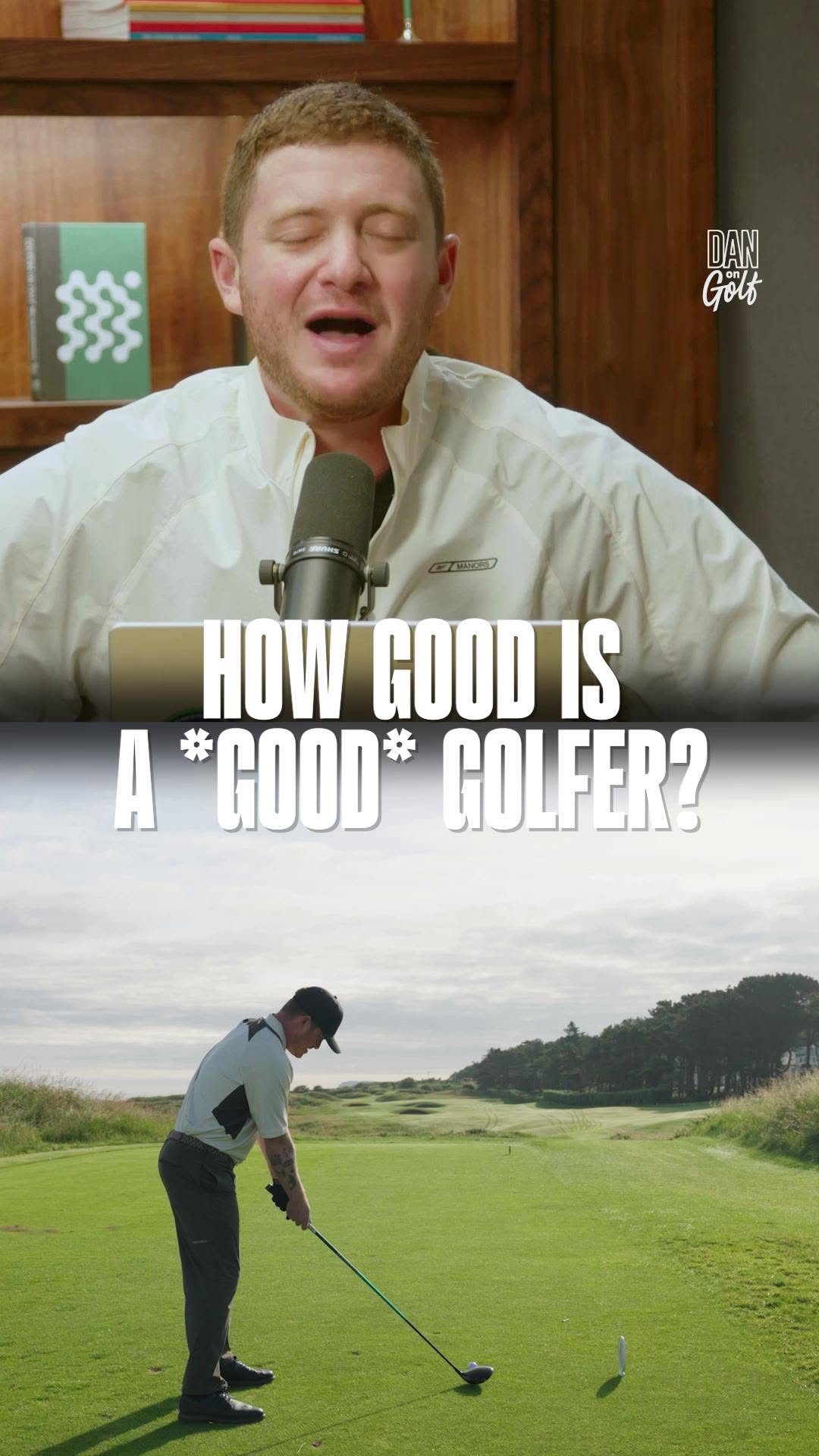
Text overlays

  • title · beginning

    ARE YOU A TORTURED GOLFER? THIS IS WHY!

  • branding · beginning

    JON SHERMAN

Transcript

Often call the mid single digit golfer the most tortured because they're kinda stuck between two worlds. They can shoot in the seventies or close to par a time, which is, you know, the mountain top for a lot of people. And then they could you know, if things really go wrong, they could be in the triple digits. And that that is a very large spectrum of scoring that's hard to accept versus maybe someone who is in the nineties and the hundreds. That's describing where I am at the moment that Yeah. It it is. I can't get around that. It's just part of, like, the lore of golf and scoring expectations and what shooting in the seventies means. Like, it's a special number. It's it's hard to do. I think Ben Hogan wrote, he believes that every golfer is capable of shooting in the seventies, but, like, will you do it? You no, that that's a matter of, you know, time and effort and experience.