Video #28956 · Speaker address
Explaining the real causes of slow golffrom @daphnesheadcovers
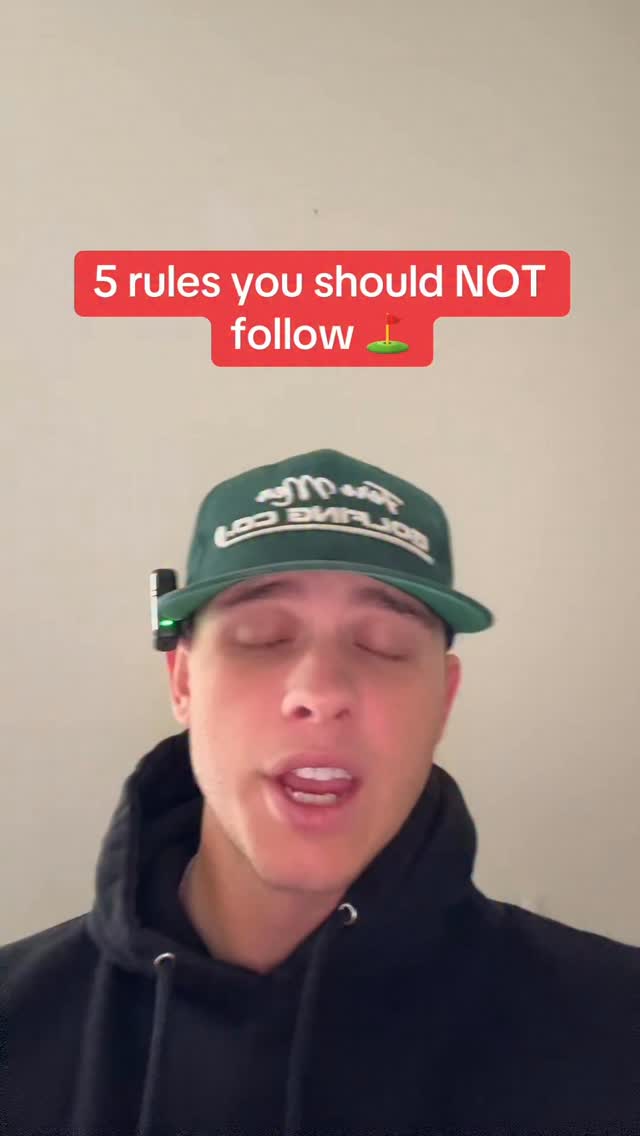
A man stands on a golf course and explains the three primary systemic causes of slow, five-hour golf rounds. He debunks the common myth that it's the group directly in front, instead pointing to loaded tee sheets from increased player demand, the "all-from-one-group" rule where an early slow group sets the pace for the day, and the logistical issues caused by mixing singles and twosomes with foursomes.
- 1Challenge common belief
- 2Present systemic cause
- 3Present logistical cause
- 4Reaffirm initial challenge
ConceptsBreakdownRapid Fire Listicle
ElementsTitle Text HookText OverlayJump Cut
[05]
Hook analysis
What stops the scroll in the first 3 seconds
Title hook · 45%
What Causes 5 Hour Rounds
Verbal hook · 50%
Here's what causes five hour rounds, and it's not the group in front of you.
Visual hook · 5%
A wide shot of a man standing on a lush green golf course with a dramatic, rocky mountain in the background, immediately establishing the video's topic and providing a visually appealing setting.
[06]
Hook template
Steal this for your own video
Here's what actually causes [frustrating common experience], and it's not [commonly blamed culprit].
- — Here's what actually causes gym plateaus, and it's not the exercises you're doing.
- — Here's what actually causes high restaurant bills, and it's not the food you're ordering.
- — Here's what actually causes project burnout, and it's not your workload.
[07]
Hook and payoff
The promise the opener makes, and how the video pays it back
Hook
A contrarian statement that directly refutes a popular explanation for a common frustration, creating an immediate knowledge gap and promising insider information.
Payoff
A definitive restatement of the initial hook, often with a strong quantitative assertion (e.g., '99% of the time'), to provide a conclusive and memorable takeaway that reinforces the creator's thesis.
[08]
Narrative framework
The structural pattern this video runs on
Framework
The Expert Debunk
To challenge a widely held belief about a common problem by presenting a series of non-obvious, expert-level explanations, thereby repositioning the viewer's understanding and establishing the creator's authority.
- 1
The Macro-Context Cause
Introduces the first, often largest-scale, reason for the problem. This establishes a broad, systemic context that the audience likely hasn't considered, supported by data.
- 2
The Operational Bottleneck Cause
Presents a second reason that focuses on a specific, mechanical, or logistical flaw in the system itself. This demonstrates a deeper, 'insider' understanding of the process through a hypothetical scenario.
- 3
The Compositional Conflict Cause
Introduces a third reason that stems from the interaction of different elements or participants within the system, highlighting a nuanced conflict that creates inefficiency.
Themes
- Myth-busting
- Education
- Sports culture
- Problem-solving
Techniques
- Direct address
- Listicle structure
- Expert positioning
Post caption
Here’s what causes 5 hour rounds, and it’s not the group in front of you.
Loaded tee sheets.
Golf has gained 4M new golfers since 2015 while the supply of golf courses has stayed the same. While this is great for the industry, more golfers means slower rounds.
The all from one group rule.
If the golf course has a full tee sheet and the 7 am tee time takes 5 hours, that’s now the pace of play. It’s really hard for the course to gain that time back after it happens.
Single and twosome groups.
Single players and twosome groups amongst foursomes makes pace difficult for all parties involved. Because singles and twosomes naturally play faster
99% of the time it’s not the group in front of you.
Text overlays
Transcript
Here's what causes five hour rounds, and it's not the group in front of you. Loaded tier sheets. Golf has gained 4,000,000 players since 2015, while the supply of golf courses has remained the same. This is great for the industry, but more golfers means slower rounds. The all because of one group rule. If the course is busy that day and the group that teed off at 7AM decides to take five hours to play, that's the new pace of play for the day. It's really difficult for the golf course to make that time up. Single and twosome groups. Single and twosome groups playing in a sea of foursomes on a busy day makes pace a struggle for everybody involved. Single and twosomes naturally play faster than everybody else, so they're just gonna butt up against the group in front of them. 99% of the time, it is not the group in front of you.